Ogutu Joseph O, Piepho Hans-Peter, Said Mohamed Y, Ojwang Gordon O, Njino Lucy W, Kifugo Shem C, Wargute Patrick W
University of Hohenheim, Institute for Crop Science-340, 70599, Stuttgart, Germany.
International Livestock Research Institute, P.O. Box 30709-00100, Nairobi, Kenya.
PLoS One. 2016 Sep 27;11(9):e0163249. doi: 10.1371/journal.pone.0163249. eCollection 2016.
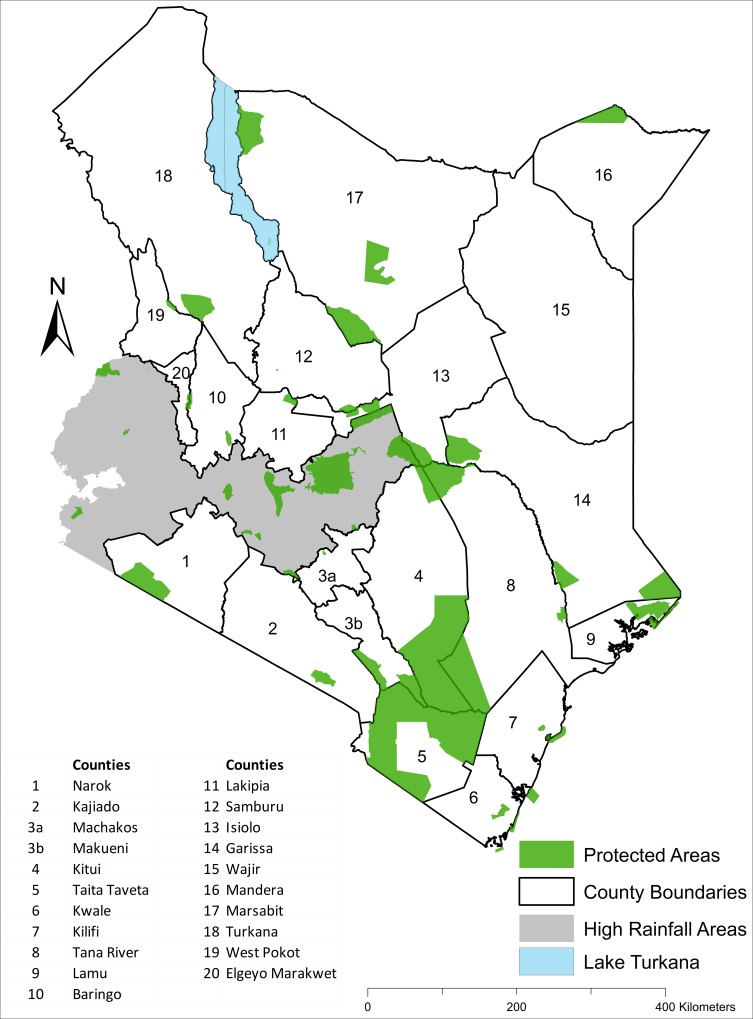
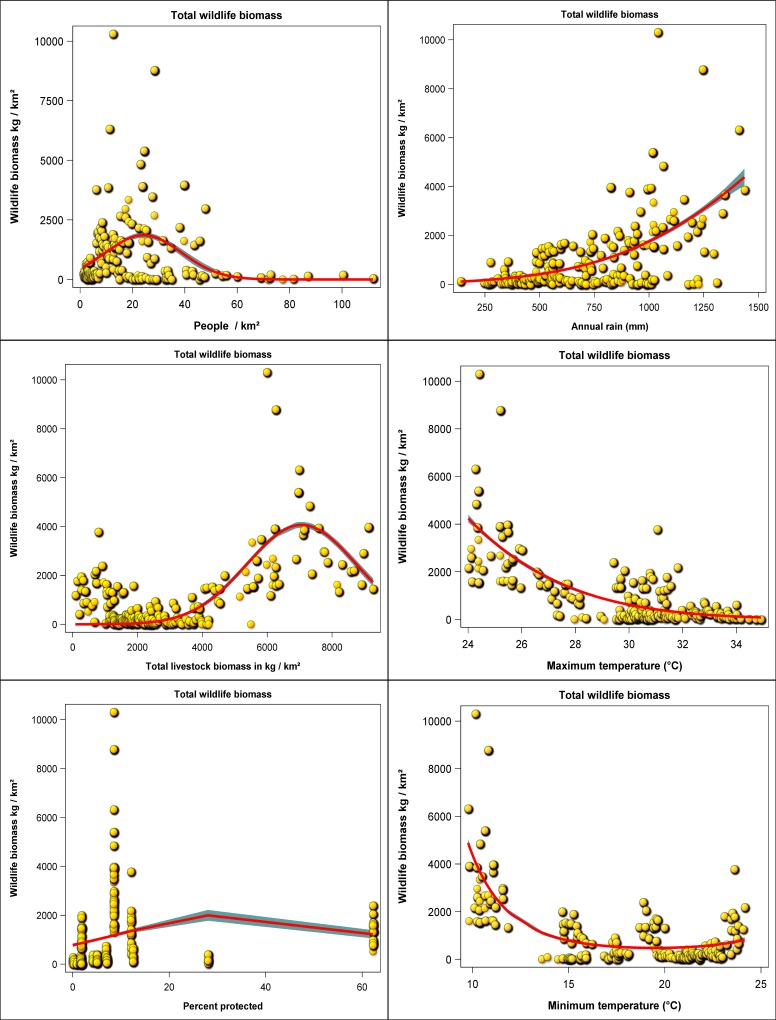
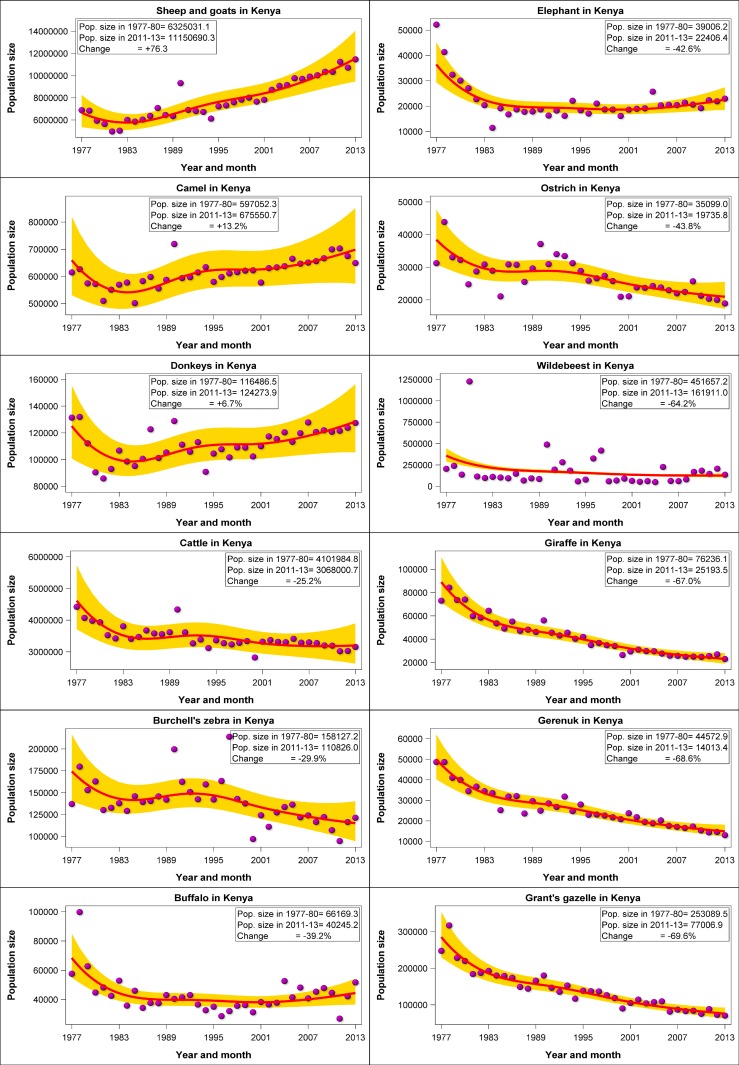
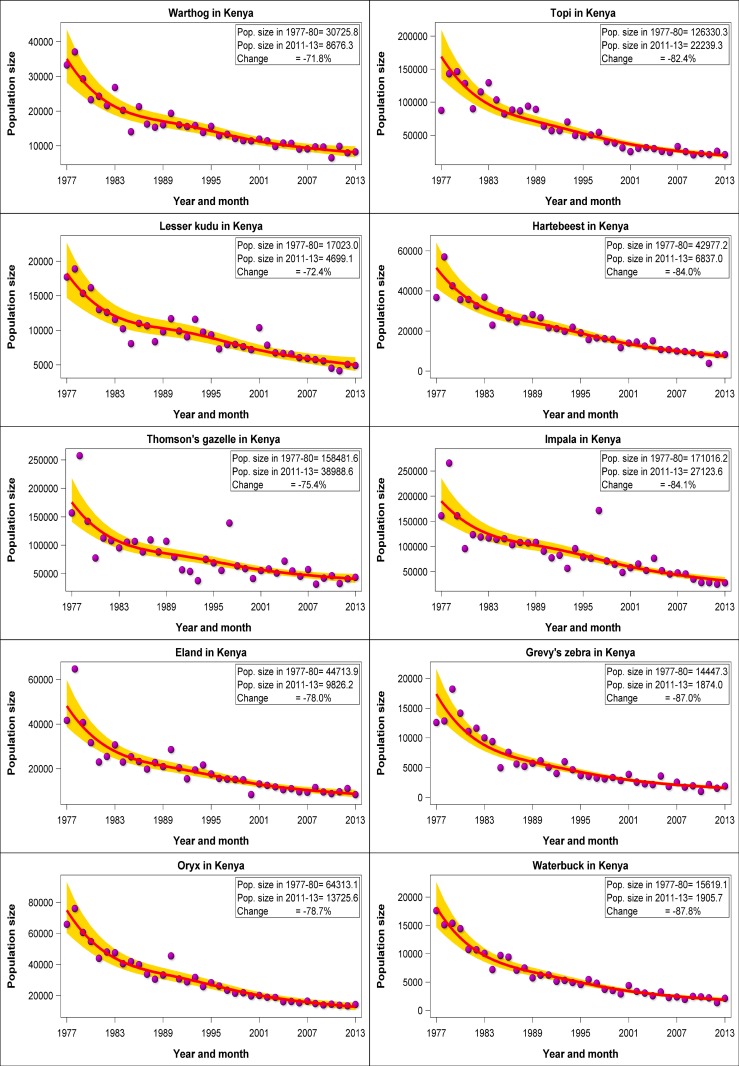
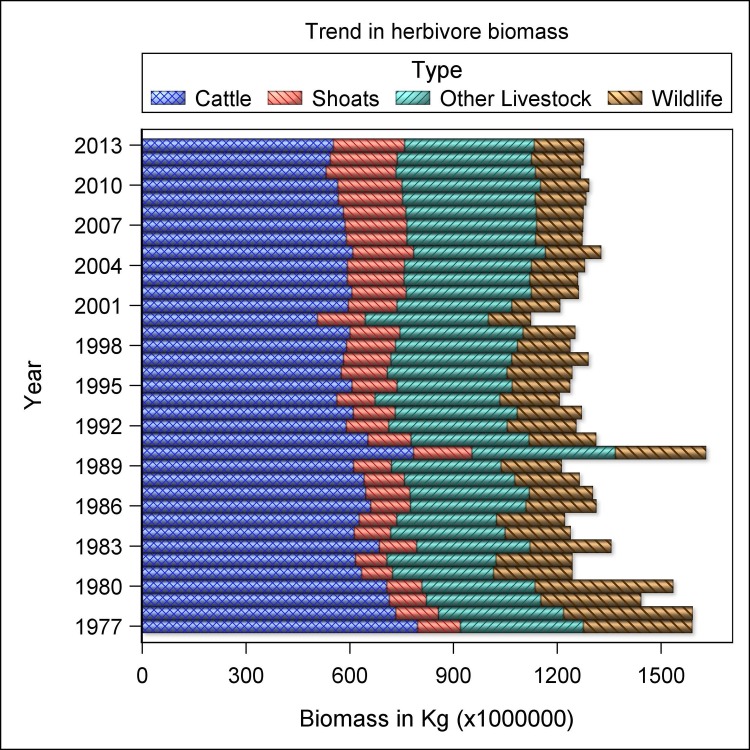
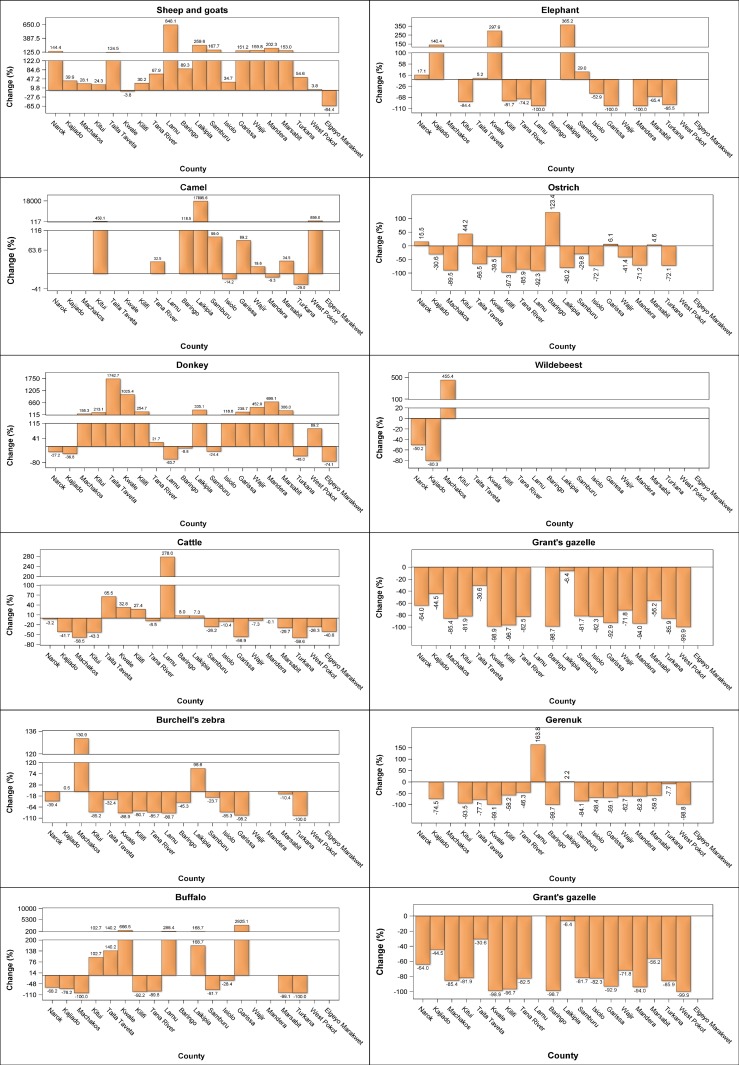
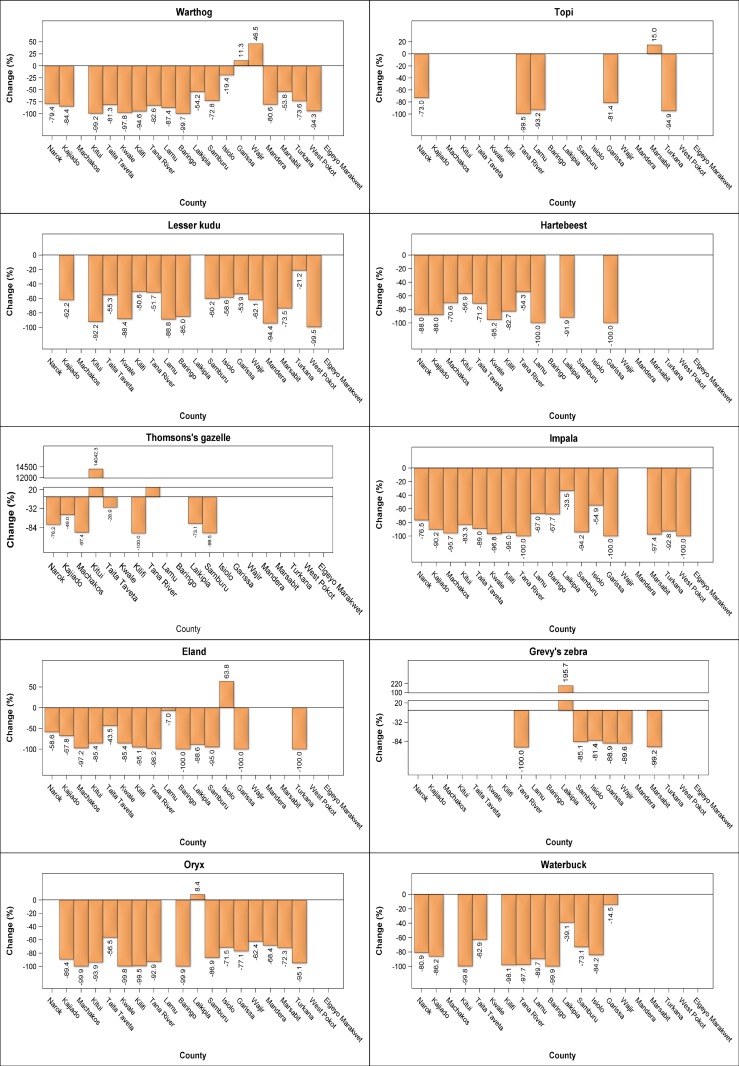
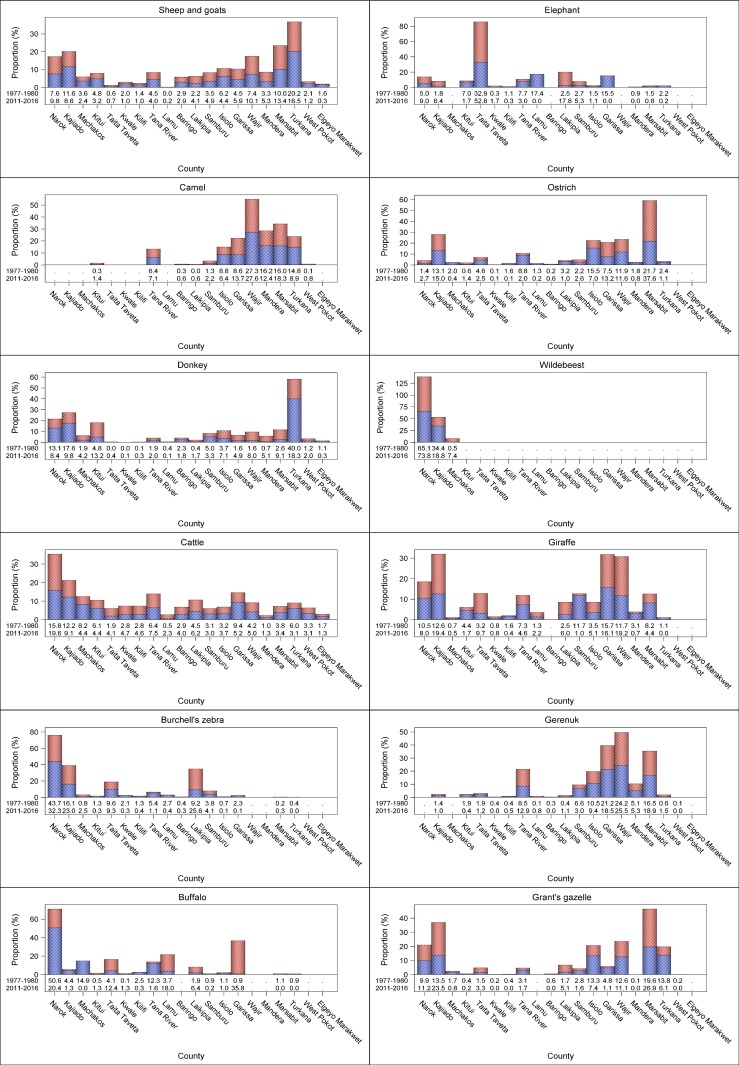
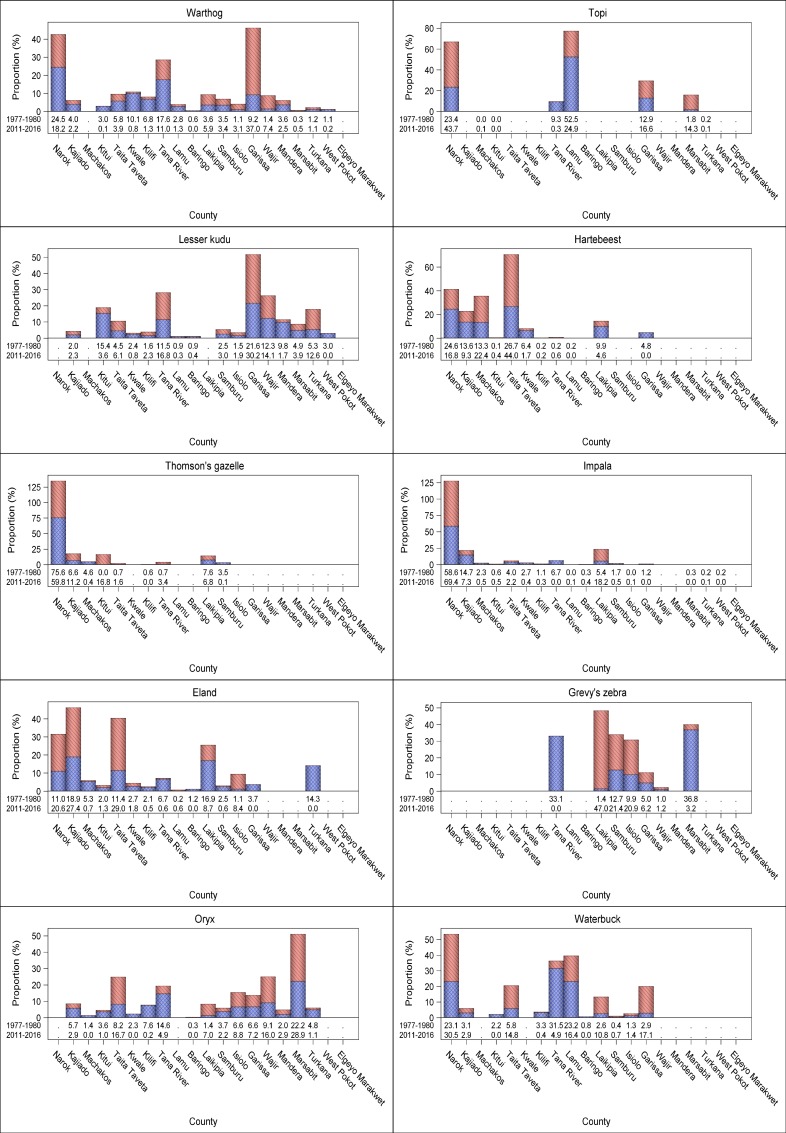
There is growing evidence of escalating wildlife losses worldwide. Extreme wildlife losses have recently been documented for large parts of Africa, including western, Central and Eastern Africa. Here, we report extreme declines in wildlife and contemporaneous increase in livestock numbers in Kenya rangelands between 1977 and 2016. Our analysis uses systematic aerial monitoring survey data collected in rangelands that collectively cover 88% of Kenya's land surface. Our results show that wildlife numbers declined on average by 68% between 1977 and 2016. The magnitude of decline varied among species but was most extreme (72-88%) and now severely threatens the population viability and persistence of warthog, lesser kudu, Thomson's gazelle, eland, oryx, topi, hartebeest, impala, Grevy's zebra and waterbuck in Kenya's rangelands. The declines were widespread and occurred in most of the 21 rangeland counties. Likewise to wildlife, cattle numbers decreased (25.2%) but numbers of sheep and goats (76.3%), camels (13.1%) and donkeys (6.7%) evidently increased in the same period. As a result, livestock biomass was 8.1 times greater than that of wildlife in 2011-2013 compared to 3.5 times in 1977-1980. Most of Kenya's wildlife (ca. 30%) occurred in Narok County alone. The proportion of the total "national" wildlife population found in each county increased between 1977 and 2016 substantially only in Taita Taveta and Laikipia but marginally in Garissa and Wajir counties, largely reflecting greater wildlife losses elsewhere. The declines raise very grave concerns about the future of wildlife, the effectiveness of wildlife conservation policies, strategies and practices in Kenya. Causes of the wildlife declines include exponential human population growth, increasing livestock numbers, declining rainfall and a striking rise in temperatures but the fundamental cause seems to be policy, institutional and market failures. Accordingly, we thoroughly evaluate wildlife conservation policy in Kenya. We suggest policy, institutional and management interventions likely to succeed in reducing the declines and restoring rangeland health, most notably through strengthening and investing in community and private wildlife conservancies in the rangelands.
全球野生动物数量不断减少的证据越来越多。最近有记录表明,非洲大部分地区,包括西部、中部和东部非洲,野生动物数量急剧减少。在此,我们报告了1977年至2016年间肯尼亚牧场野生动物数量的极端下降以及牲畜数量的同期增加。我们的分析使用了在牧场收集的系统空中监测调查数据,这些牧场总面积覆盖了肯尼亚88%的陆地表面。我们的结果表明,1977年至2016年间野生动物数量平均下降了68%。下降幅度因物种而异,但最为极端(72%-88%),目前严重威胁到肯尼亚牧场疣猪、东非狷羚、汤氏瞪羚、大羚羊、长角羚、转角牛羚、角马、黑斑羚、细纹斑马和水羚的种群生存能力和持久性。这种下降很普遍,发生在21个牧场县中的大多数。与野生动物情况类似,牛的数量减少了(25.2%),但同期绵羊和山羊数量(76.3%)、骆驼数量(13.1%)和驴的数量(6.7%)明显增加。结果,2011-2013年牲畜生物量比野生动物生物量大8.1倍,而1977-1980年为3.5倍。肯尼亚大部分野生动物(约30%)仅分布在纳罗克县。1977年至2016年间,每个县的“国家”野生动物总数比例仅在泰塔塔韦塔县和莱基皮亚县大幅增加,而在加里萨县和瓦吉尔县略有增加,这在很大程度上反映了其他地方野生动物数量的大幅减少。这些下降引发了人们对肯尼亚野生动物未来、野生动物保护政策、战略和实践有效性的严重担忧。野生动物数量下降的原因包括人口呈指数增长、牲畜数量增加、降雨量减少和气温显著上升,但根本原因似乎是政策、制度和市场失灵。因此,我们全面评估了肯尼亚的野生动物保护政策。我们建议采取政策、制度和管理干预措施,这些措施可能成功减少野生动物数量下降并恢复牧场健康,最显著的是通过加强和投资牧场的社区和私人野生动物保护区。