Grasser Susanne, Schunko Christoph, Vogl Christian R
Working Group Knowledge Systems and Innovation, Division of Organic Farming, Department of Sustainable Agricultural Systems, University of Natural Resources and Life Sciences Vienna (BOKU), Gregor-Mendel-Strasse 33, 1180, Vienna, Austria.
J Ethnobiol Ethnomed. 2016 Oct 10;12(1):46. doi: 10.1186/s13002-016-0119-6.
Ethically sound research in applied ethnobiology should benefit local communities by giving them full access to research processes and results. Participatory research may ensure such access, but there has been little discussion on methodological details of participatory approaches in ethnobiological research. This paper presents and discusses the research processes and methods developed in the course of a three-year research project on wild plant gathering, the involvement of children as co-researchers and the project's indications for local impact.
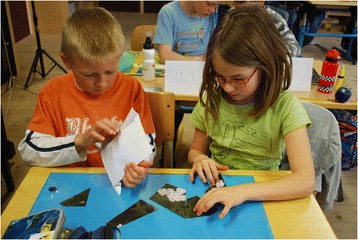
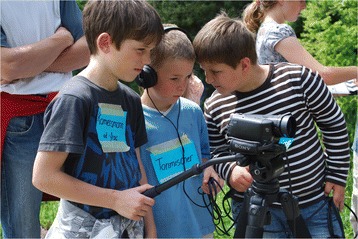
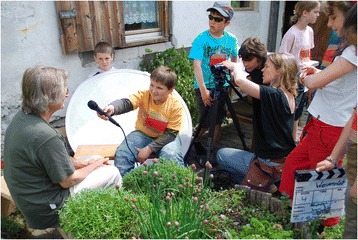
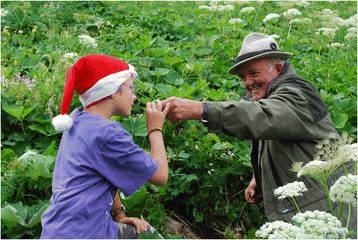
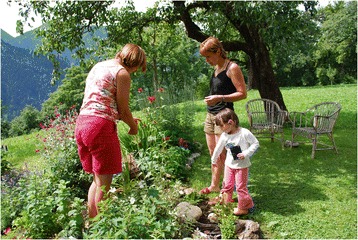
Research was conducted in the Grosses Walsertal Biosphere Reserve, Austria, between 2008 and 2010 in four research phases. In phase 1, 36 freelist interviews with local people and participant observation was conducted. In phase 2 school workshops were held in 14 primary school classes and their 189 children interviewed 506 family members with structured questionnaires. In phase 3, 27 children and two researchers co-produced participatory videos. In phase 4 indications for the impact of the project were investigated with questionnaires from ten children and with participant observation.
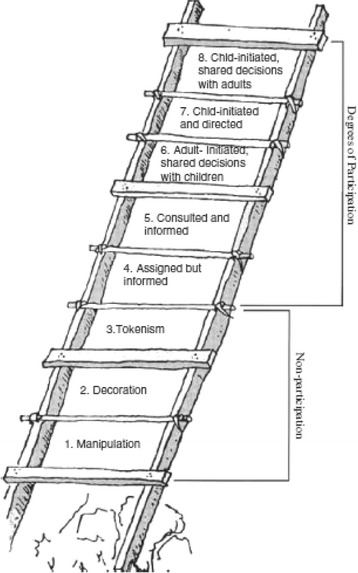
Children participated in various ways in the research process and the scientific output and local impact of the project was linked to the phases, degrees and methods of children's involvement. Children were increasingly involved in the project, from non-participation to decision-making. Scientific output was generated from participatory and non-participatory activities whereas local impact - on personal, familial, communal and institutional levels - was mainly generated through the participatory involvement of children as interviewers and as co-producers of videos. Creating scientific outputs from participatory video is little developed in ethnobiology, whereas bearing potential.
As ethnobotanists and ethnobiologists, if we are truly concerned about the impact and benefits of our research processes and results to local communities, the details of the research processes need to be deliberately planned and evaluated and then reported and discussed in academic publications.
应用民族生物学领域符合伦理的研究应让当地社区充分参与研究过程并获取研究成果,从而使他们受益。参与式研究或许能确保这种参与,但在民族生物学研究中,对于参与式方法的方法细节却鲜有讨论。本文介绍并探讨了在一项为期三年的关于野生植物采集的研究项目过程中所开发的研究过程和方法、儿童作为共同研究者的参与情况以及该项目对当地产生影响的迹象。
2008年至2010年期间,在奥地利的大瓦尔瑟谷生物圈保护区分四个研究阶段开展研究。第一阶段,对当地居民进行了36次自由列举访谈并进行了参与观察。第二阶段,在14个小学班级举办了学校工作坊,其189名儿童用结构化问卷采访了506名家庭成员。第三阶段,27名儿童和两名研究人员共同制作了参与式视频。第四阶段,通过向10名儿童发放问卷并进行参与观察,调查了该项目影响的迹象。
儿童以多种方式参与了研究过程,项目的科学产出和当地影响与儿童参与的阶段、程度和方法相关。儿童对项目的参与度不断提高,从无参与到参与决策。科学产出源自参与式和非参与式活动,而当地影响——在个人、家庭、社区和机构层面——主要是通过儿童作为访谈者和视频共同制作者的参与式介入产生的。在民族生物学中,利用参与式视频创造科学产出的做法尚不多见,但具有潜力。
作为民族植物学家和民族生物学家,如果我们真正关心研究过程和结果对当地社区的影响和益处,就需要精心规划和评估研究过程的细节,然后在学术出版物中进行报告和讨论。