Programa de Pós-Graduação em Etnobiologia e Conservação da Natureza, Universidade Federal Rural de Pernambuco, Rua Dom Manoel de Medeiros, s/n, Recife, PE, 52171-900, Brazil.
Departamento de Ecologia, Universidade Federal Rural de Pernambuco, Rua Dom Manoel de Medeiros, s/n, Recife, PE, 52171-900, Brazil.
J Ethnobiol Ethnomed. 2020 May 6;16(1):23. doi: 10.1186/s13002-020-00373-5.
Bridging the gap between local and scientific knowledge can have useful implications in the teaching-learning process because it can create environments conducive to the valorization of sociocultural diversity in schools. The present review aims to analyze the profile and contributions of scientific publications dealing with articulations between local and scientific knowledge in basic formal education.
Combined searches of 14 terms related to ethnoscience and 20 terms of education were conducted in English, Portuguese, and Spanish using the databases of Web of Science, Scopus, Science Direct, and Scielo. The recovered works were filtered, organized in a spreadsheet, and analyzed for publication characteristics (year, author, periodicals, countries of origin of the authors, and countries surveyed) and contents of the studies (epistemological bases, techniques of application, and record of the articulation of local and scientific knowledge).
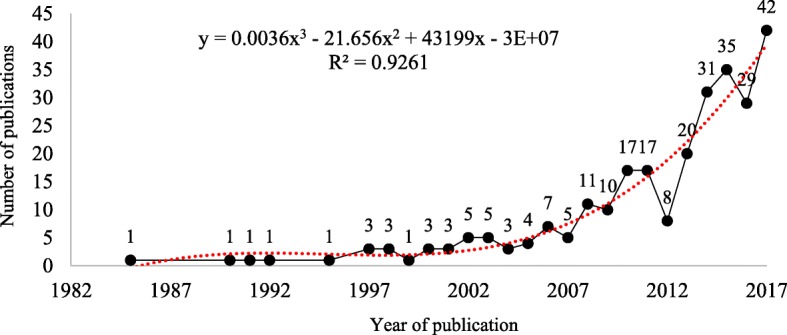
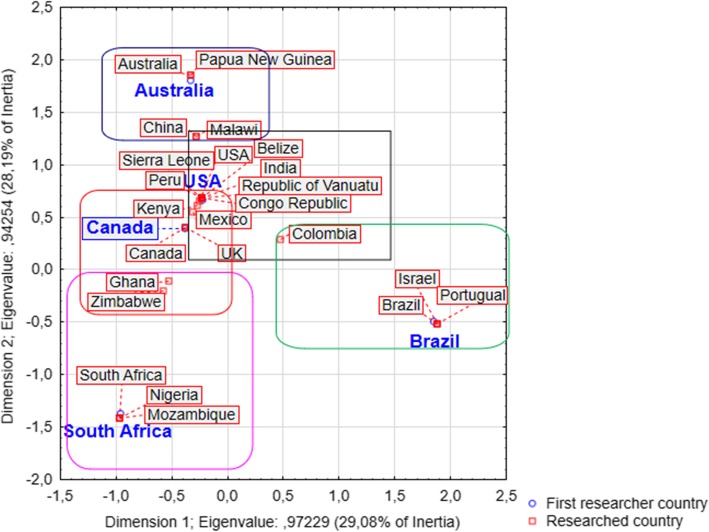
The research field that establishes these articulations is growing, with 81% of the works being written in the English language. A total of 494 researchers were recorded. The USA, South Africa, Brazil, Canada, and Australia were the countries of origin of the first author for the majority (64%) of the works considered. Multiculturalism, Vygotskian theory of learning, postcolonial theory, constructivism, critical pedagogy, and the argumentation theory were the main theoretical bases of half of the recovered works in which some explicit theoretical orientation could be found. Teacher training and interviews stood out as important tools in the application and record of links between local and scientific knowledge, respectively.
Interdisciplinary approaches were common in the conception and application of pedagogical activities reported in the recovered works. Articulations between local and scientific knowledge are effective for culturally-sensitive scientific education, especially (but not exclusively) in schools directly related to traditional communities. There was a tendency to emphasize the teacher as a fundamental agent in the search for education that establishes these articulations. The authors of the analyzed works frequently indicated a need for greater proximity of the community to school spaces.
在教学过程中,弥合本地知识和科学知识之间的差距具有重要意义,因为它可以创造有利于学校中社会文化多样性增值的环境。本综述旨在分析基础教育中本地知识和科学知识之间联系的科学出版物的特点和贡献。
使用 Web of Science、Scopus、Science Direct 和 Scielo 数据库,以英语、葡萄牙语和西班牙语对 14 个与民族科学相关的术语和 20 个教育术语进行了联合检索。对检索到的文献进行过滤、整理成电子表格,并分析其出版特点(年份、作者、期刊、作者的原籍国和调查的国家)和研究内容(认识论基础、应用技术和记录本地知识和科学知识的联系)。
建立这些联系的研究领域正在发展,其中 81%的作品用英语书写。共记录了 494 位研究人员。美国、南非、巴西、加拿大和澳大利亚是大多数(64%)被认为的作品的第一作者的原籍国。多元文化主义、维果茨基学习理论、后殖民理论、建构主义、批判教育学和论证理论是一半以上回收作品的主要理论基础,其中一些明确的理论取向可以找到。教师培训和访谈分别作为应用和记录本地和科学知识之间联系的重要工具。
在回收作品中报告的教学活动的构思和应用中,跨学科方法很常见。本地知识和科学知识之间的联系对于文化敏感的科学教育是有效的,特别是(但不仅限于)与传统社区直接相关的学校。强调教师是寻找建立这些联系的教育的基本主体的趋势。分析工作的作者经常指出社区与学校空间更加接近的需求。