Marron Alan O, Ratcliffe Sarah, Wheeler Glen L, Goldstein Raymond E, King Nicole, Not Fabrice, de Vargas Colomban, Richter Daniel J
Department of Applied Mathematics and Theoretical Physics, Centre for Mathematical Sciences, University of Cambridge, Cambridge, United Kingdom
Department of Zoology, University of Cambridge, Cambridge, United Kingdom.
Mol Biol Evol. 2016 Dec;33(12):3226-3248. doi: 10.1093/molbev/msw209. Epub 2016 Oct 11.
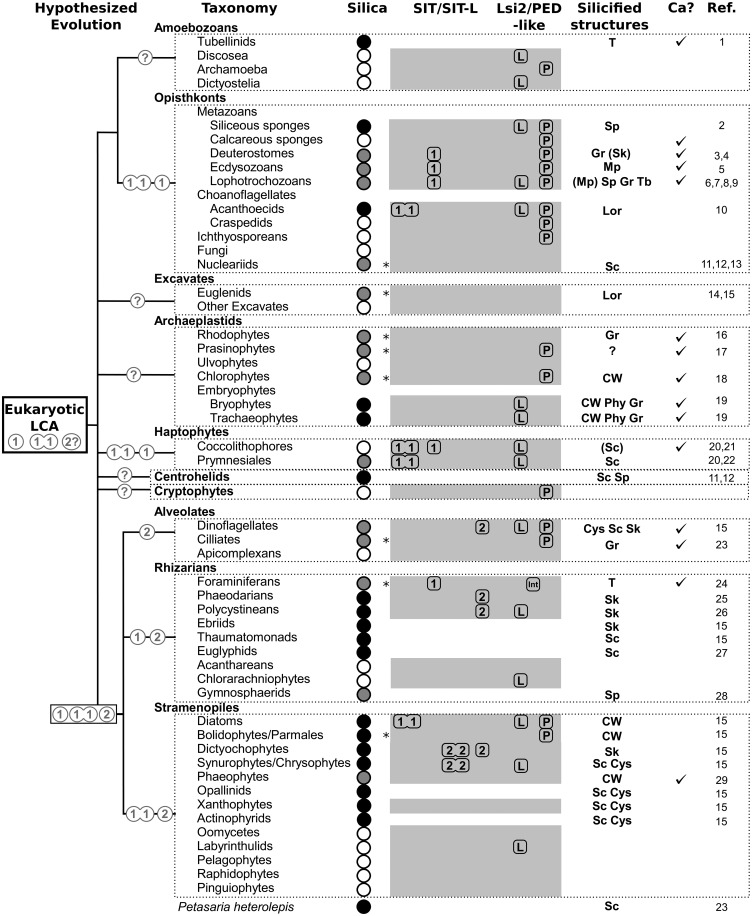
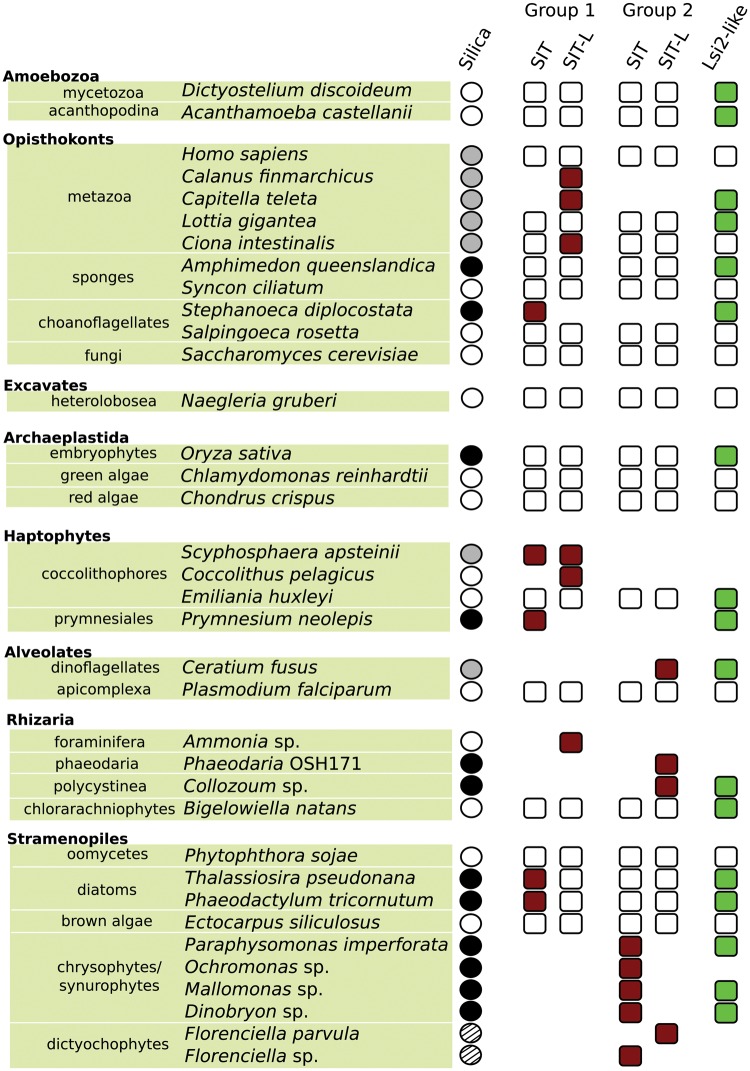
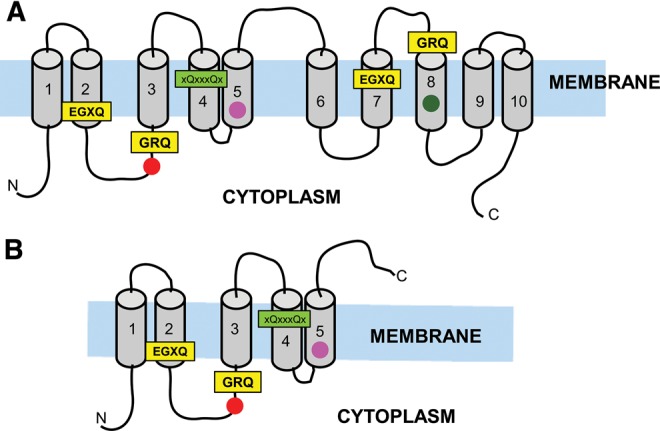
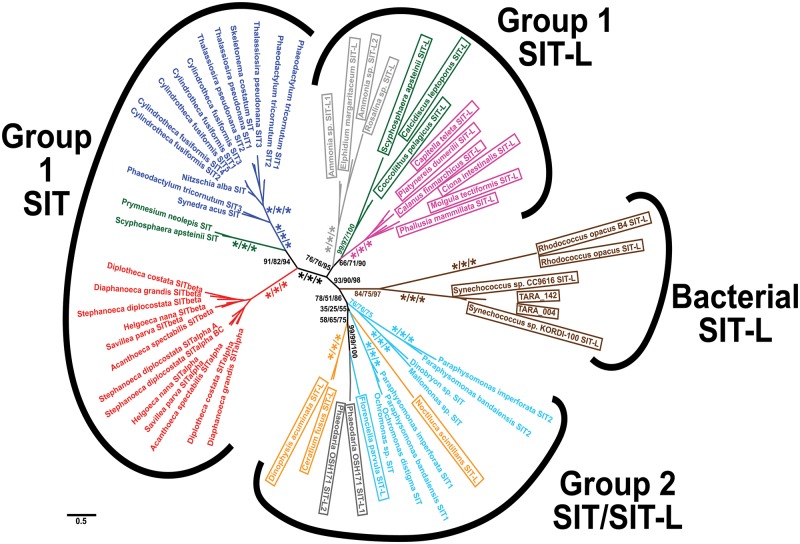
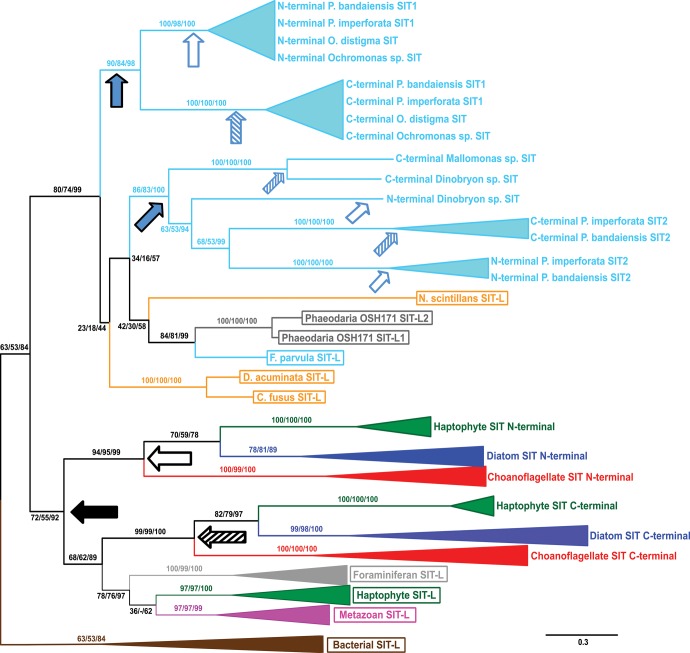
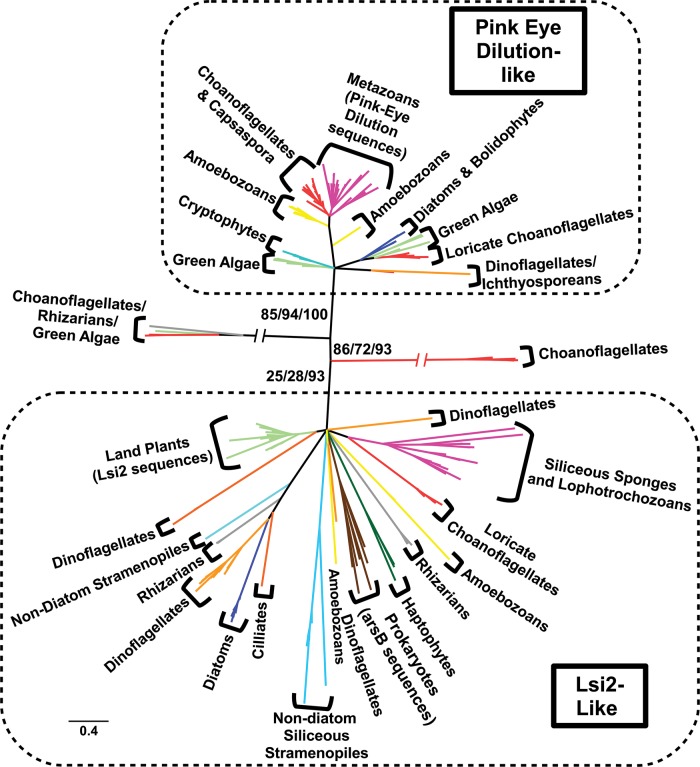
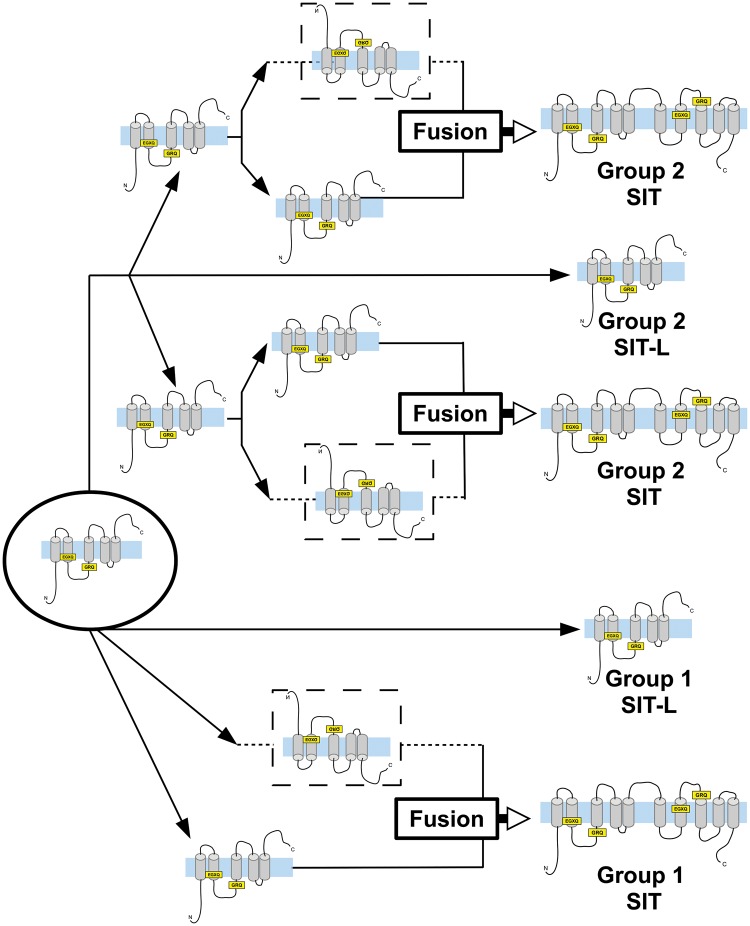
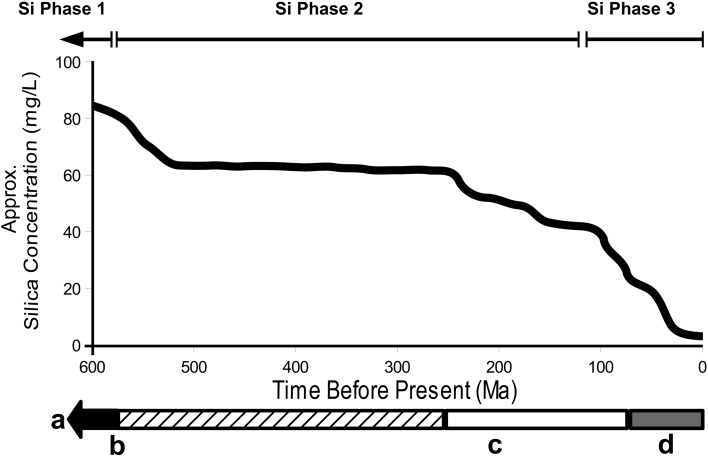
Biosilicification (the formation of biological structures from silica) occurs in diverse eukaryotic lineages, plays a major role in global biogeochemical cycles, and has significant biotechnological applications. Silicon (Si) uptake is crucial for biosilicification, yet the evolutionary history of the transporters involved remains poorly known. Recent evidence suggests that the SIT family of Si transporters, initially identified in diatoms, may be widely distributed, with an extended family of related transporters (SIT-Ls) present in some nonsilicified organisms. Here, we identify SITs and SIT-Ls in a range of eukaryotes, including major silicified lineages (radiolarians and chrysophytes) and also bacterial SIT-Ls. Our evidence suggests that the symmetrical 10-transmembrane-domain SIT structure has independently evolved multiple times via duplication and fusion of 5-transmembrane-domain SIT-Ls. We also identify a second gene family, similar to the active Si transporter Lsi2, that is broadly distributed amongst siliceous and nonsiliceous eukaryotes. Our analyses resolve a distinct group of Lsi2-like genes, including plant and diatom Si-responsive genes, and sequences unique to siliceous sponges and choanoflagellates. The SIT/SIT-L and Lsi2 transporter families likely contribute to biosilicification in diverse lineages, indicating an ancient role for Si transport in eukaryotes. We propose that these Si transporters may have arisen initially to prevent Si toxicity in the high Si Precambrian oceans, with subsequent biologically induced reductions in Si concentrations of Phanerozoic seas leading to widespread losses of SIT, SIT-L, and Lsi2-like genes in diverse lineages. Thus, the origin and diversification of two independent Si transporter families both drove and were driven by ancient ocean Si levels.
生物硅化作用(即由二氧化硅形成生物结构)发生在多种真核生物谱系中,在全球生物地球化学循环中起主要作用,并且具有重要的生物技术应用。硅(Si)的摄取对于生物硅化作用至关重要,然而所涉及转运蛋白的进化历史仍然鲜为人知。最近的证据表明,最初在硅藻中发现的硅转运蛋白SIT家族可能广泛分布,在一些非硅化生物中存在一个相关转运蛋白的扩展家族(SIT-Ls)。在这里,我们在一系列真核生物中鉴定出了SIT和SIT-Ls,包括主要的硅化谱系(放射虫和金藻)以及细菌SIT-Ls。我们的证据表明,对称的10跨膜结构域SIT结构是通过5跨膜结构域SIT-Ls的复制和融合多次独立进化而来的。我们还鉴定出了第二个基因家族,类似于活性硅转运蛋白Lsi2,它广泛分布于硅质和非硅质真核生物中。我们的分析解析出了一组不同的Lsi2样基因,包括植物和硅藻的硅响应基因,以及硅质海绵和领鞭毛虫特有的序列。SIT/SIT-L和Lsi2转运蛋白家族可能在不同谱系中促进生物硅化作用,表明硅转运在真核生物中具有古老的作用。我们提出,这些硅转运蛋白最初可能是为了防止前寒武纪高硅海洋中的硅毒性而出现的,随后显生宙海洋中生物诱导的硅浓度降低导致不同谱系中SIT、SIT-L和Lsi2样基因广泛丢失。因此,两个独立的硅转运蛋白家族的起源和多样化既推动了古代海洋硅水平的变化,又受到其驱动。