Back Du-San, Shin Gee-Wook, Wendt Mitchell, Heo Gang-Joon
Veterinary Medical Center and College of Veterinary Medicine, Chungbuk National University, Cheongju, Korea.
Bio-Safety Research Institute and College of Veterinary Medicine, Chonbuk National University, Jeonju, Korea.
Lab Anim Res. 2016 Sep;32(3):166-170. doi: 10.5625/lar.2016.32.3.166. Epub 2016 Sep 30.
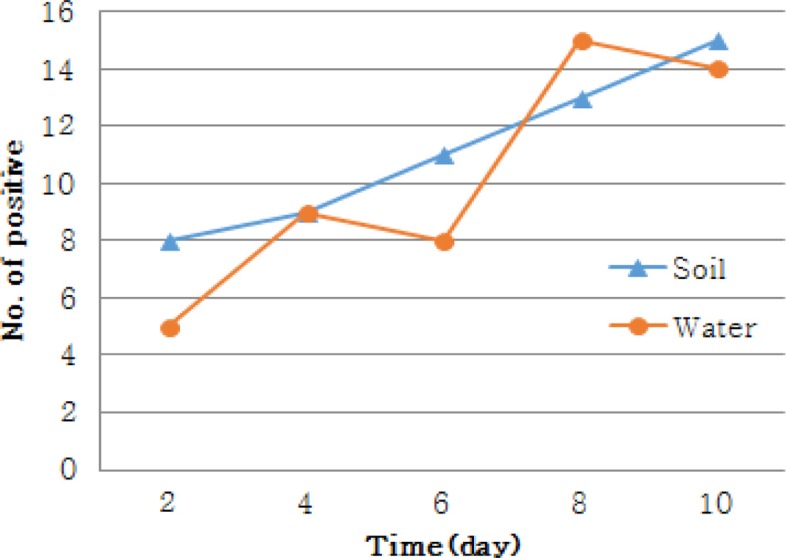
Pet turtles are known as a source of infection to humans when handled in captivity. Thirty four turtles purchased from pet shops and online markets in Korea were examined to determine whether the turtles and their environment were contaminated with spp. spp. were isolated from fecal samples of 17 turtles. These isolates were identified as through 16S rRNA gene sequencing. The isolation rate of spp. from the soil and water samples increased over time. We concluded that a high percentage of turtles being sold in pet shops were infected with spp., and their environments tend to become contaminated over time unless they are maintained properly. These results indicate that pet turtles could be a potential risk of salmonellosis in Korea.
人工饲养的宠物龟被认为是人类感染源。对从韩国宠物店和网上市场购买的34只乌龟进行了检查,以确定乌龟及其环境是否被[具体菌名]污染。从17只乌龟的粪便样本中分离出了[具体菌名]。通过16S rRNA基因测序将这些分离株鉴定为[具体菌名]。土壤和水样中[具体菌名]的分离率随时间增加。我们得出结论,宠物店出售的乌龟中有很大比例感染了[具体菌名],除非得到妥善养护,否则它们的环境往往会随着时间推移而受到污染。这些结果表明,宠物龟在韩国可能是沙门氏菌病的潜在风险因素。