Hasselhof Viktoria, Sperling Anastasia, Buttler Kerstin, Ströbel Philipp, Becker Jürgen, Aung Thiha, Felmerer Gunther, Wilting Jörg
Institute of Anatomy and Cell Biology, University Medical School Göttingen, Göttingen, Germany.
Institute of Pathology, University Medical Center Göttingen, Göttingen, Germany.
PLoS One. 2016 Oct 20;11(10):e0164964. doi: 10.1371/journal.pone.0164964. eCollection 2016.
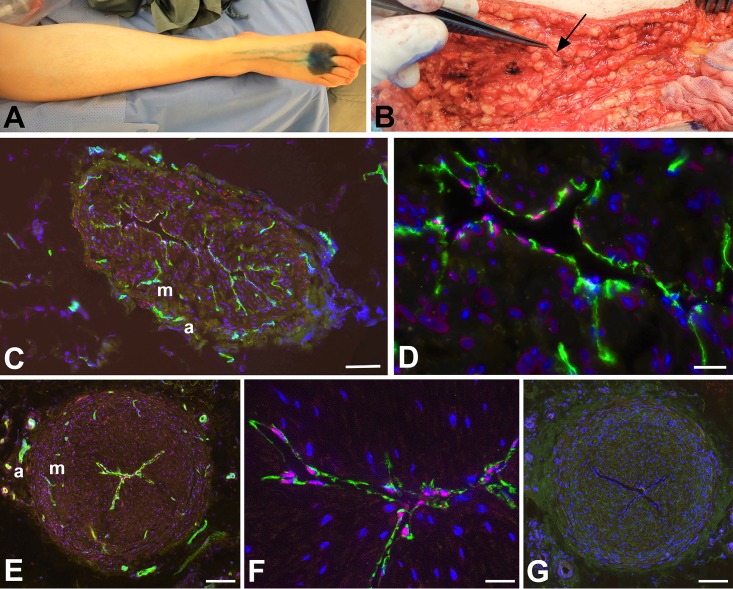
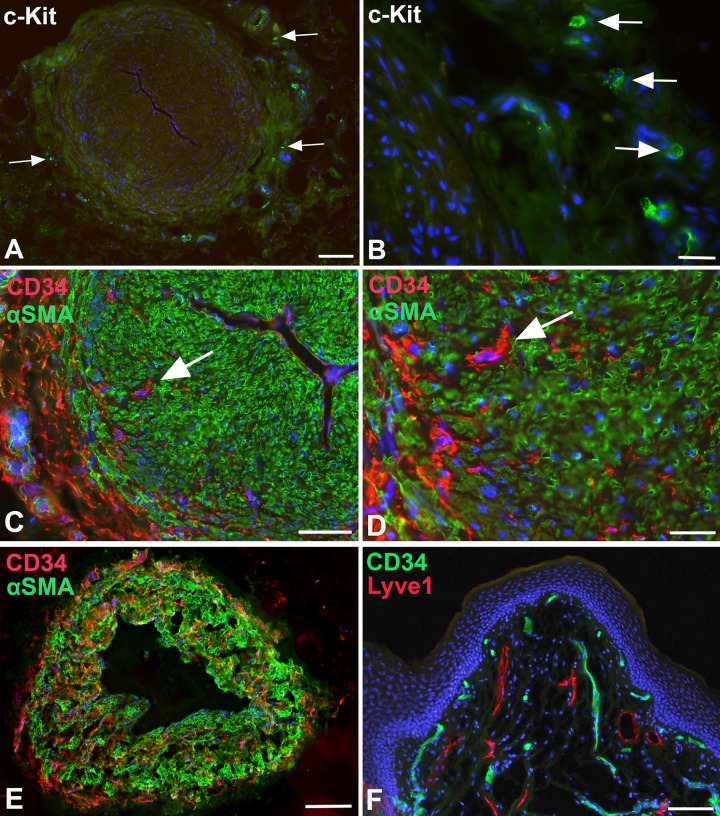
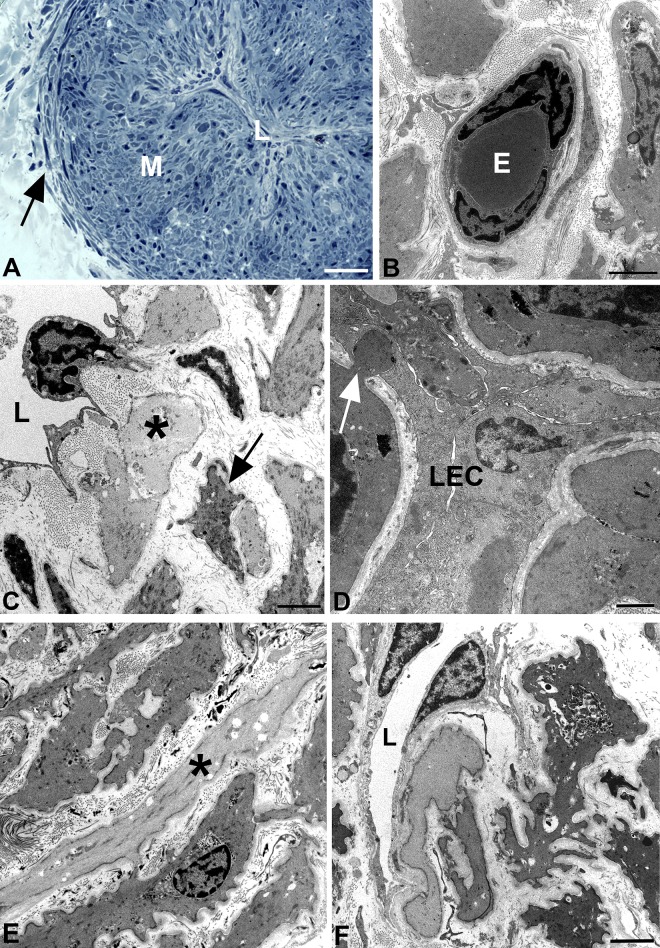
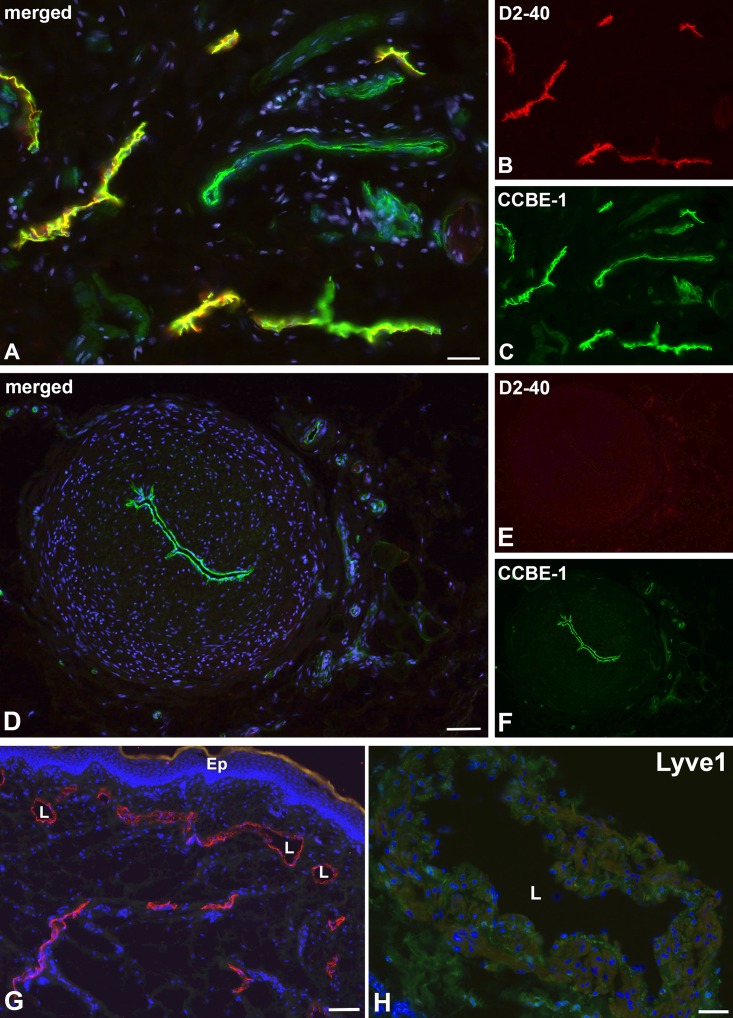
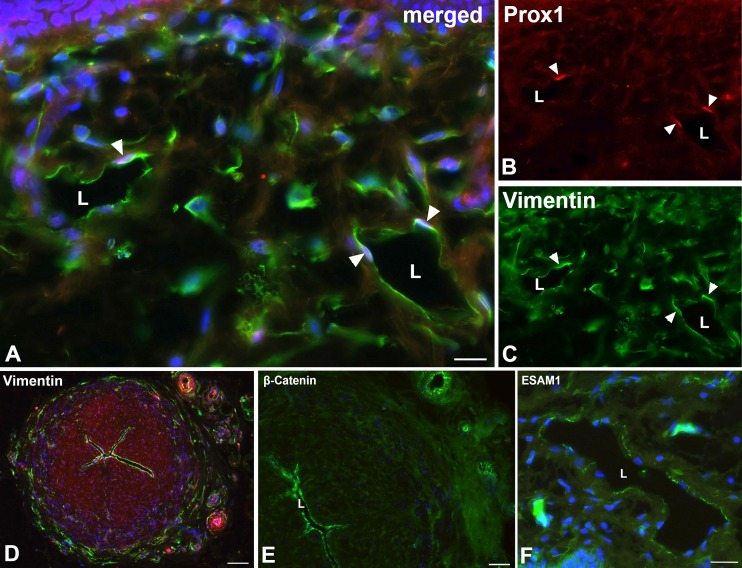
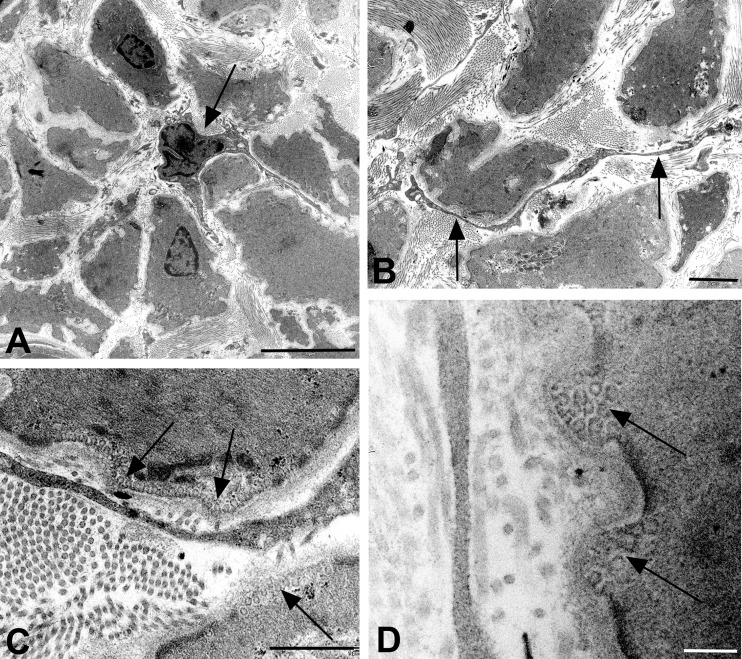
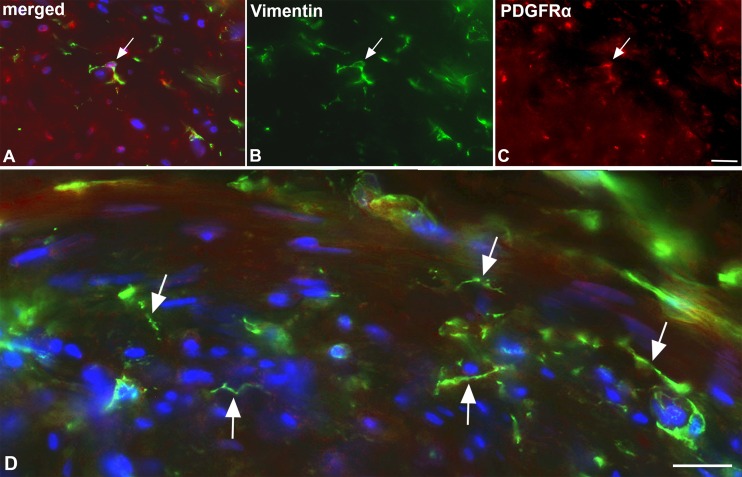
Millions of patients suffer from lymphedema worldwide. Supporting the contractility of lymphatic collectors is an attractive target for pharmacological therapy of lymphedema. However, lymphatics have mostly been studied in animals, while the cellular and molecular characteristics of human lymphatic collectors are largely unknown. We studied epifascial lymphatic collectors of the thigh, which were isolated for autologous transplantations. Our immunohistological studies identify additional markers for LECs (vimentin, CCBE1). We show and confirm differences between initial and collecting lymphatics concerning the markers ESAM1, D2-40 and LYVE-1. Our transmission electron microscopic studies reveal two types of smooth muscle cells (SMCs) in the media of the collectors with dark and light cytoplasm. We observed vasa vasorum in the media of the largest collectors, as well as interstitial Cajal-like cells, which are highly ramified cells with long processes, caveolae, and lacking a basal lamina. They are in close contact with SMCs, which possess multiple caveolae at the contact sites. Immunohistologically we identified such cells with antibodies against vimentin and PDGFRα, but not CD34 and cKIT. With Next Generation Sequencing we searched for highly expressed genes in the media of lymphatic collectors, and found therapeutic targets, suitable for acceleration of lymphatic contractility, such as neuropeptide Y receptors 1, and 5; tachykinin receptors 1, and 2; purinergic receptors P2RX1, and 6, P2RY12, 13, and 14; 5-hydroxytryptamine receptors HTR2B, and 3C; and adrenoceptors α2A,B,C. Our studies represent the first comprehensive characterization of human epifascial lymphatic collectors, as a prerequisite for diagnosis and therapy.
全球数百万患者患有淋巴水肿。支持淋巴管收集器的收缩性是淋巴水肿药物治疗的一个有吸引力的靶点。然而,淋巴管大多是在动物身上进行研究的,而人类淋巴管收集器的细胞和分子特征在很大程度上尚不清楚。我们研究了大腿浅筋膜淋巴管收集器,这些收集器是为自体移植而分离出来的。我们的免疫组织学研究确定了淋巴管内皮细胞(LECs)的其他标志物(波形蛋白、CCBE1)。我们展示并证实了起始淋巴管和收集淋巴管在标志物ESAM1、D2-40和LYVE-1方面的差异。我们的透射电子显微镜研究揭示了收集器中膜内存在两种类型的平滑肌细胞(SMCs),其细胞质有明暗之分。我们在最大的收集器的膜内观察到了血管滋养管,以及间质 Cajal 样细胞,这些细胞是具有长突起、小窝且缺乏基膜的高度分支细胞。它们与在接触部位具有多个小窝的平滑肌细胞紧密接触。通过免疫组织学方法,我们用抗波形蛋白和血小板衍生生长因子受体α(PDGFRα)的抗体鉴定出了这类细胞,但未用抗 CD34 和 cKIT 的抗体鉴定出。通过下一代测序,我们在淋巴管收集器的膜内寻找高表达基因,并发现了适合加速淋巴管收缩性的治疗靶点,如神经肽 Y 受体 1 和 5;速激肽受体 1 和 2;嘌呤能受体 P2RX1 和 6、P2RY12、13 和 14;5-羟色胺受体 HTR2B 和 3C;以及肾上腺素能受体α2A、B、C。我们的研究首次对人类浅筋膜淋巴管收集器进行了全面表征,这是诊断和治疗的前提条件。