Research Center of Brain and Cognitive Neuroscience, Liaoning Normal University, Dalian, 116029, China.
Department of Computer Science and Information Systems, University of Jyväskylä, Jyväskylä, 40014, Finland.
Sci Rep. 2016 Oct 24;6:35573. doi: 10.1038/srep35573.
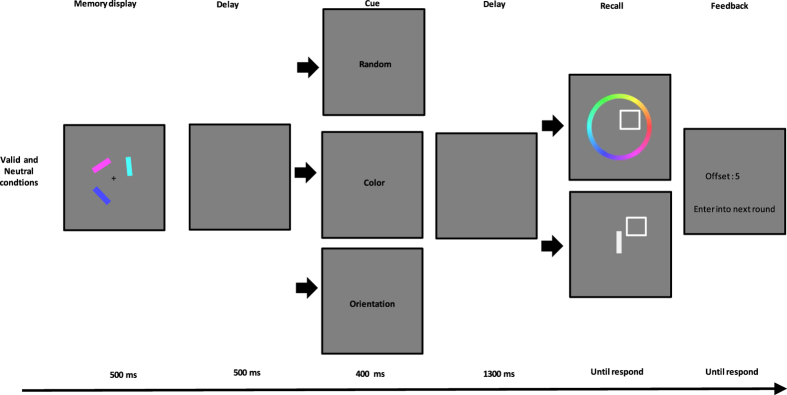
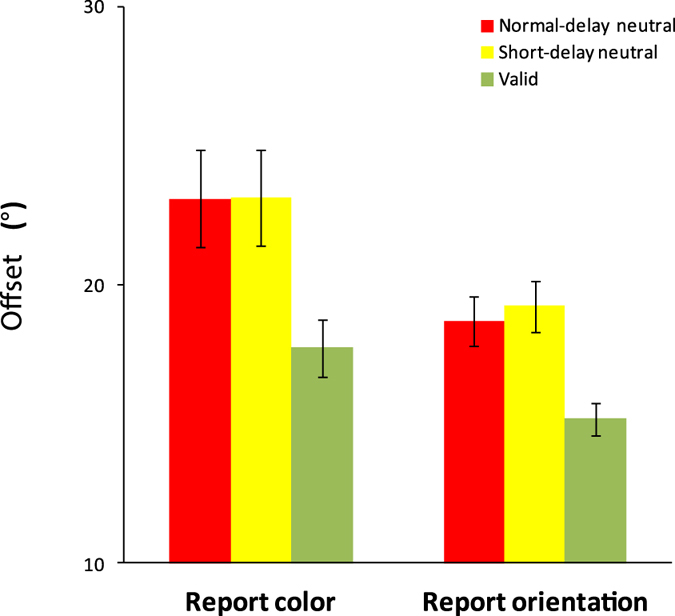
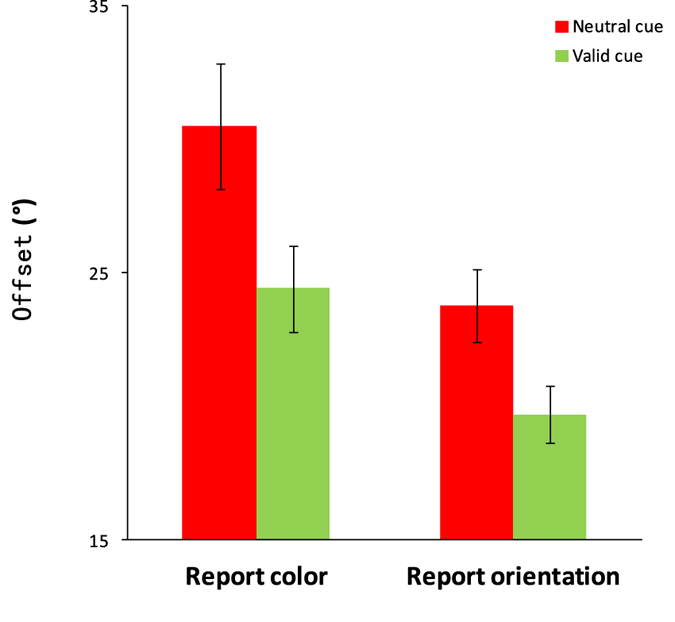
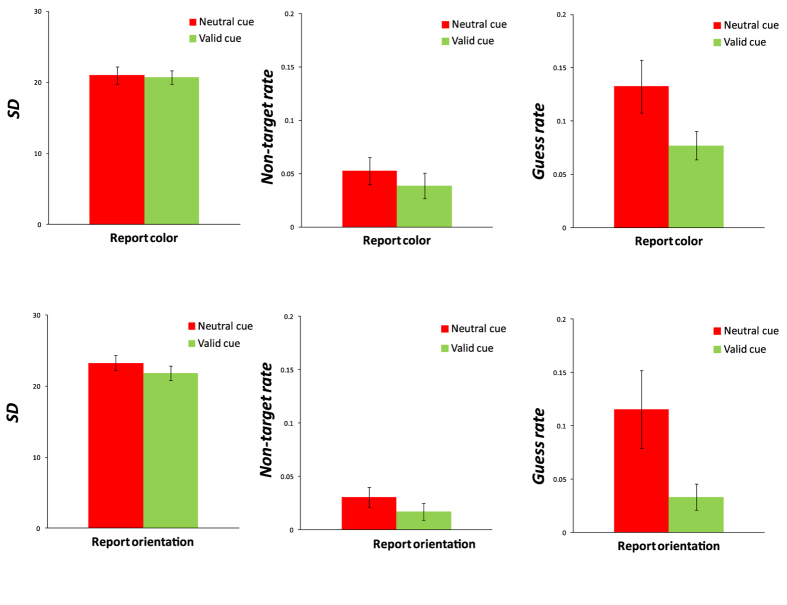
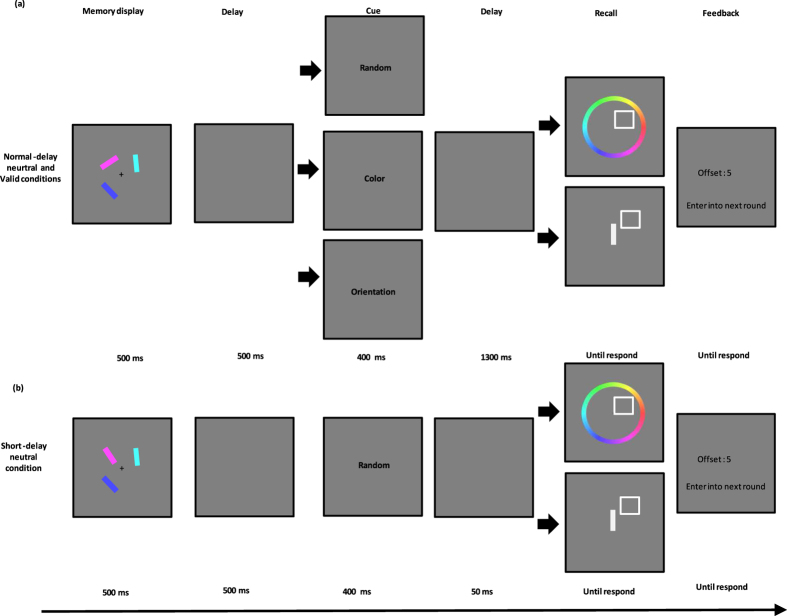
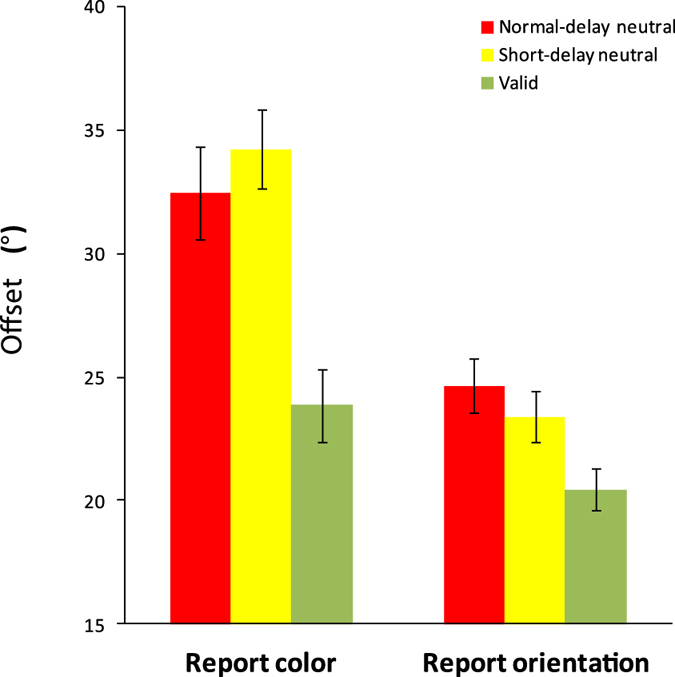
In visual working memory (VWM) tasks, participants' performance can be improved by a retro-object-cue. However, previous studies have not investigated whether participants' performance can also be improved by a retro-dimension-cue. Three experiments investigated this issue. We used a recall task with a retro-dimension-cue in all experiments. In Experiment 1, we found benefits from retro-dimension-cues compared to neutral cues. This retro-dimension-cue benefit is reflected in an increased probability of reporting the target, but not in the probability of reporting the non-target, as well as increased precision with which this item is remembered. Experiment 2 replicated the retro-dimension-cue benefit and showed that the length of the blank interval after the cue disappeared did not influence recall performance. Experiment 3 replicated the results of Experiment 2 with a lower memory load. Our studies provide evidence that there is a robust retro-dimension-cue benefit in VWM. Participants can use internal attention to flexibly allocate cognitive resources to a particular dimension of memory representations. The results also support the feature-based storing hypothesis.
在视觉工作记忆 (VWM) 任务中,通过回溯对象提示可以提高参与者的表现。然而,以前的研究尚未探讨通过回溯维度提示是否也可以提高参与者的表现。三项实验研究了这个问题。我们在所有实验中都使用了带有回溯维度提示的回忆任务。在实验 1 中,我们发现回溯维度提示与中性提示相比具有优势。这种回溯维度提示的优势反映在报告目标的概率增加,但报告非目标的概率没有增加,以及记忆项目的精度增加。实验 2 复制了回溯维度提示的优势,并表明提示消失后空白间隔的长度不会影响回忆表现。实验 3 在较低的记忆负荷下复制了实验 2 的结果。我们的研究提供了证据,表明 VWM 中存在强大的回溯维度提示优势。参与者可以使用内部注意力灵活地将认知资源分配到记忆表示的特定维度上。结果也支持基于特征的存储假设。