Cheng Fei, Lu Junyang, Gao Min, Shi Kai, Kong Qiusheng, Huang Yuan, Bie Zhilong
Key Laboratory of Horticultural Plant Biology, Ministry of Education/College of Horticulture and Forestry Sciences, Huazhong Agricultural University Wuhan, China.
Department of Horticulture, Zhejiang University Hangzhou, China.
Front Plant Sci. 2016 Oct 10;7:1519. doi: 10.3389/fpls.2016.01519. eCollection 2016.
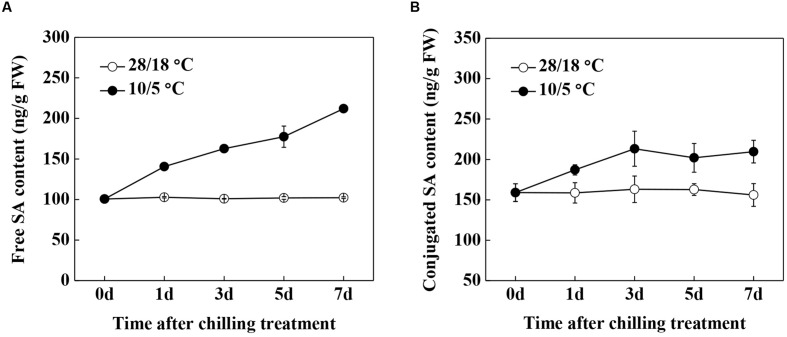
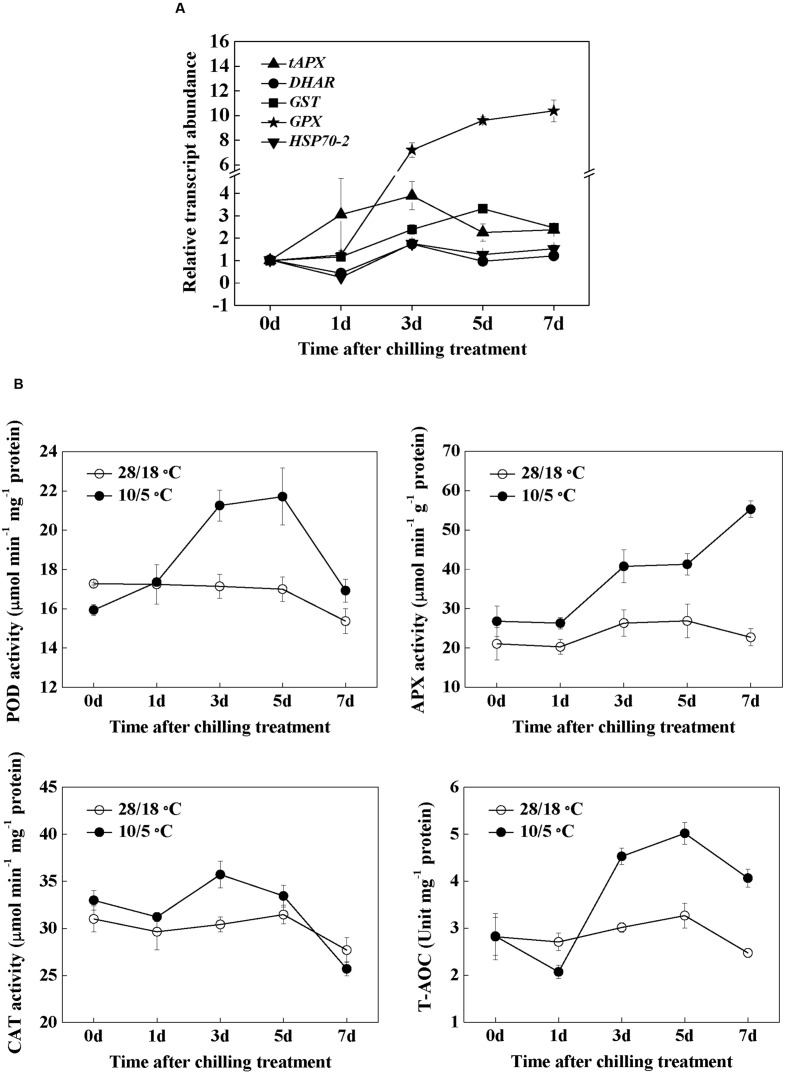
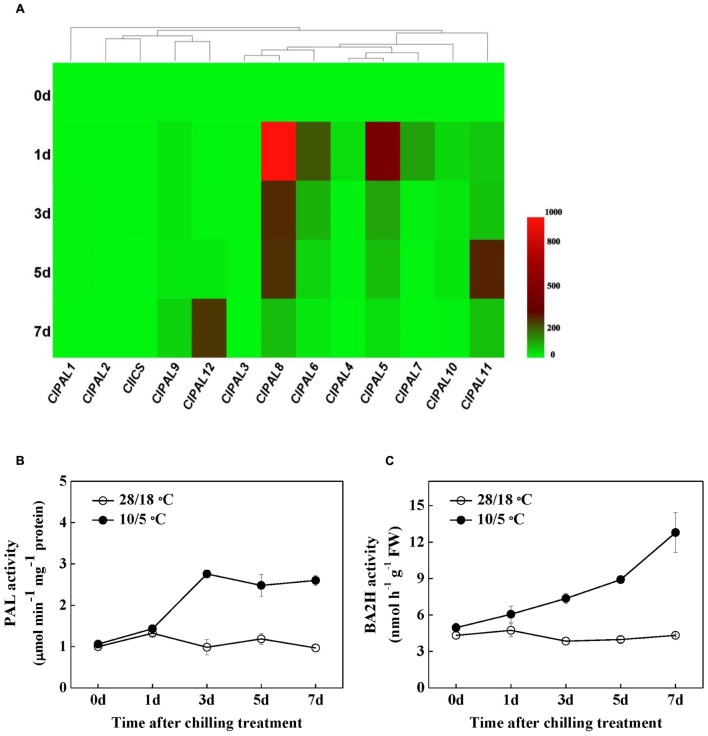
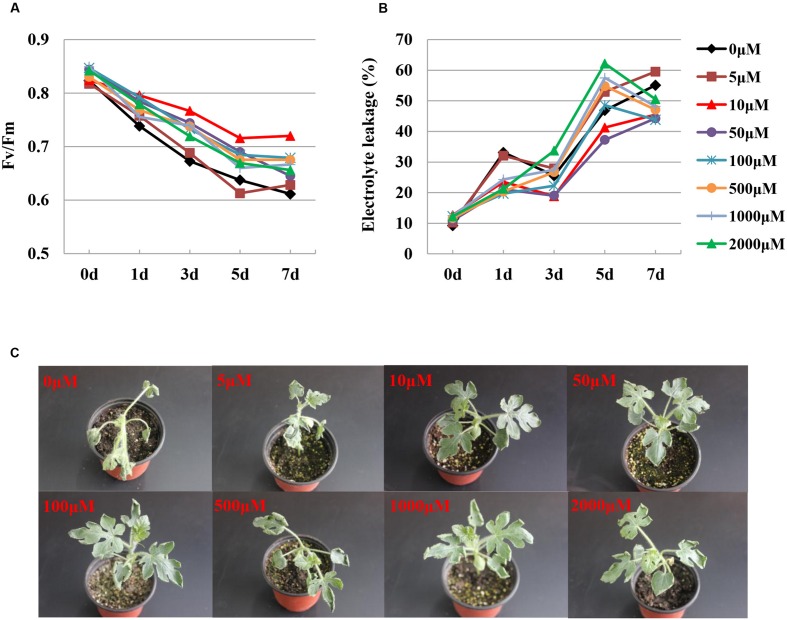
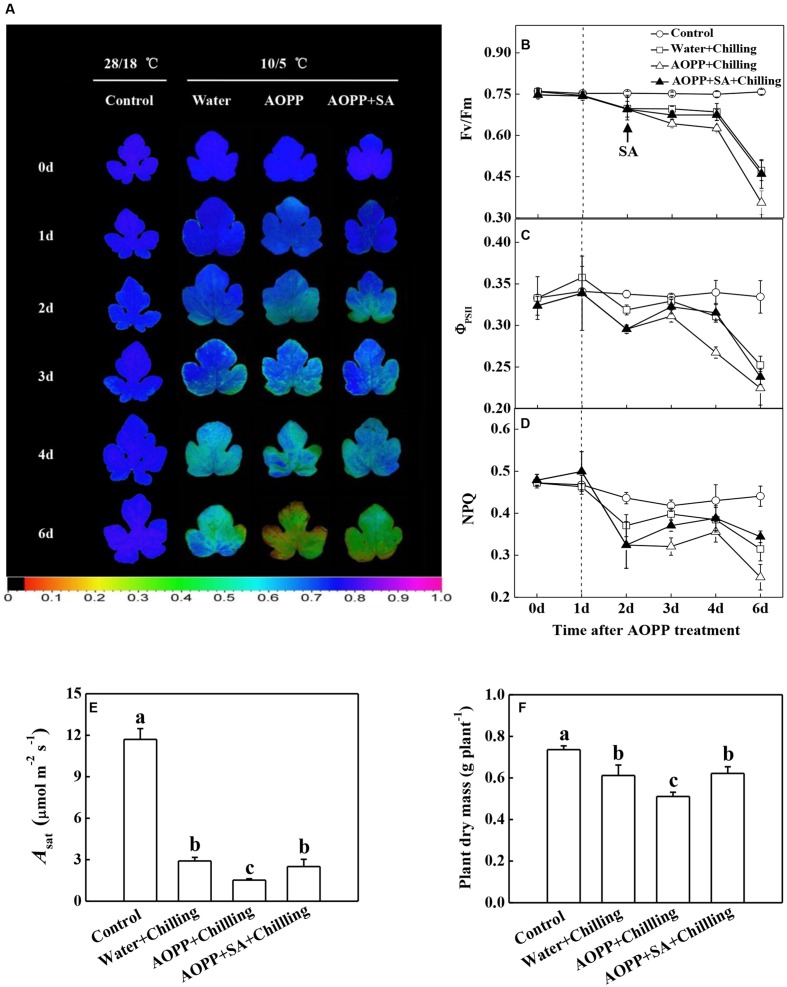
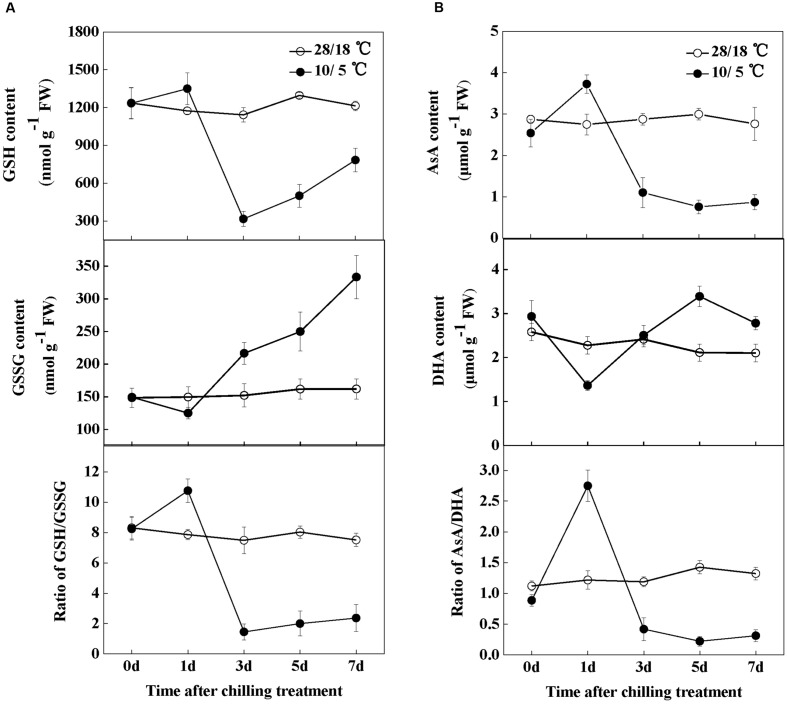
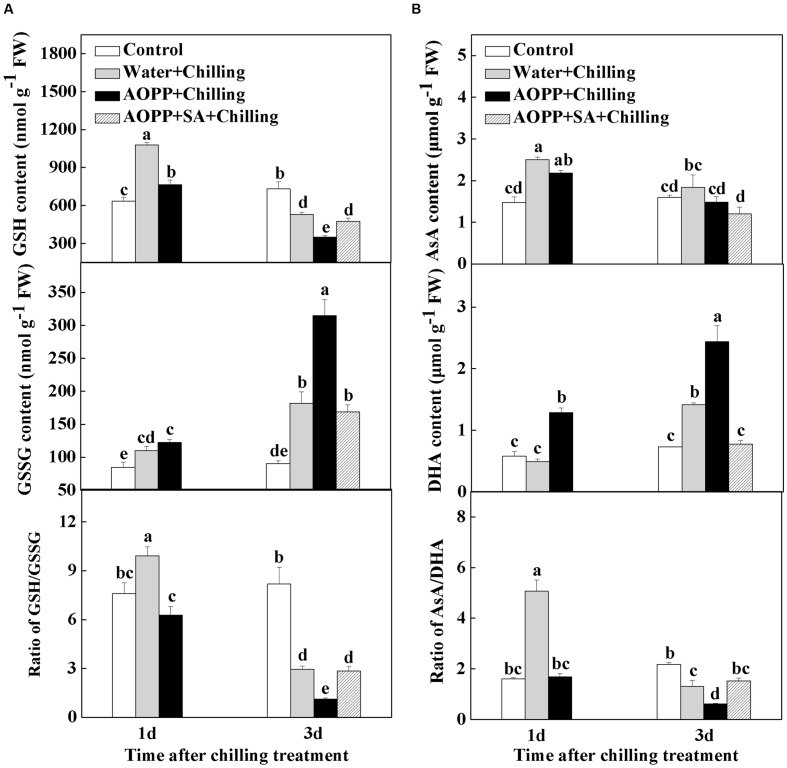
Salicylic acid (SA) plays an important role in plant response to abiotic stresses. This study investigated the potential role of SA in alleviating the adverse effects of chilling stress on photosynthesis and growth in watermelon (). Chilling stress induced the simultaneous accumulation of free and conjugated SA in watermelon plants, and the chilling-induced SA production was attributed to the phenylalanine ammonia-lyase pathway. Applying SA at moderate concentrations induced chilling tolerance, whereas inhibition of SA biosynthesis by L-α-aminooxy-β-phenylpropionic acid (AOPP) increased the photooxidation of PS II under chilling stress in watermelon, resulting in reduced photosynthesis and growth. Chilling induced a transient increase in the ratios of reduced to oxidized glutathione and reduced ascorbate to dehydroascorbate. Then, the expression of antioxidant genes was upregulated, and the activities of antioxidant enzymes were enhanced. Furthermore, SA-induced chilling tolerance was associated with cellular glutathione and ascorbate homeostasis, which served as redox signals to regulate antioxidant metabolism under chilling stress. AOPP treatment stimulated the chilling-induced expression of cold-responsive genes, particularly via C-repeat binding factors CBF3 and CBF4. These results confirm the synergistic role of SA signaling and the CBF-dependent responsive pathway during chilling stress in watermelon.
水杨酸(SA)在植物对非生物胁迫的响应中发挥着重要作用。本研究调查了SA在减轻低温胁迫对西瓜光合作用和生长的不利影响方面的潜在作用。低温胁迫诱导西瓜植株中游离态和结合态SA同时积累,且低温诱导的SA产生归因于苯丙氨酸解氨酶途径。适度浓度施用SA可诱导耐寒性,而L-α-氨基氧基-β-苯丙酸(AOPP)抑制SA生物合成会增加低温胁迫下西瓜PS II的光氧化,导致光合作用和生长降低。低温诱导还原型谷胱甘肽与氧化型谷胱甘肽以及还原型抗坏血酸与脱氢抗坏血酸的比率短暂增加。然后,抗氧化基因的表达上调,抗氧化酶的活性增强。此外,SA诱导的耐寒性与细胞内谷胱甘肽和抗坏血酸稳态有关,它们作为氧化还原信号在低温胁迫下调节抗氧化代谢。AOPP处理刺激了低温诱导的冷响应基因的表达,特别是通过C-重复结合因子CBF3和CBF4。这些结果证实了SA信号传导和CBF依赖的响应途径在西瓜低温胁迫期间的协同作用。