Myers L L, Shoop D S, Collins J E, Bradbury W C
Veterinary Research Laboratory, Montana State University, Bozeman 59717.
J Clin Microbiol. 1989 Sep;27(9):2025-30. doi: 10.1128/jcm.27.9.2025-2030.1989.
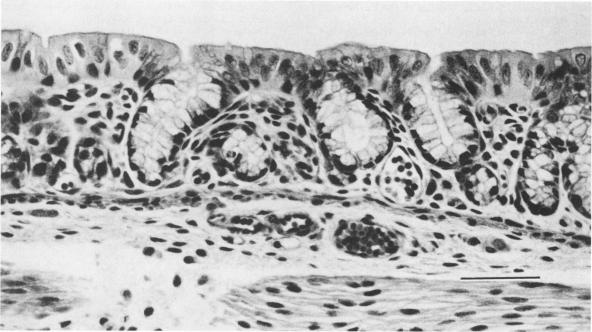
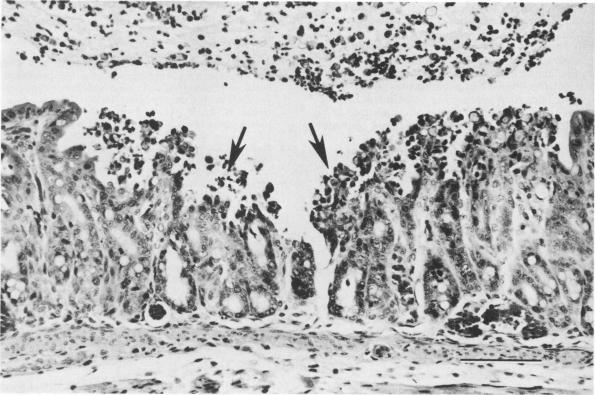
Enterotoxigenic Bacteroides fragilis caused severe, nonhemorrhagic, watery diarrhea when 10(9) CFU of a porcine or human isolate was administered orogastrically to 3-day-old rabbits. The bacterium colonized the intestinal tract with a predilection for the large intestine (10(9) CFU/g of cecal contents). Diarrhea occurred at an average of 4.6 days postinoculation, and 84% of rabbits were dead or moribund at an average of 8.8 days postinoculation. The disease was characterized by watery diarrhea and dehydration. Severe histologic lesions including inflammation, exfoliation of epithelial cells, and crypt hyperplasia were observed throughout the colon. There was no indication of bacteremia or of bacterial adherence to or invasion of intestinal epithelial cells. Rabbits inoculated with nonenterotoxigenic B. fragilis were colonized with B. fragilis but did not develop clinical disease or intestinal lesions. While the pathogenesis of this disease is undefined, clinical signs of disease and histologic changes were consistent with a mechanism of net secretion of fluid into the small intestine and decreased absorption of fluid from the large intestine. Enteric disease caused by enterotoxigenic B. fragilis in infant rabbits was similar to naturally occurring enteric disease associated with the bacterium in humans and livestock. This study established that enterotoxigenic B. fragilis is enteropathogenic in intact infant rabbits.
当给3日龄的兔子经口胃途径接种10⁹CFU的猪源或人源脆弱拟杆菌产肠毒素菌株时,会引发严重的、非出血性的水样腹泻。该细菌在肠道内定植,尤其倾向于在大肠定植(盲肠内容物中达10⁹CFU/g)。腹泻平均在接种后4.6天出现,平均在接种后8.8天,84%的兔子死亡或濒死。该病的特征为水样腹泻和脱水。在整个结肠观察到严重的组织学病变,包括炎症、上皮细胞脱落和隐窝增生。没有菌血症的迹象,也没有细菌粘附或侵入肠上皮细胞的迹象。接种非产肠毒素脆弱拟杆菌的兔子被脆弱拟杆菌定植,但未出现临床疾病或肠道病变。虽然该病的发病机制尚不清楚,但疾病的临床症状和组织学变化与液体向小肠净分泌以及大肠对液体吸收减少的机制一致。产肠毒素脆弱拟杆菌在幼兔中引起的肠道疾病与人类和家畜中与该细菌相关的自然发生的肠道疾病相似。本研究证实产肠毒素脆弱拟杆菌在完整的幼兔中具有肠道致病性。