Markov O V, Mironova N L, Vlasov V V, Zenkova M A
Institute of Chemical Biology and Fundamental Medicine, Lavrentieva Ave., 8, Novosibirsk, 630090 , Russia.
Acta Naturae. 2016 Jul-Sep;8(3):17-30.
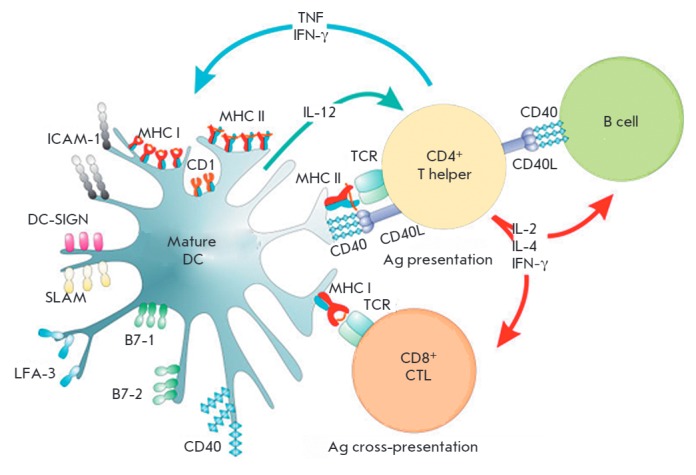
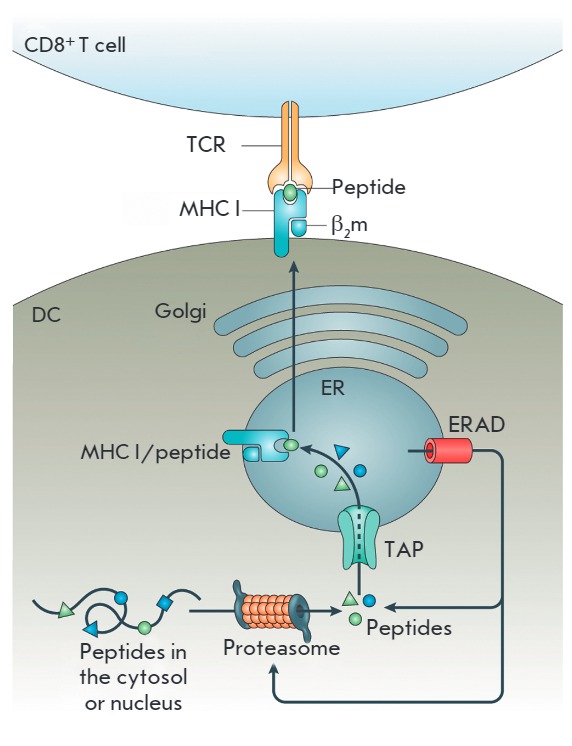
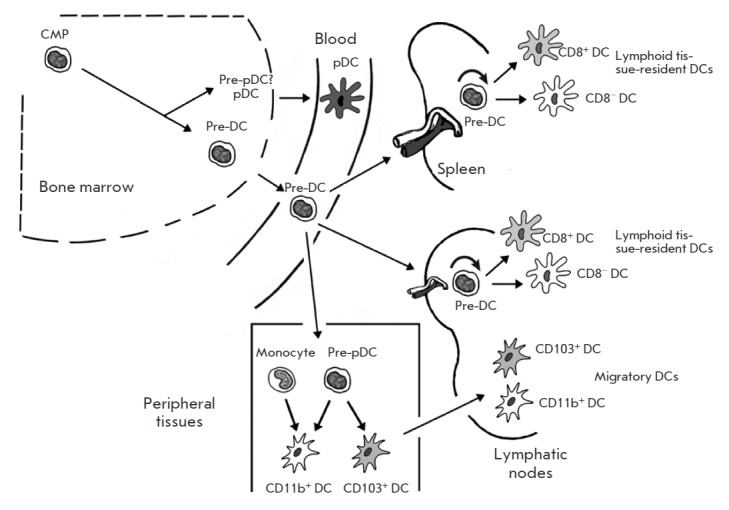
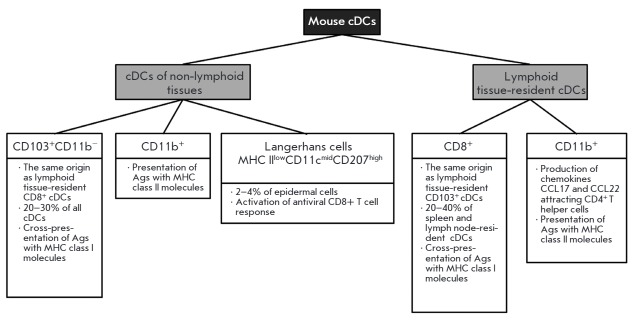
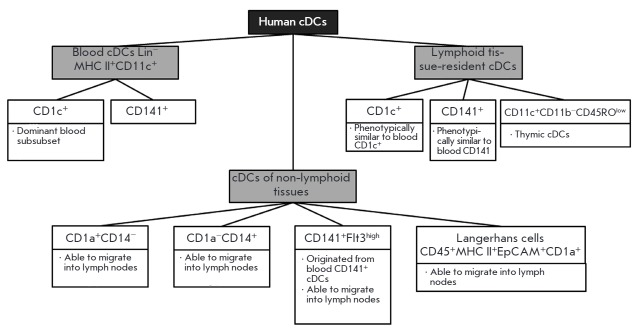
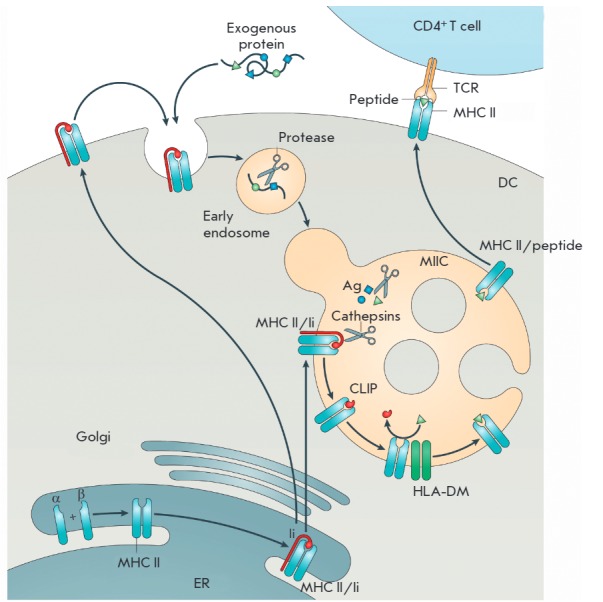
Dendritic cells (DCs) play a crucial role in the initiation and regulation of the antitumor immune response. Already , DC-based antitumor vaccines have been thoroughly explored both in animal tumor models and in clinical trials. DC-based vaccines are commonly produced from DC progenitors isolated from peripheral blood or bone marrow by culturing in the presence of cytokines, followed by loading the DCs with tumor-specific antigens, such as DNA, RNA, viral vectors, or a tumor cell lysate. However, the efficacy of DC-based vaccines remains low. Undoubtedly, a deeper understanding of the molecular mechanisms by which DCs function would allow us to enhance the antitumor efficacy of DC-based vaccines in clinical applications. This review describes the origin and major subsets of mouse and human DCs, as well as the differences between them. The cellular mechanisms of presentation and cross-presentation of exogenous antigens by DCs to T cells are described. We discuss intracellular antigen processing in DCs, cross-dressing, and the acquisition of the antigen cross-presentation function. A particular section in the review describes the mechanisms of tumor escape from immune surveillance through the suppression of DCs functions.
树突状细胞(DCs)在抗肿瘤免疫反应的启动和调节中起着关键作用。目前,基于DC的抗肿瘤疫苗已在动物肿瘤模型和临床试验中得到充分研究。基于DC的疫苗通常由从外周血或骨髓中分离出的DC祖细胞在细胞因子存在的情况下培养产生,随后用肿瘤特异性抗原(如DNA、RNA、病毒载体或肿瘤细胞裂解物)加载DC。然而,基于DC的疫苗的疗效仍然较低。毫无疑问,深入了解DC发挥功能的分子机制将使我们能够在临床应用中提高基于DC的疫苗的抗肿瘤疗效。本综述描述了小鼠和人类DC的起源和主要亚群,以及它们之间的差异。描述了DC将外源性抗原呈递给T细胞以及交叉呈递的细胞机制。我们讨论了DC中的细胞内抗原加工、交叉着装以及抗原交叉呈递功能的获得。综述中的一个特定部分描述了肿瘤通过抑制DC功能逃避免疫监视的机制。