Timpka Simon, Macdonald-Wallis Corrie, Hughes Alun D, Chaturvedi Nishi, Franks Paul W, Lawlor Debbie A, Fraser Abigail
Genetic and Molecular Epidemiology Unit, Lund University Diabetes Center, Lund University, Malmö, Sweden
School of Social and Community Medicine, University of Bristol, United Kingdom.
J Am Heart Assoc. 2016 Oct 31;5(11):e003906. doi: 10.1161/JAHA.116.003906.
Fetal exposure to preeclampsia is associated with higher blood pressure and later risk of stroke. We aimed to investigate the associations of maternal preeclampsia, gestational hypertension, and maternal blood pressure change in pregnancy with offspring cardiac structure and function in adolescence.
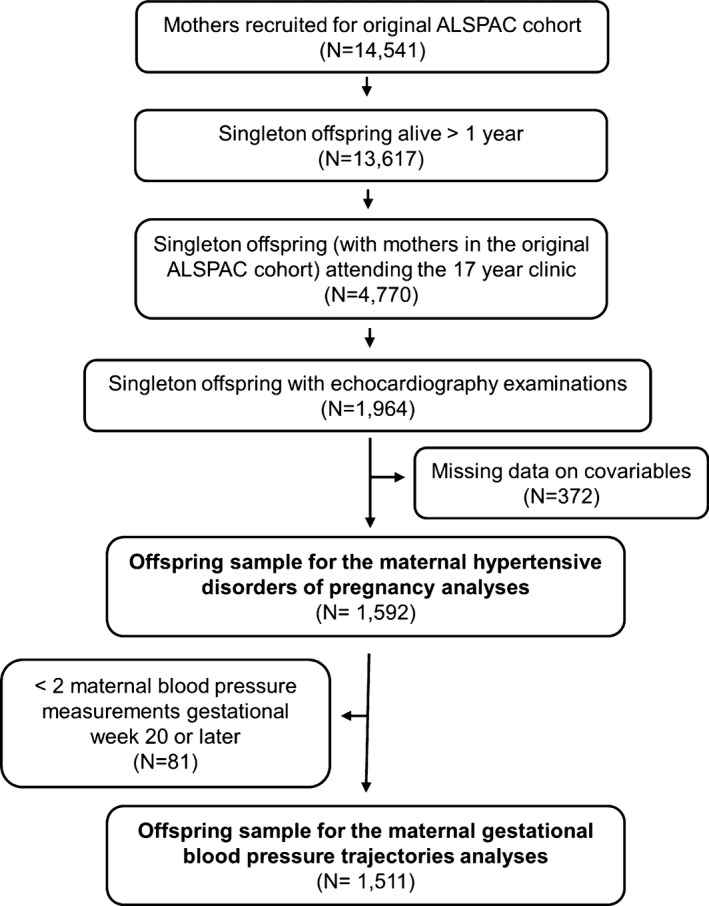
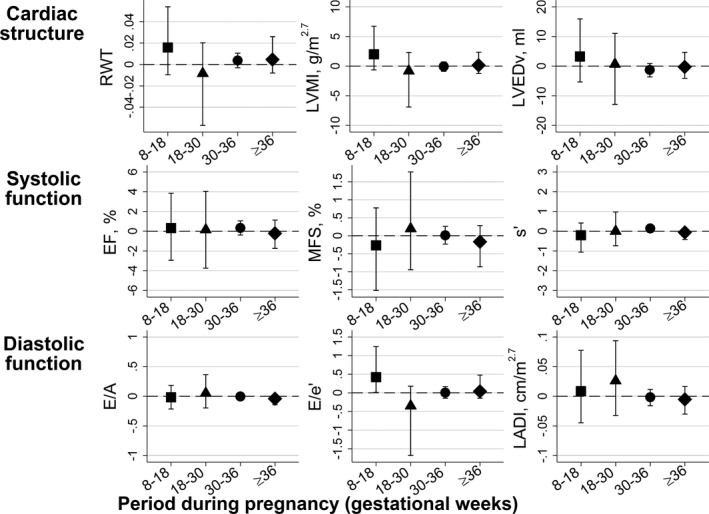
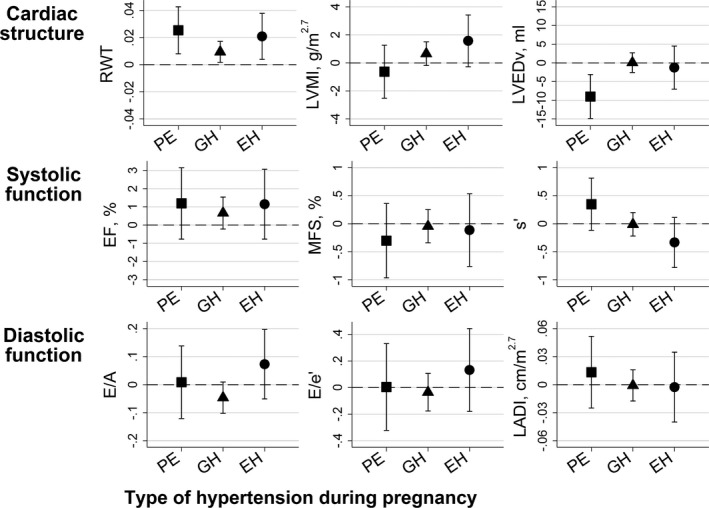
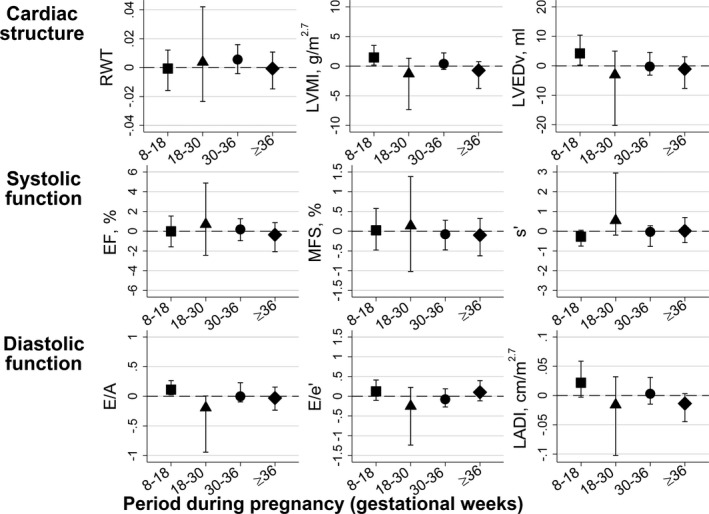
Using data from a prospective birth cohort study, we included offspring who underwent echocardiography (mean age, 17.7 years; SD, 0.3; N=1592). We examined whether hypertensive disorders of pregnancy were associated with offspring cardiac structure and systolic/diastolic function using linear regression. Using multilevel linear spline models (measurement occasions within women), we also investigated whether rate of maternal systolic/diastolic blood pressure change during pregnancy (weeks 8-18, 18-30, 30-36, and 36 or more) were associated with offspring outcomes. Main models were typically adjusted for maternal age, offspring age and sex, prepregnancy body mass index, parity, glycosuria/diabetes mellitus, education, and maternal smoking. Exposure to maternal preeclampsia (0.025; 95% CI, 0.008-0.043) and gestational hypertension (0.010; 0.002-0.017) were associated with greater relative wall thickness. Furthermore, preeclampsia was also associated with a smaller left ventricular end-diastolic volume (-9.0 mL; -15 to -3.1). No associations were found between hypertensive disorders of pregnancy and offspring cardiac function. Positive rate of maternal systolic blood pressure change during weeks 8 to 18 was associated with greater offspring left ventricular end-diastolic volume, left ventricular mass indexed to height, and E/A.
Adolescent offspring exposed to maternal preeclampsia had greater relative wall thickness and reduced left ventricular end-diastolic volume, which could be early signs of concentric remodeling and affect future cardiac function as well as risk of cardiovascular disease.
胎儿暴露于子痫前期与血压升高及日后中风风险增加有关。我们旨在研究母体子痫前期、妊娠期高血压以及孕期母体血压变化与青少年后代心脏结构和功能之间的关联。
利用一项前瞻性出生队列研究的数据,我们纳入了接受超声心动图检查的后代(平均年龄17.7岁;标准差0.3;N = 1592)。我们使用线性回归分析妊娠高血压疾病是否与后代心脏结构及收缩/舒张功能相关。使用多水平线性样条模型(女性个体内的测量时间点),我们还研究了孕期(第8 - 18周、18 - 30周、30 - 36周以及36周及以后)母体收缩压/舒张压变化率是否与后代结局相关。主要模型通常对母体年龄、后代年龄和性别、孕前体重指数、产次、糖尿/糖尿病、教育程度以及母体吸烟情况进行了校正。暴露于母体子痫前期(0.025;95%可信区间,0.008 - 0.043)和妊娠期高血压(0.010;0.002 - 0.017)与相对室壁厚度增加有关。此外,子痫前期还与左心室舒张末期容积减小(-9.0 mL;-15至-3.1)有关。未发现妊娠高血压疾病与后代心脏功能之间存在关联。孕期第8至18周母体收缩压变化的正值与后代更大的左心室舒张末期容积、身高校正后的左心室质量以及E/A相关。
暴露于母体子痫前期的青少年后代有更大的相对室壁厚度和减小的左心室舒张末期容积,这可能是向心性重塑的早期迹象,并会影响未来的心脏功能以及心血管疾病风险。