Department of Pharmacology and Toxicology, Ernest Mario School of Pharmacy, Environmental and Occupational Health Sciences Institute, Rutgers the State University of New Jersey, Piscataway, NJ 08854, USA.
Int J Environ Res Public Health. 2012 Aug;9(8):2875-93. doi: 10.3390/ijerph9082875. Epub 2012 Aug 14.
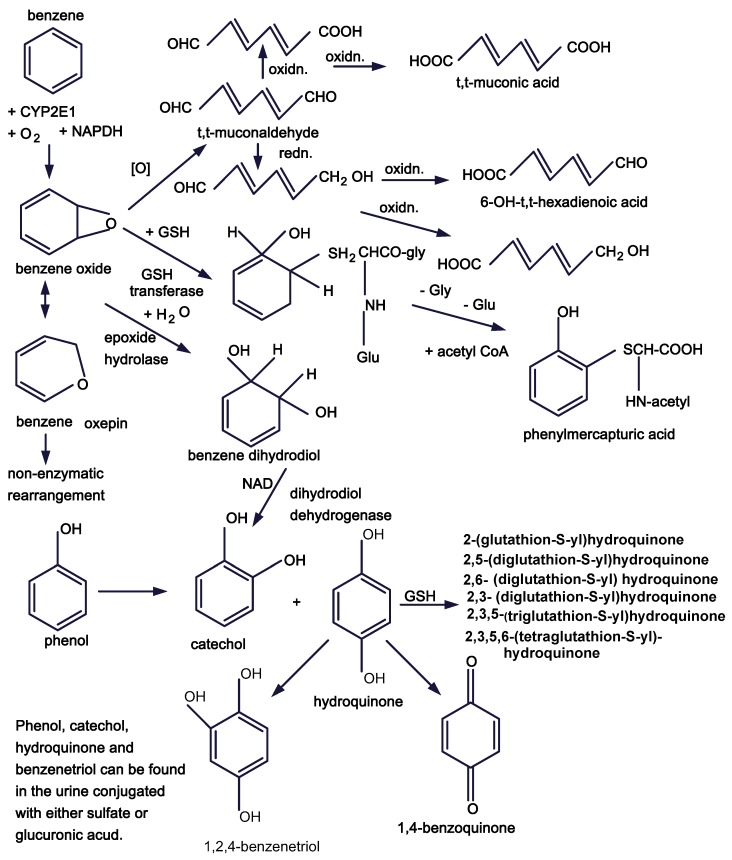
Excessive exposure to benzene has been known for more than a century to damage the bone marrow resulting in decreases in the numbers of circulating blood cells, and ultimately, aplastic anemia. Of more recent vintage has been the appreciation that an alternative outcome of benzene exposure has been the development of one or more types of leukemia. While many investigators agree that the array of toxic metabolites, generated in the liver or in the bone marrow, can lead to traumatic bone marrow injury, the more subtle mechanisms leading to leukemia have yet to be critically dissected. This problem appears to have more general interest because of the recognition that so-called "second cancer" that results from prior treatment with alkylating agents to yield tumor remissions, often results in a type of leukemia reminiscent of benzene-induced leukemia. Furthermore, there is a growing literature attempting to characterize the fine structure of the marrow and the identification of so called "niches" that house a variety of stem cells and other types of cells. Some of these "niches" may harbor cells capable of initiating leukemias. The control of stem cell differentiation and proliferation via both inter- and intra-cellular signaling will ultimately determine the fate of these transformed stem cells. The ability of these cells to avoid checkpoints that would prevent them from contributing to the leukemogenic response is an additional area for study. Much of the study of benzene-induced bone marrow damage has concentrated on determining which of the benzene metabolites lead to leukemogenesis. The emphasis now should be directed to understanding how benzene metabolites alter bone marrow cell biology.
一个多世纪以来,人们已经知道过量接触苯会损害骨髓,导致循环血细胞数量减少,最终导致再生障碍性贫血。最近人们认识到,苯暴露的另一种后果是发展为一种或多种类型的白血病。虽然许多研究人员都认为,在肝脏或骨髓中产生的一系列有毒代谢物会导致外伤性骨髓损伤,但导致白血病的更微妙机制仍有待仔细分析。由于认识到先前用烷化剂治疗以产生肿瘤缓解的所谓“第二癌症”通常会导致类似于苯诱导的白血病的白血病,因此这个问题似乎具有更普遍的意义。此外,越来越多的文献试图描述骨髓的精细结构,并确定所谓的“龛”,这些龛容纳了各种干细胞和其他类型的细胞。其中一些“龛”可能含有能够引发白血病的细胞。通过细胞间和细胞内信号传导来控制干细胞的分化和增殖,最终将决定这些转化干细胞的命运。这些细胞逃避阻止它们引发白血病反应的检查点的能力是另一个需要研究的领域。苯致骨髓损伤的研究大多集中在确定哪些苯代谢物导致白血病发生。现在的重点应该是理解苯代谢物如何改变骨髓细胞生物学。