Baron Sandrine, Lesne Jean, Jouy Eric, Larvor Emeline, Kempf Isabelle, Boncy Jacques, Rebaudet Stanilas, Piarroux Renaud
Mycoplasmology-Bacteriology Unit, Ploufragan-Plouzané Laboratory, French Agency for Food, Environmental and Occupational Health & SafetyPloufragan, France; Vie-Agro-Santé, Bretagne-Loire UniversityRennes, France.
National Public Health Laboratory, Ministry of Public Health and Population Port au Prince, Haiti.
Front Microbiol. 2016 Oct 21;7:1671. doi: 10.3389/fmicb.2016.01671. eCollection 2016.
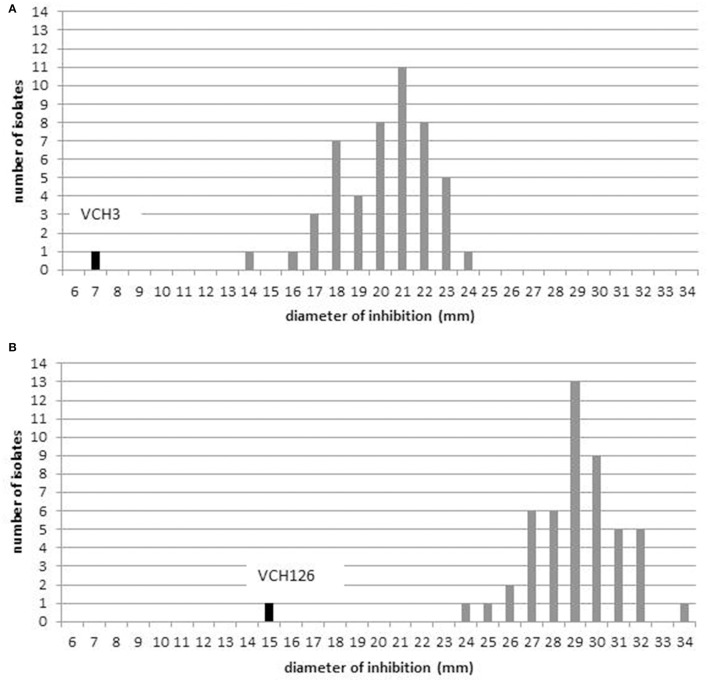
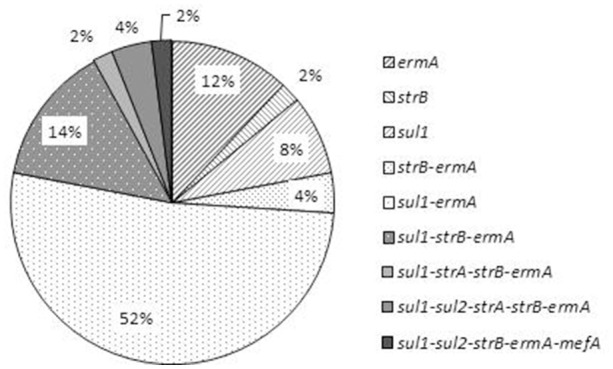
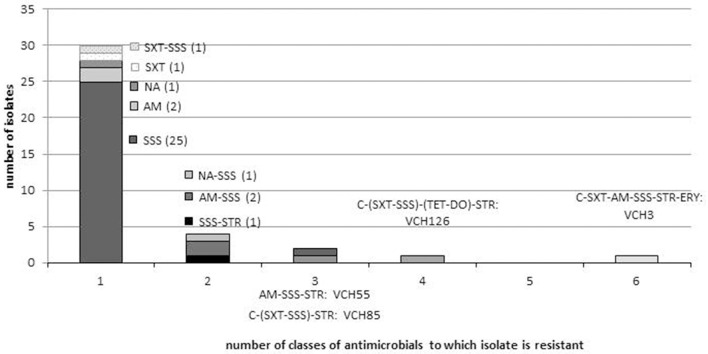
We investigated the antimicrobial susceptibility of 50 environmental isolates of non-O1/non-O139 collected in surface waters in Haiti in July 2012, during an active cholera outbreak. A panel of 16 antibiotics was tested on the isolates using the disk diffusion method and PCR detection of seven resistance-associated genes (/, s//, and ). All isolates were susceptible to amoxicillin-clavulanic acid, cefotaxime, imipenem, ciprofloxacin, norfloxacin, amikacin, and gentamicin. Nearly a quarter (22.0%) of the isolates were susceptible to all 16 antimicrobials tested and only 8.0% of the isolates ( = 4) were multidrug-resistant. The highest proportions of resistant isolates were observed for sulfonamide (70.0%), amoxicillin (12.0%), and trimethoprim-sulfamethoxazole (10.0%). One strain was resistant to erythromycin and one to doxycycline, two antibiotics used to treat cholera in Haiti. Among the 50 isolates, 78% possessed at least two resistance-associated genes, and the genes A, and B were detected in all four multidrug-resistant isolates. Our results clearly indicate that the autochthonous population of non-O1/non-O139 found in surface waters in Haiti shows antimicrobial patterns different from that of the outbreak strain. The presence in the Haitian aquatic environment of non-O1/non-O139 with reduced susceptibility or resistance to antibiotics used in human medicine may constitute a mild public health threat.
2012年7月霍乱疫情活跃期间,我们对海地地表水中采集的50株非O1/非O139环境分离株进行了抗菌药敏性研究。使用纸片扩散法对这些分离株进行了16种抗生素检测,并通过PCR检测了7个耐药相关基因(、s//和)。所有分离株对阿莫西林-克拉维酸、头孢噻肟、亚胺培南、环丙沙星、诺氟沙星、阿米卡星和庆大霉素敏感。近四分之一(22.0%)的分离株对所有16种测试抗菌药物敏感,仅有8.0%的分离株(=4)为多重耐药。磺胺类(70.0%)、阿莫西林(12.0%)和甲氧苄啶-磺胺甲恶唑(10.0%)的耐药分离株比例最高。有1株对红霉素耐药,1株对多西环素耐药,这两种抗生素用于海地霍乱治疗。在50株分离株中,78%至少拥有两个耐药相关基因,在所有4株多重耐药分离株中均检测到基因A和B。我们的结果清楚地表明,海地地表水中发现的非O1/非O139本地菌群显示出与疫情菌株不同的抗菌模式。海地水生环境中存在对人类医学中使用的抗生素敏感性降低或耐药的非O1/非O139可能构成轻度公共卫生威胁。