Nilsonne Gustav, Lekander Mats, Åkerstedt Torbjörn, Axelsson John, Ingre Michael
Stockholm University, Stress Research Institute, Stockholm, Sweden.
Karolinska Institutet, Department of Clinical Neuroscience, Stockholm, Sweden.
PLoS One. 2016 Nov 10;11(11):e0165799. doi: 10.1371/journal.pone.0165799. eCollection 2016.
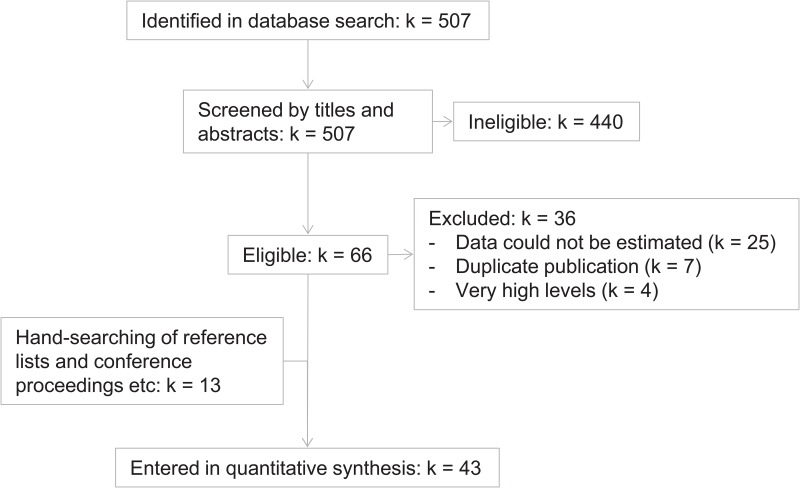
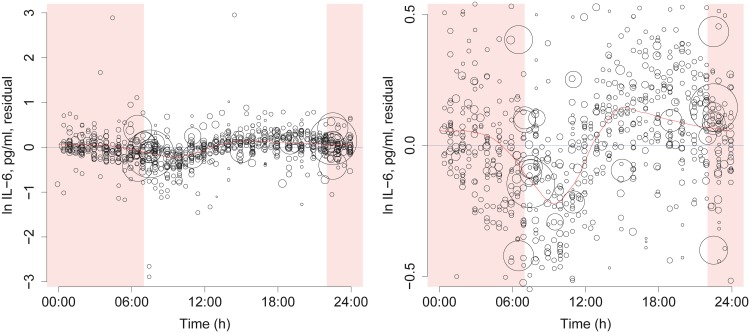
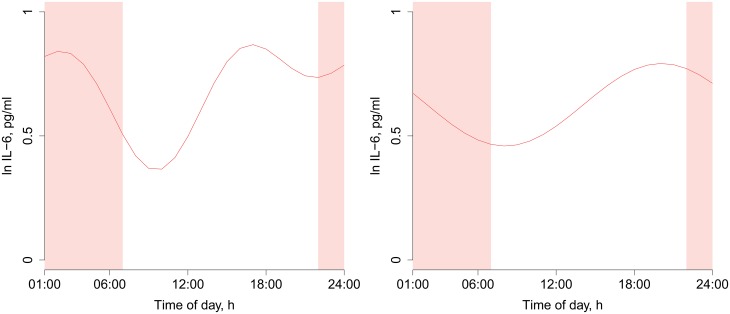
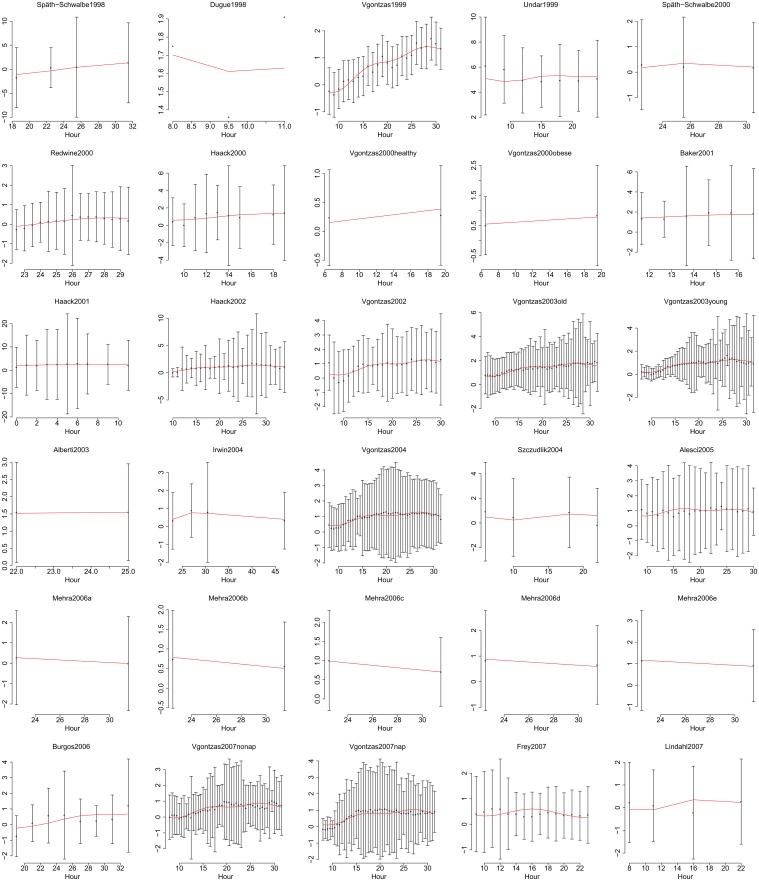
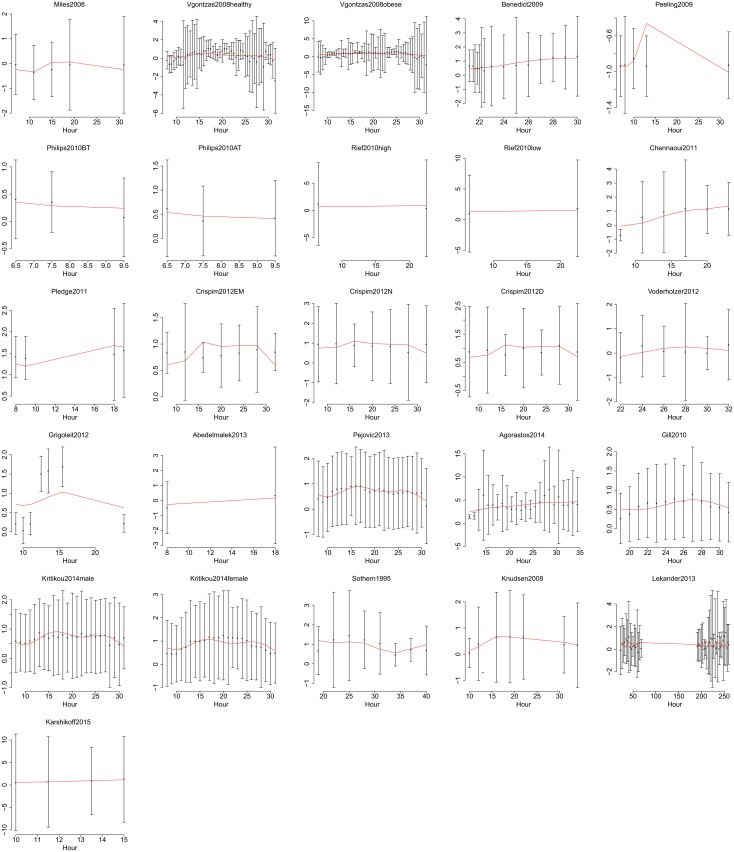
The pleiotropic cytokine interleukin-6 (IL-6) has been proposed to contribute to circadian regulation of sleepiness by increasing in the blood at night. Earlier studies have reported diurnal variation of IL-6, but phase estimates are conflicting. We have therefore performed a meta-analysis on the diurnal variation of circulating IL-6. Studies were included if they reported IL-6 in plasma or serum recorded at least twice within 24 hours in the same individual. A systematic search resulted in the inclusion of 43 studies with 56 datasets, for a total of 1100 participants. Individual participant data were available from 4 datasets with a total of 56 participants. Mixed-effects meta-regression modelling confirmed that IL-6 varied across the day, the most conspicuous effect being a trough in the morning. These results stand in contrast to earlier findings of a peak in the evening or night, and suggest that diurnal variation should be taken into account in order to avoid confounding by time of day in studies of IL-6 in plasma or serum.
多效性细胞因子白细胞介素-6(IL-6)被认为通过在夜间血液中水平升高而参与昼夜节律性嗜睡调节。早期研究报道了IL-6的昼夜变化,但相位估计存在冲突。因此,我们对循环IL-6的昼夜变化进行了荟萃分析。如果研究报告了同一受试者在24小时内至少两次记录的血浆或血清中的IL-6,则纳入该研究。系统检索后纳入了43项研究,共56个数据集,涉及1100名参与者。4个数据集提供了个体参与者数据,共56名参与者。混合效应荟萃回归模型证实,IL-6在一天中有所变化,最显著的效应是早晨出现低谷。这些结果与早期关于傍晚或夜间出现峰值的发现形成对比,表明在血浆或血清中IL-6的研究中,为避免昼夜时间的混杂影响,应考虑昼夜变化。