Zhu Jiao, Iovinella Immacolata, Dani Francesca Romana, Liu Yu-Ling, Huang Ling-Qiao, Liu Yang, Wang Chen-Zhu, Pelosi Paolo, Wang Guirong
State Key Laboratory for Biology of Plant Diseases and Insect Pests, Institute of Plant Protection, Chinese Academy of Agricultural Sciences, Beijing 100193, China.
State Key Laboratory of Integrated Management of Pest Insects and Rodents, Institute of Zoology, Chinese Academy of Sciences, Beijing 100101, P.R. China; Dipartimento di Biologia, Università degli Studi di Firenze, 50019 Sesto Fiorentino (Firenze), Italy.
Int J Biol Sci. 2016 Oct 26;12(11):1394-1404. doi: 10.7150/ijbs.16517. eCollection 2016.
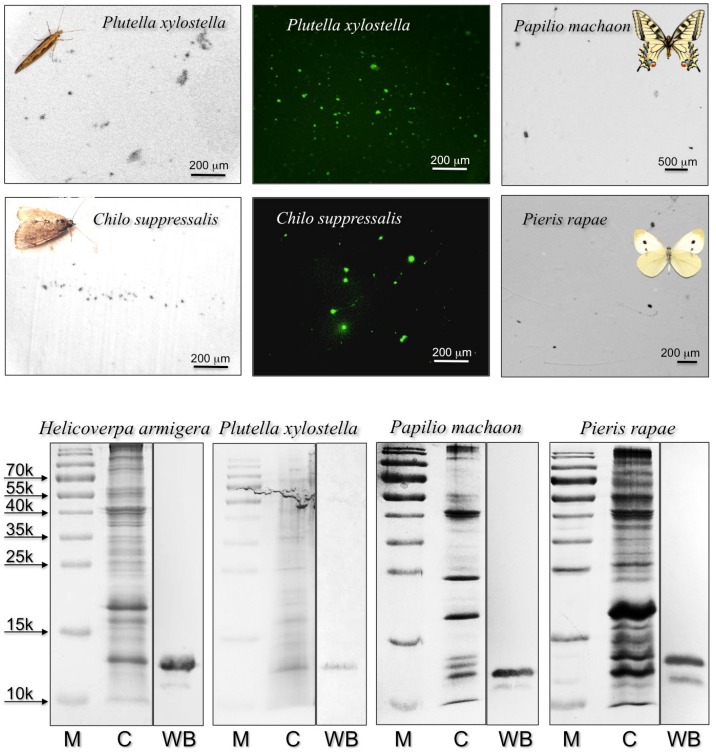
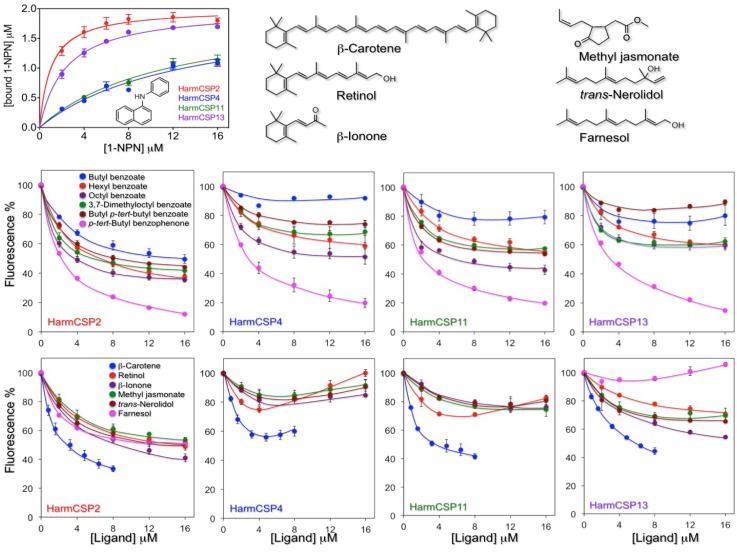
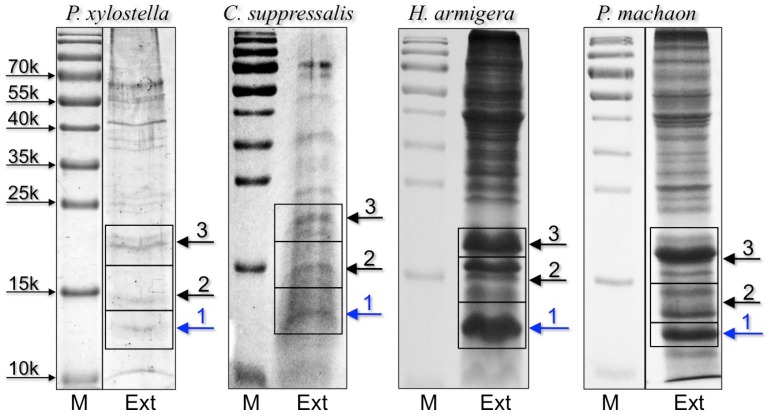
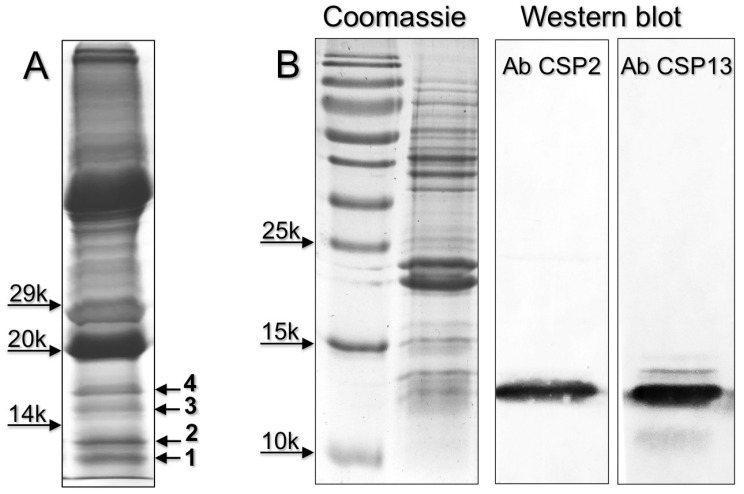
Odorant-binding proteins (OBPs) and chemosensory proteins (CSPs) are endowed with several different functions besides being carriers for pheromones and odorants. Based on a previous report of a CSP acting as surfactant in the proboscis of the moth , we revealed the presence of orthologue proteins in two other moths and , as well as two butterflies and , using immunodetection and proteomic analysis. The unusual conservation of these proteins across large phylogenetic distances indicated a common specific function for these CSPs. This fact prompted us to search for other functions of these proteins and discovered that CSPs are abundantly expressed in the eyes of and possibly involved as carriers for carotenoids and visual pigments. This hypothesis is supported by ligand-binding experiments and docking simulations with retinol and β-carotene. This last orange pigment, occurring in many fruits and vegetables, is an antioxidant and the precursor of visual pigments. We propose that structurally related CSPs solubilise nutritionally important carotenoids in the proboscis, while they act as carriers of both β-carotene and its derived products 3-hydroxyretinol and 3-hydroxyretinal in the eye. The use of soluble olfactory proteins, such as CSPs, as carriers for visual pigments in insects, here reported for the first time, parallels the function of retinol-binding protein in vertebrates, a lipocalin structurally related to vertebrate odorant-binding proteins.
气味结合蛋白(OBPs)和化学感受蛋白(CSPs)除了作为信息素和气味剂的载体外,还具有多种不同功能。基于之前一份关于一种CSP在蛾类喙中充当表面活性剂的报告,我们通过免疫检测和蛋白质组分析,在另外两种蛾类以及两种蝴蝶中发现了同源蛋白。这些蛋白在较大的系统发育距离上具有异常的保守性,这表明这些CSP具有共同的特定功能。这一事实促使我们寻找这些蛋白的其他功能,并发现CSPs在[具体物种]的眼睛中大量表达,可能作为类胡萝卜素和视觉色素的载体。配体结合实验以及视黄醇和β - 胡萝卜素的对接模拟支持了这一假设。最后这种橙色色素存在于许多水果和蔬菜中,是一种抗氧化剂和视觉色素的前体。我们提出,结构相关的CSPs在喙中使营养重要的类胡萝卜素溶解,而在眼睛中它们作为β - 胡萝卜素及其衍生产物3 - 羟基视黄醇和3 - 羟基视黄醛的载体。本文首次报道了昆虫中使用可溶性嗅觉蛋白(如CSPs)作为视觉色素的载体,这与脊椎动物中视黄醇结合蛋白的功能相似,视黄醇结合蛋白是一种与脊椎动物气味结合蛋白结构相关的脂质运载蛋白。