Happel Christine, Ramalingam Dhivya, Ziegelbauer Joseph M
HIV and AIDS Malignancy Branch, National Cancer Institute, National Institutes of Health, Bethesda, Maryland, United States of America.
PLoS Biol. 2016 Nov 28;14(11):e2000998. doi: 10.1371/journal.pbio.2000998. eCollection 2016 Nov.
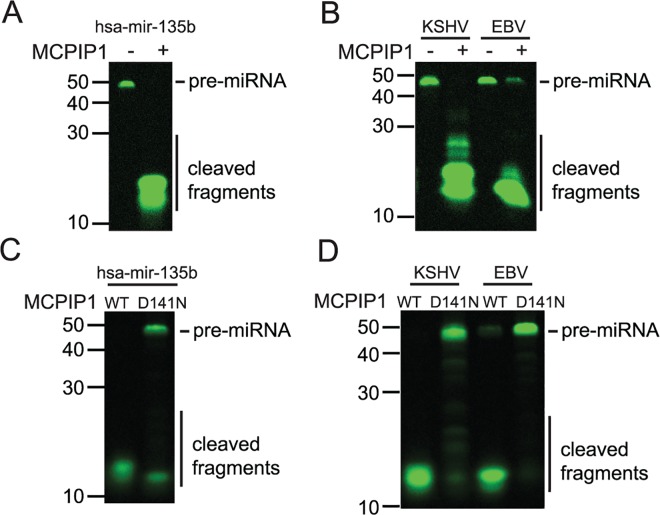
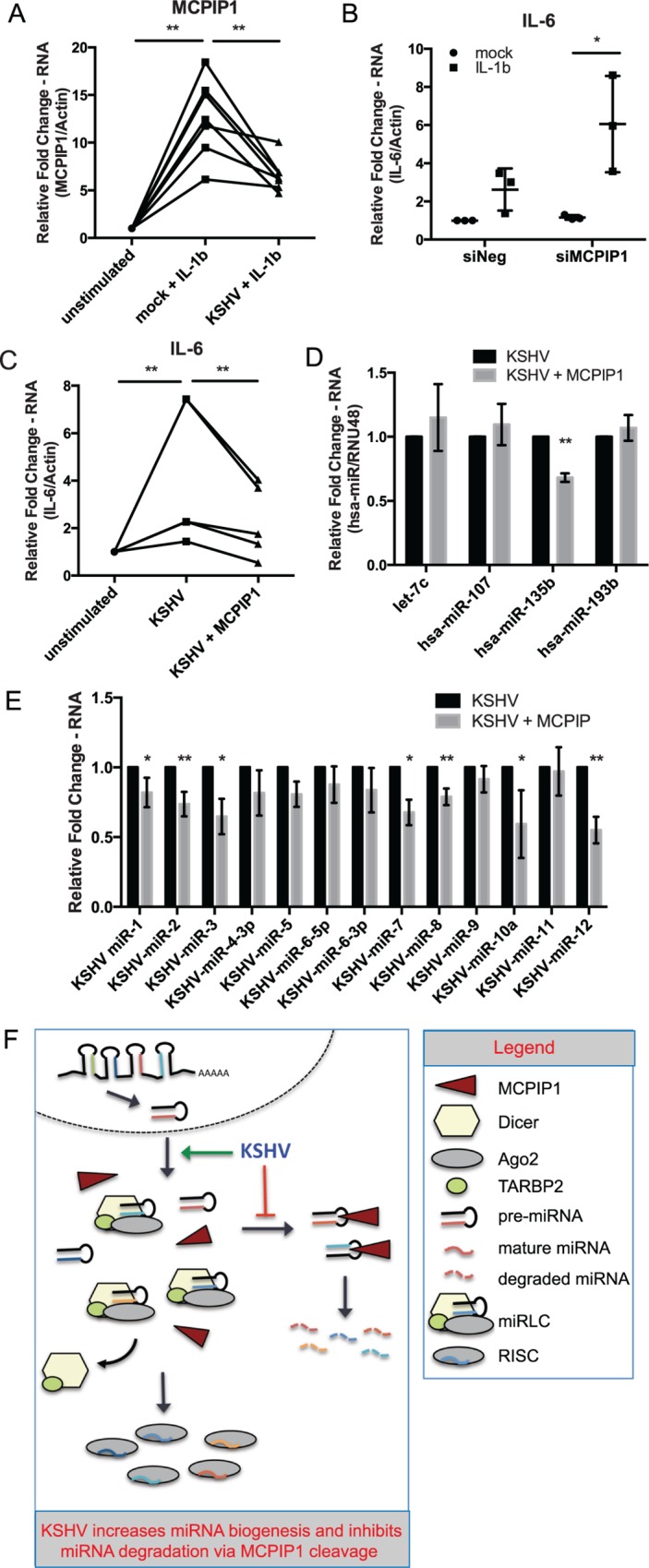
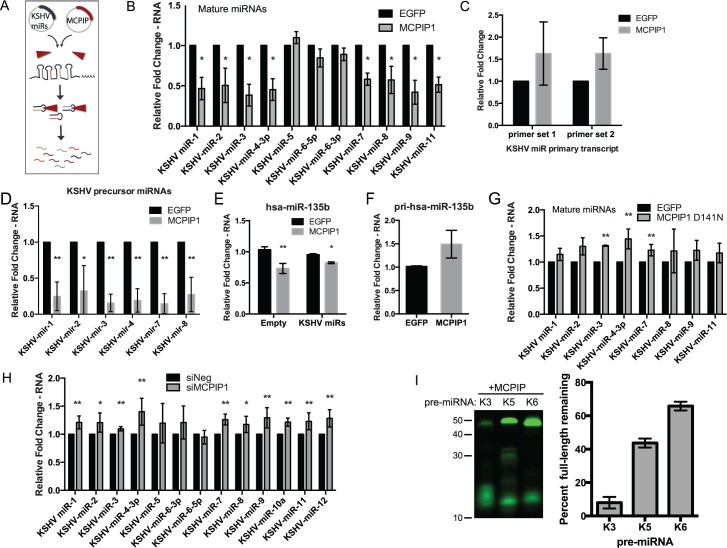
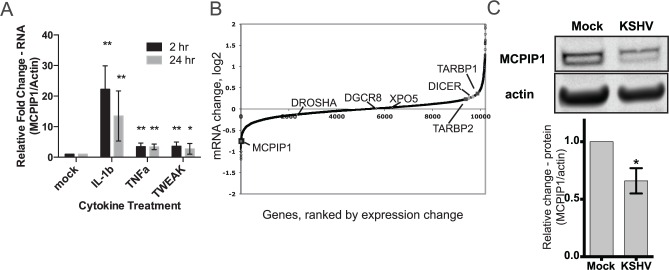
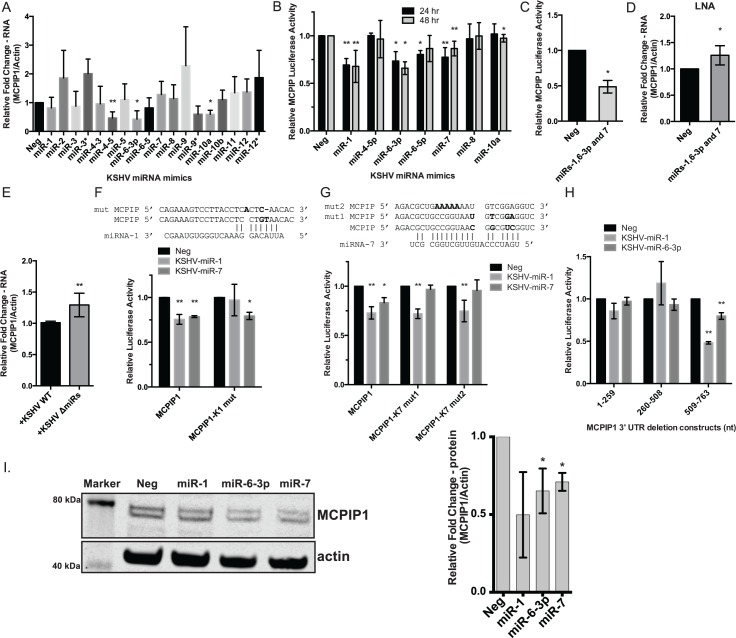
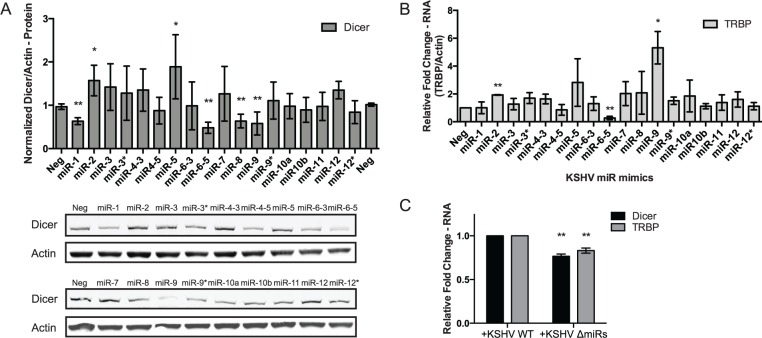
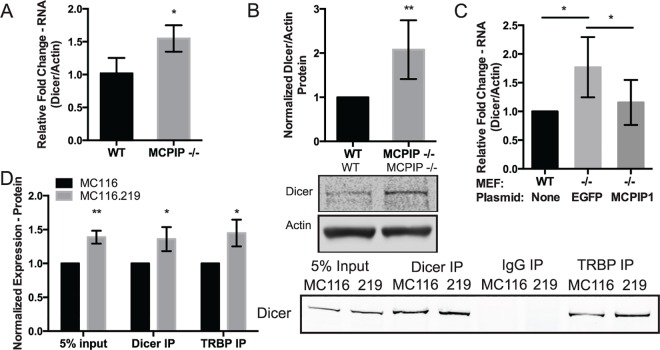
Kaposi's sarcoma-associated herpesvirus (KSHV), the causative agent of Kaposi's sarcoma, encodes 25 mature viral miRNAs. MCP-1-induced protein-1 (MCPIP1), a critical regulator of immune homeostasis, has been shown to suppress miRNA biosynthesis via cleavage of precursor miRNAs through its RNase domain. We demonstrate that MCPIP1 can directly cleave KSHV and EBV precursor miRNAs and that MCPIP1 expression is repressed following de novo KSHV infection. In addition, repression with siRNAs to MCPIP1 in KSHV-infected cells increased IL-6 and KSHV miRNA expression, supporting a role for MCPIP1 in IL-6 and KSHV miRNA regulation. We also provide evidence that KSHV miRNAs repress MCPIP1 expression by targeting the 3'UTR of MCPIP1. Conversely, expression of essential miRNA biogenesis components Dicer and TRBP is increased following latent KSHV infection. We propose that KSHV infection inhibits a negative regulator of miRNA biogenesis (MCPIP1) and up-regulates critical miRNA processing components to evade host mechanisms that inhibit expression of viral miRNAs. KSHV-mediated alterations in miRNA biogenesis represent a novel mechanism by which KSHV interacts with its host and a new mechanism for the regulation of viral miRNA expression.
卡波西肉瘤相关疱疹病毒(KSHV)是卡波西肉瘤的病原体,可编码25种成熟的病毒微小RNA(miRNA)。单核细胞趋化蛋白1诱导蛋白1(MCPIP1)是免疫稳态的关键调节因子,已被证明可通过其核糖核酸酶结构域切割前体miRNA来抑制miRNA生物合成。我们证明MCPIP1可直接切割KSHV和EBV前体miRNA,并且在KSHV初次感染后MCPIP1的表达受到抑制。此外,在KSHV感染的细胞中用针对MCPIP1的小干扰RNA(siRNA)进行抑制可增加白细胞介素6(IL-6)和KSHV miRNA的表达,这支持了MCPIP1在IL-6和KSHV miRNA调节中的作用。我们还提供证据表明KSHV miRNA通过靶向MCPIP1的3'非翻译区(3'UTR)来抑制MCPIP1的表达。相反,在KSHV潜伏感染后,miRNA生物合成必需成分Dicer和TRBP的表达增加。我们提出,KSHV感染会抑制miRNA生物合成的负调节因子(MCPIP1)并上调关键的miRNA加工成分,以逃避宿主抑制病毒miRNA表达的机制。KSHV介导的miRNA生物合成改变代表了KSHV与其宿主相互作用的一种新机制以及调节病毒miRNA表达的一种新机制。