Liverani Chiara, La Manna Federico, Groenewoud Arwin, Mercatali Laura, Van Der Pluijm Gabri, Pieri Federica, Cavaliere Davide, De Vita Alessandro, Spadazzi Chiara, Miserocchi Giacomo, Bongiovanni Alberto, Recine Federica, Riva Nada, Amadori Dino, Tasciotti Ennio, Snaar-Jagalska Ewa, Ibrahim Toni
Osteoncology and Rare Tumors Center, Istituto Scientifico Romagnolo per lo Studio e la Cura dei Tumori (IRST) IRCCS, via P. Maroncelli 40, Meldola 47014, Italy.
Leiden University Medical Center, Department of Urology, J-3-100, Albinusdreef 2, Leiden 2333ZA, The Netherlands.
Biol Open. 2017 Feb 15;6(2):133-140. doi: 10.1242/bio.022483.
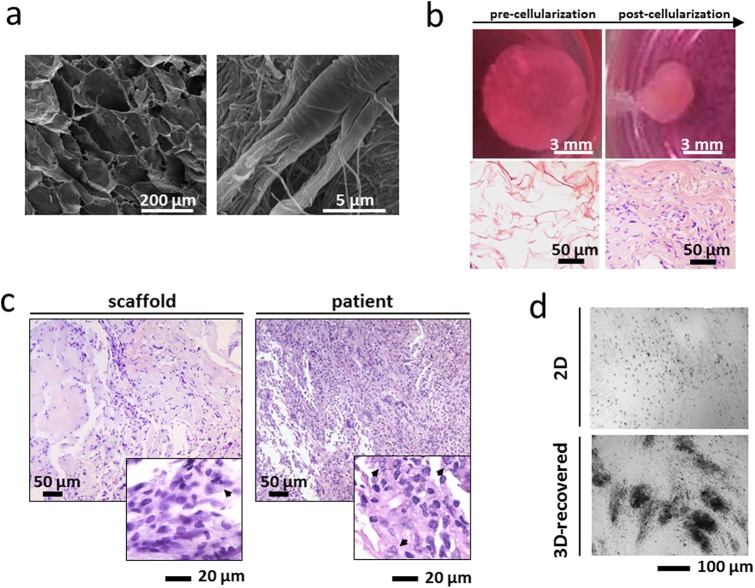
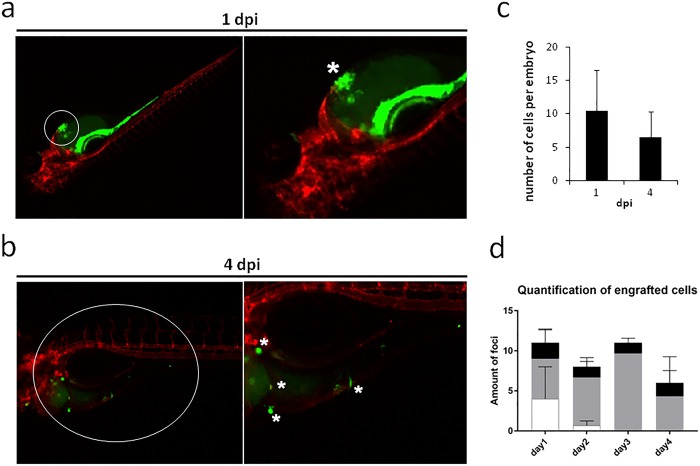
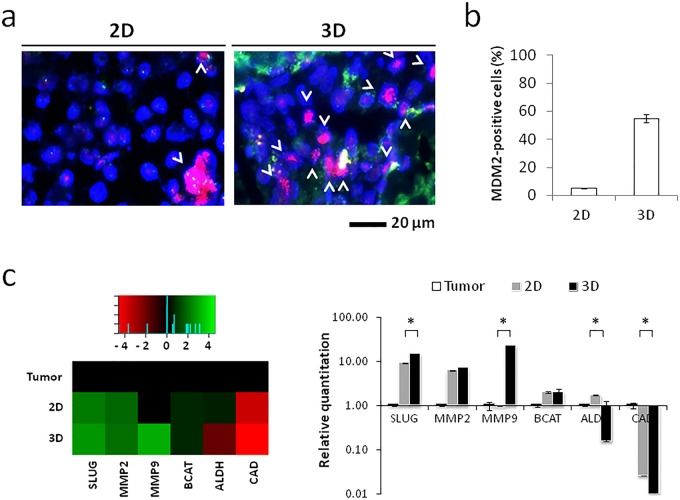
Patient-derived specimens are an invaluable resource to investigate tumor biology. However, studies on primary cultures are often limited by the small amount of material available, while conventional systems might alter the features and behavior that characterize cancer cells. We present our data obtained on primary dedifferentiated liposarcoma cells cultured in a 3D scaffold-based system and injected into a zebrafish model. Primary cells were characterized for their morphological features, sensitivity to drugs and biomarker expression, and for their engraftment and invasiveness abilities. The 3D culture showed a higher enrichment in cancer cells than the standard monolayer culture and a better preservation of liposarcoma-associated markers. We also successfully grafted primary cells into zebrafish, showing their local migratory and invasive abilities. Our work provides proof of concept of the ability of 3D cultures to maintain the original phenotype of cells, and highlights the potential of the zebrafish model to provide a versatile system for studies with limited biological material. Such models could be used in translational research studies for biomolecular analyses, drug screenings and tumor aggressiveness assays.
患者来源的标本是研究肿瘤生物学的宝贵资源。然而,原代培养的研究常常受到可用材料量少的限制,而传统系统可能会改变癌细胞的特征和行为。我们展示了在基于3D支架的系统中培养并注射到斑马鱼模型中的原发性去分化脂肪肉瘤细胞所获得的数据。对原代细胞的形态特征、药物敏感性和生物标志物表达以及它们的植入和侵袭能力进行了表征。与标准单层培养相比,3D培养显示癌细胞富集程度更高,并且更好地保留了脂肪肉瘤相关标志物。我们还成功地将原代细胞移植到斑马鱼中,展示了它们的局部迁移和侵袭能力。我们的工作为3D培养维持细胞原始表型的能力提供了概念验证,并突出了斑马鱼模型为使用有限生物材料进行研究提供通用系统的潜力。此类模型可用于生物分子分析、药物筛选和肿瘤侵袭性测定的转化研究。