State Key Laboratory of Cognitive Neuroscience and Learning &IDG/McGovern Institute for Brain Research, Beijing Normal University, Beijing 100875, China.
Institute of Affective and Social Neuroscience &College of Psychology and Sociology, Shenzhen University, Shenzhen 518060, China.
Nat Commun. 2016 Nov 29;7:13375. doi: 10.1038/ncomms13375.
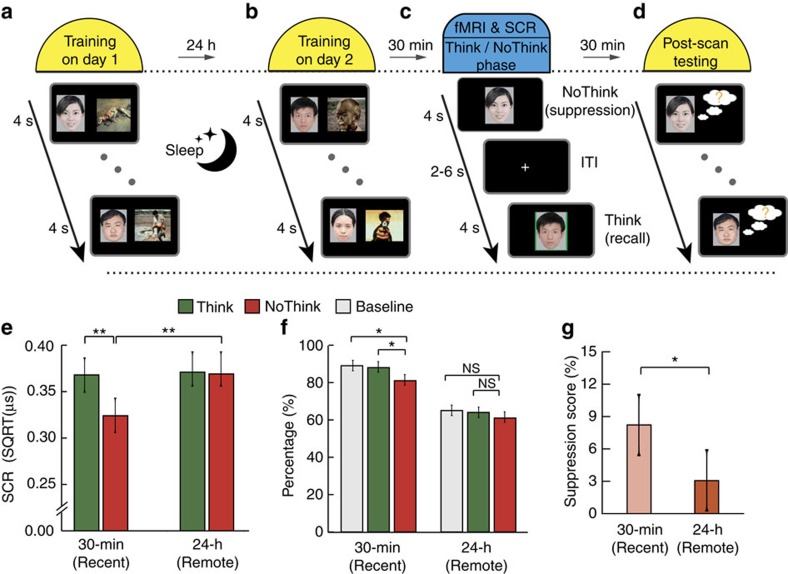
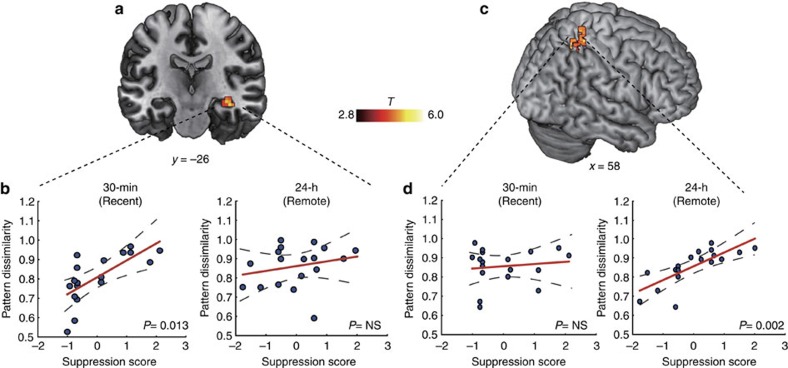
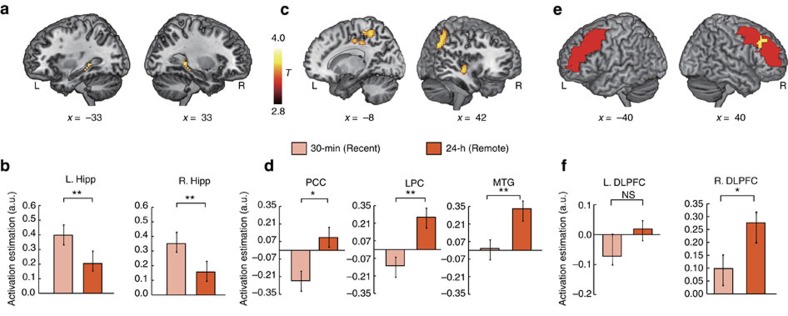
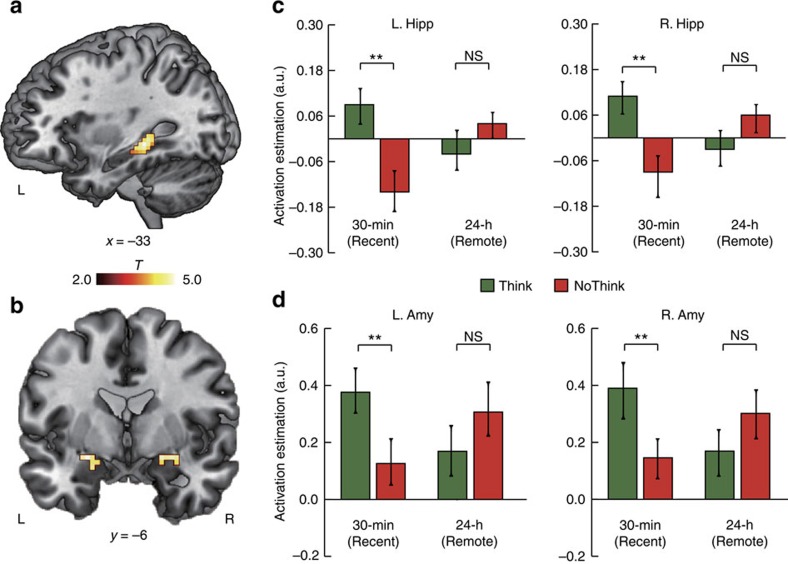
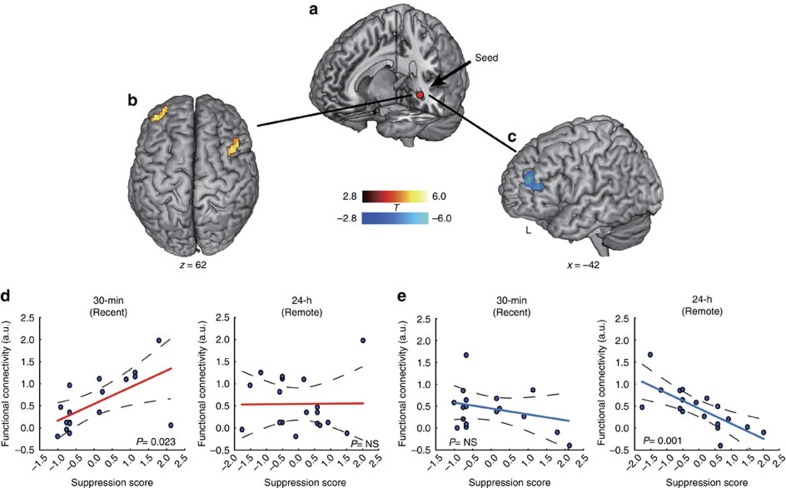
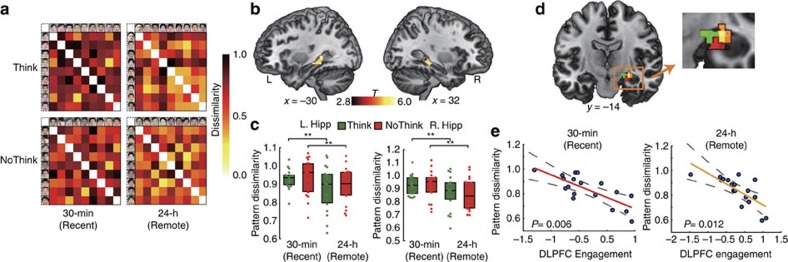
The ability to suppress unwanted emotional memories is crucial for human mental health. Through consolidation over time, emotional memories often become resistant to change. However, how consolidation impacts the effectiveness of emotional memory suppression is still unknown. Using event-related fMRI while concurrently recording skin conductance, we investigated the neurobiological processes underlying the suppression of aversive memories before and after overnight consolidation. Here we report that consolidated aversive memories retain their emotional reactivity and become more resistant to suppression. Suppression of consolidated memories involves higher prefrontal engagement, and less concomitant hippocampal and amygdala disengagement. In parallel, we show a shift away from hippocampal-dependent representational patterns to distributed neocortical representational patterns in the suppression of aversive memories after consolidation. These findings demonstrate rapid changes in emotional memory organization with overnight consolidation, and suggest possible neurobiological bases underlying the resistance to suppression of emotional memories in affective disorders.
抑制不必要的情绪记忆的能力对人类心理健康至关重要。随着时间的推移,情绪记忆通常会变得难以改变,即巩固。然而,巩固如何影响情绪记忆抑制的有效性尚不清楚。我们使用事件相关 fMRI 技术,同时记录皮肤电导率,研究了在一夜巩固前后抑制厌恶记忆的神经生物学过程。在这里,我们报告说,巩固的厌恶记忆保留了它们的情绪反应性,并且更难以抑制。巩固后的记忆抑制需要更高的前额叶参与,同时伴随更少的海马体和杏仁核脱抑制。与此平行,我们发现在巩固后抑制厌恶记忆时,代表模式从海马体依赖模式向分布式新皮层模式转变。这些发现表明,在一夜巩固过程中,情绪记忆组织会迅速发生变化,并为情感障碍中情绪记忆抑制的抵抗提供可能的神经生物学基础。