Kristóf E, Doan-Xuan Q-M, Sárvári A K, Klusóczki Á, Fischer-Posovszky P, Wabitsch M, Bacso Z, Bai P, Balajthy Z, Fésüs L
Department of Biochemistry and Molecular Biology, University of Debrecen, Debrecen, Hungary.
Department of Biophysics and Cell Biology, University of Debrecen, Debrecen, Hungary.
Transl Psychiatry. 2016 Nov 29;6(11):e963. doi: 10.1038/tp.2016.230.
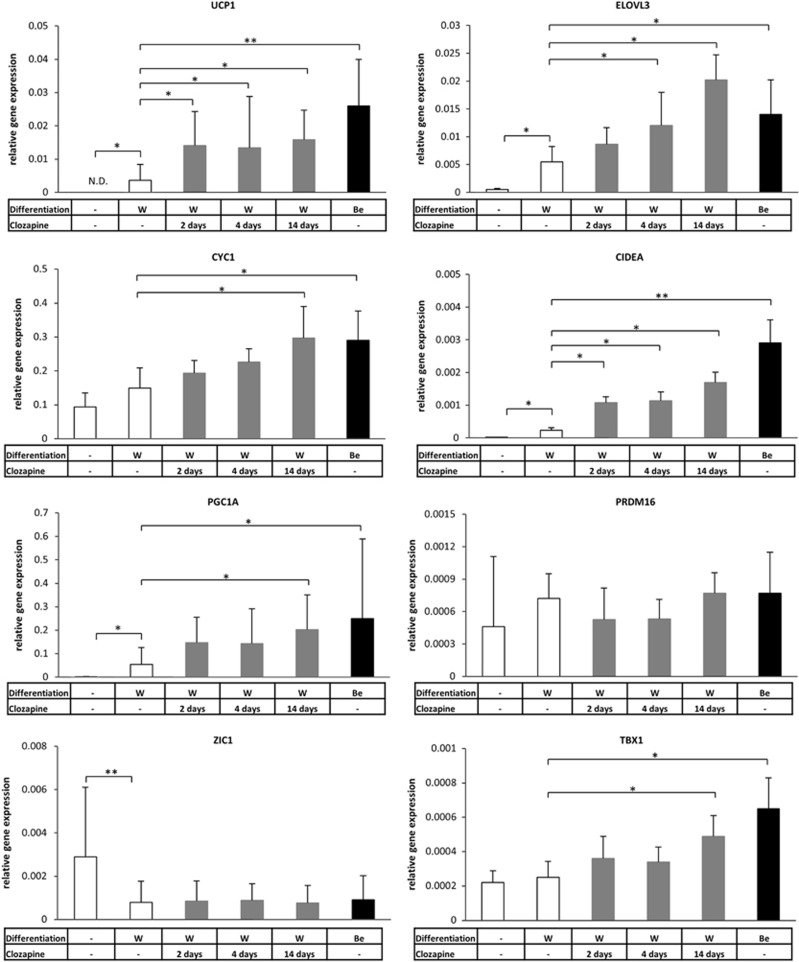
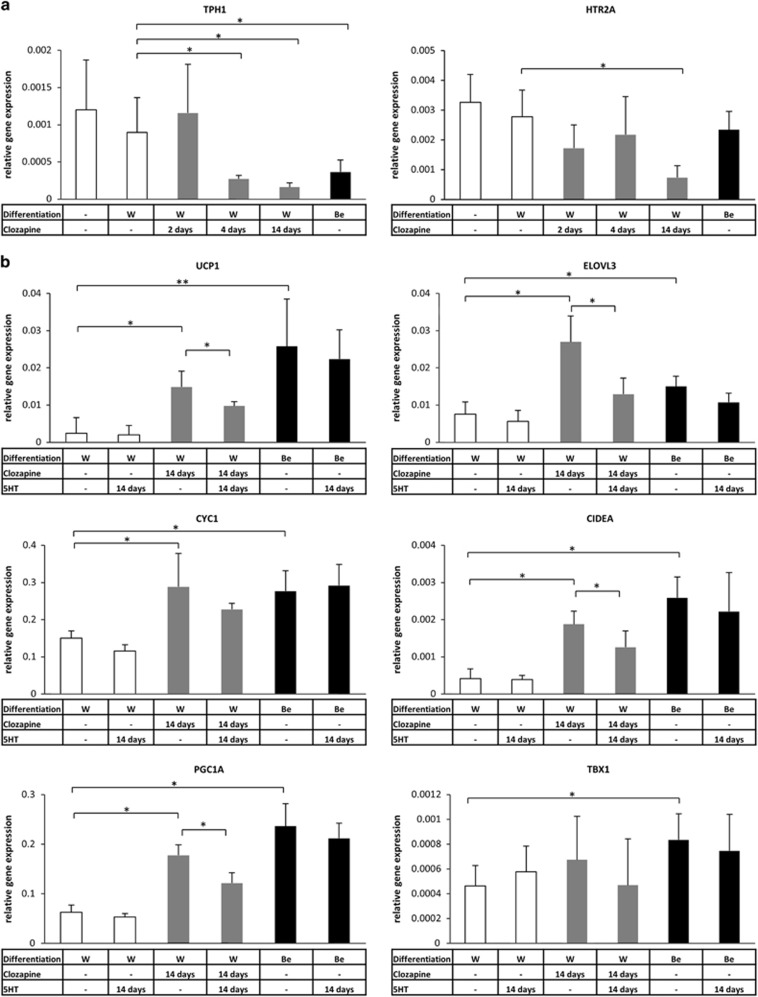
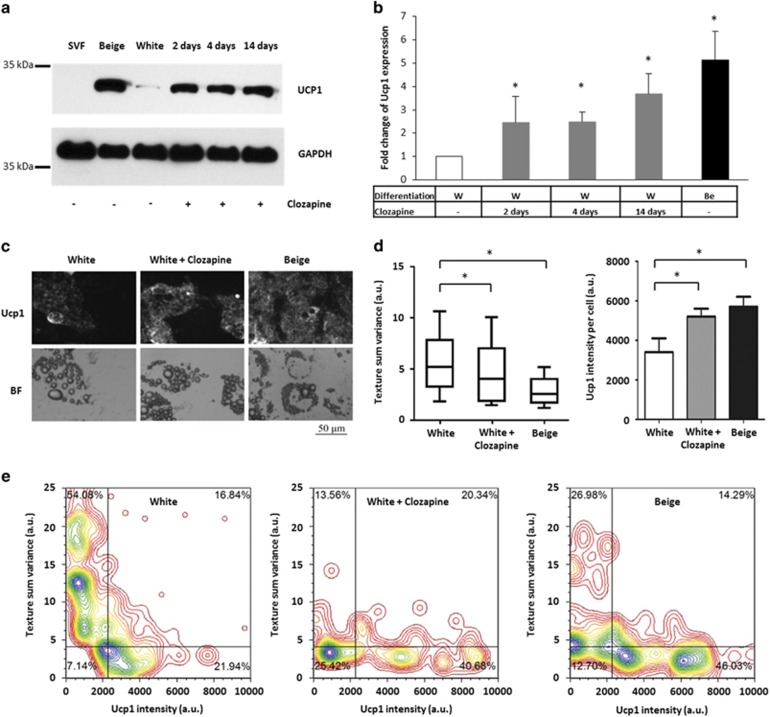
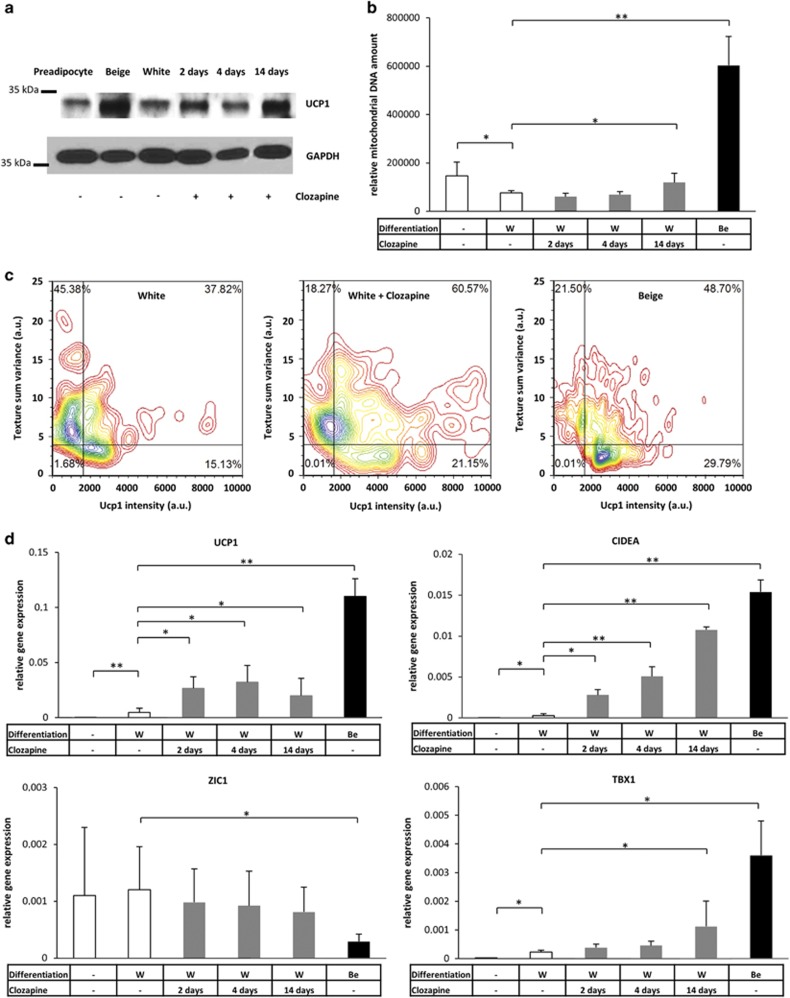
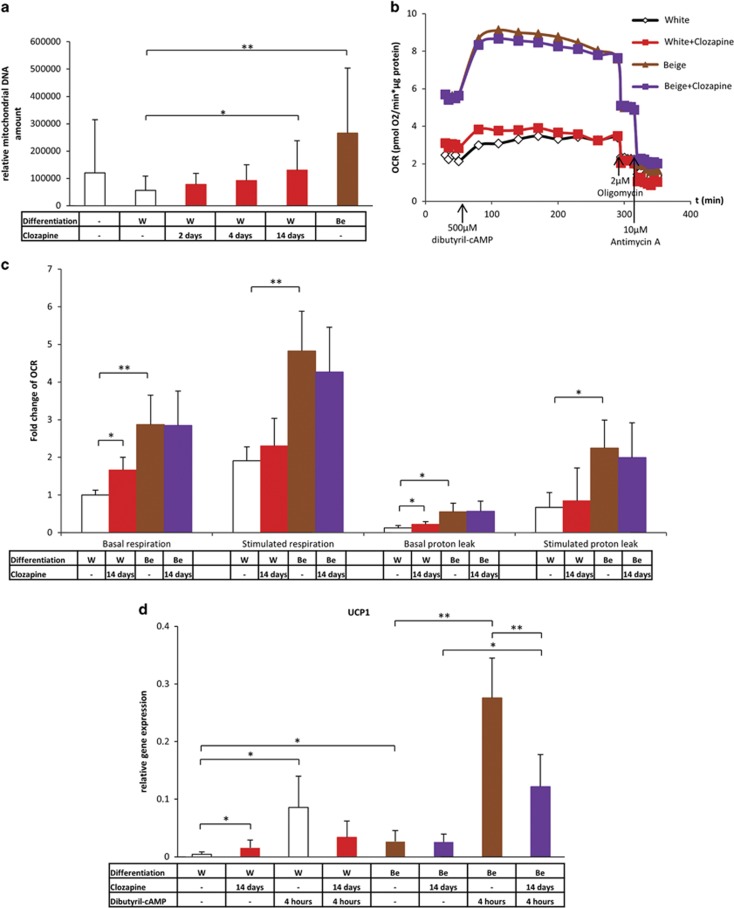
Administration of second-generation antipsychotic drugs (SGAs) often leads to weight gain and consequent cardio-metabolic side effects. We observed that clozapine but not six other antipsychotic drugs reprogrammed the gene expression pattern of differentiating human adipocytes ex vivo, leading to an elevated expression of the browning marker gene UCP1, more and smaller lipid droplets and more mitochondrial DNA than in the untreated white adipocytes. Laser scanning cytometry showed that up to 40% of the differentiating single primary and Simpson-Golabi-Behmel syndrome (SGBS) adipocytes had the characteristic morphological features of browning cells. Furthermore, clozapine significantly upregulated ELOVL3, CIDEA, CYC1, PGC1A and TBX1 genes but not ZIC1 suggesting induction of the beige-like and not the classical brown phenotype. When we tested whether browning induced by clozapine can be explained by its known pharmacological effect of antagonizing serotonin (5HT) receptors, it was found that browning cells expressed 5HT receptors 2A, 1D, 7 and the upregulation of browning markers was diminished in the presence of exogenous 5HT. Undifferentiated progenitors or completely differentiated beige or white adipocytes did not respond to clozapine administration. The clozapine-induced beige cells displayed increased basal and oligomycin-inhibited (proton leak) oxygen consumption, but these cells showed a lower response to cAMP stimulus as compared with control beige adipocytes indicating that they are less capable to respond to natural thermogenic anti-obesity cues. Our data altogether suggest that novel pharmacological stimulation of these masked beige adipocytes can be a future therapeutic target for the treatment of SGA-induced weight gain.
第二代抗精神病药物(SGA)的使用常常会导致体重增加以及随之而来的心脏代谢副作用。我们观察到,氯氮平可在体外重新编程分化中的人类脂肪细胞的基因表达模式,而其他六种抗精神病药物则无此作用,这导致与未处理的白色脂肪细胞相比,褐色脂肪标记基因UCP1的表达升高、脂滴更多更小且线粒体DNA更多。激光扫描细胞术显示,高达40%的分化中的原代和辛普森 - 戈拉比 - 贝梅尔综合征(SGBS)脂肪细胞具有褐色脂肪细胞的特征形态。此外,氯氮平显著上调了ELOVL3、CIDEA、CYC1、PGC1A和TBX1基因,但未上调ZIC1基因,这表明诱导的是米色样而非经典褐色表型。当我们测试氯氮平诱导的褐色化是否可以用其已知的拮抗5-羟色胺(5HT)受体的药理作用来解释时,发现褐色化细胞表达5HT受体2A、1D、7,并且在外源性5HT存在的情况下褐色化标记物的上调减弱。未分化的祖细胞或完全分化的米色或白色脂肪细胞对氯氮平给药无反应。氯氮平诱导的米色细胞显示基础耗氧量增加以及寡霉素抑制(质子泄漏)的耗氧量增加,但与对照米色脂肪细胞相比,这些细胞对cAMP刺激的反应较低,这表明它们对天然产热抗肥胖信号的反应能力较低。我们的数据总体表明,对这些隐藏的米色脂肪细胞进行新的药理刺激可能是治疗SGA诱导的体重增加的未来治疗靶点。