Smith Erin P, Miller Cheryl N, Child Robert, Cundiff Jennifer A, Celli Jean
Paul G. Allen School for Global Animal Health, College of Veterinary Medicine, Washington State University, Pullman, Washington, USA.
Rocky Mountain Laboratories, National Institute for Allergy and Infectious Diseases, National Institutes of Health, Hamilton, Montana, USA.
mBio. 2016 Nov 29;7(6):e01730-16. doi: 10.1128/mBio.01730-16.
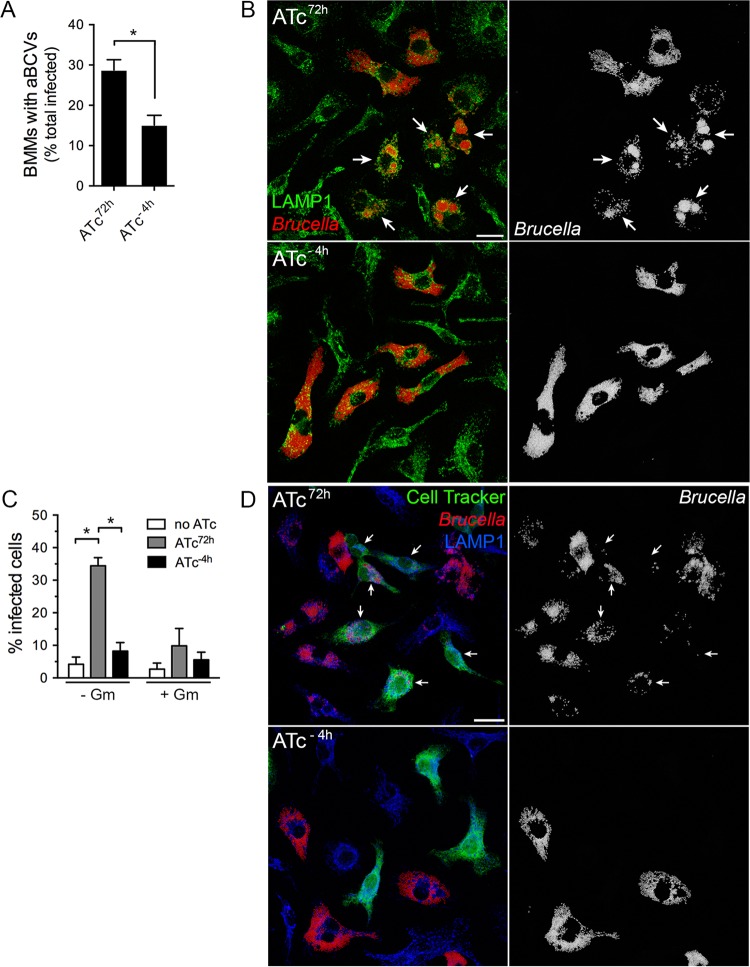
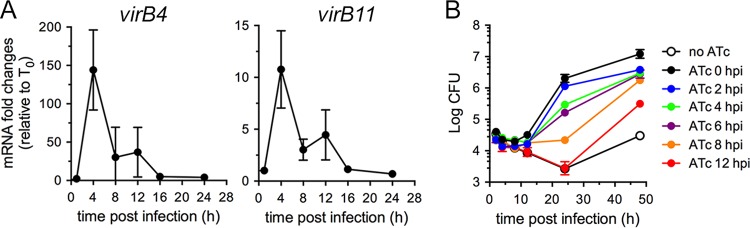
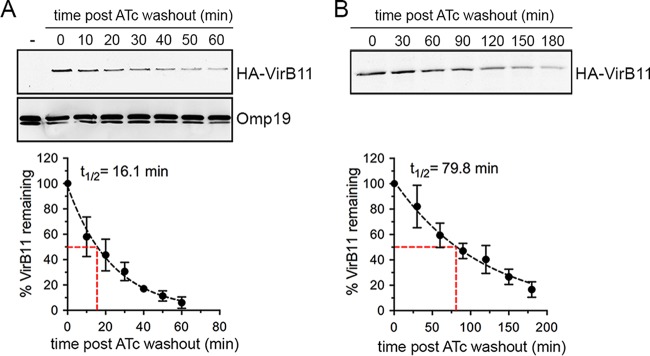
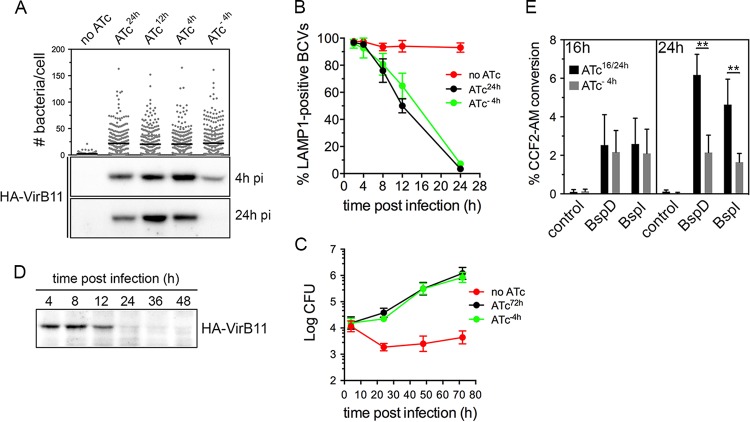
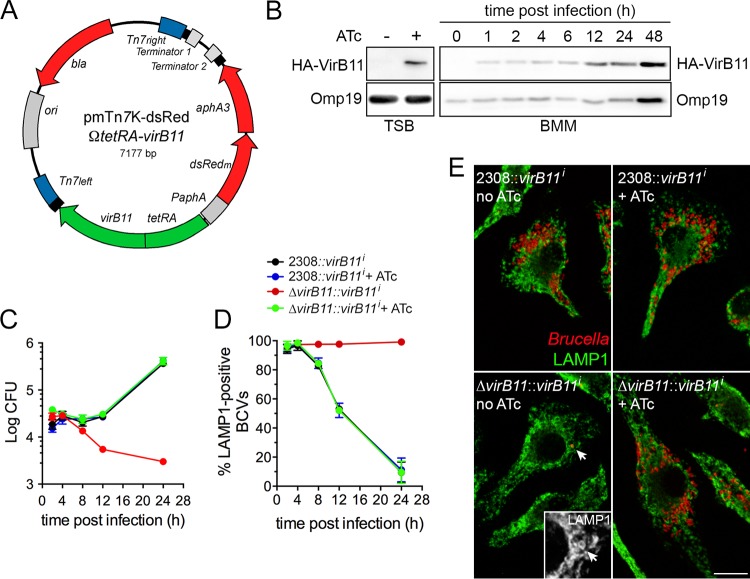
Brucella abortus, the bacterial agent of the worldwide zoonosis brucellosis, primarily infects host phagocytes, where it undergoes an intracellular cycle within a dedicated membrane-bound vacuole, the Brucella-containing vacuole (BCV). Initially of endosomal origin (eBCV), BCVs are remodeled into replication-permissive organelles (rBCV) derived from the host endoplasmic reticulum, a process that requires modulation of host secretory functions via delivery of effector proteins by the Brucella VirB type IV secretion system (T4SS). Following replication, rBCVs are converted into autophagic vacuoles (aBCVs) that facilitate bacterial egress and subsequent infections, arguing that the bacterium sequentially manipulates multiple cellular pathways to complete its cycle. The VirB T4SS is essential for rBCV biogenesis, as VirB-deficient mutants are stalled in eBCVs and cannot mediate rBCV biogenesis. This has precluded analysis of whether the VirB apparatus also drives subsequent stages of the Brucella intracellular cycle. To address this issue, we have generated a B. abortus strain in which VirB T4SS function is conditionally controlled via anhydrotetracycline (ATc)-dependent complementation of a deletion of the virB11 gene encoding the VirB11 ATPase. We show in murine bone marrow-derived macrophages (BMMs) that early VirB production is essential for optimal rBCV biogenesis and bacterial replication. Transient expression of virB11 prior to infection was sufficient to mediate normal rBCV biogenesis and bacterial replication but led to T4SS inactivation and decreased aBCV formation and bacterial release, indicating that these postreplication stages are also T4SS dependent. Hence, our findings support the hypothesis of additional, postreplication roles of type IV secretion in the Brucella intracellular cycle.
Many intracellular bacterial pathogens encode specialized secretion systems that deliver effector proteins into host cells to mediate the multiple stages of their intracellular cycles. Because these intracellular events occur sequentially, classical genetic approaches cannot address the late roles that these apparatuses play, as secretion-deficient mutants cannot proceed past their initial defect. Here we have designed a functionally controllable VirB type IV secretion system (T4SS) in the bacterial pathogen Brucella abortus to decipher its temporal requirements during the bacterium's intracellular cycle in macrophages. By controlling production of the VirB11 ATPase, which energizes the T4SS, we show not only that this apparatus is required early to generate the Brucella replicative organelle but also that it contributes to completion of the bacterium's cycle and bacterial egress. Our findings expand upon the pathogenic functions of the Brucella VirB T4SS and illustrate targeting of secretion ATPases as a useful strategy to manipulate the activity of bacterial secretion systems.
流产布鲁氏菌是全球人畜共患疾病布鲁氏菌病的病原体,主要感染宿主吞噬细胞,在其中一个专门的膜结合液泡即含布鲁氏菌液泡(BCV)内经历细胞内循环。BCV最初起源于内体(eBCV),随后被重塑为源自宿主内质网的允许复制的细胞器(rBCV),这一过程需要布鲁氏菌VirB IV型分泌系统(T4SS)通过效应蛋白的递送调节宿主分泌功能。复制后,rBCV转变为自噬液泡(aBCV),促进细菌逸出及后续感染,这表明该细菌依次操纵多个细胞途径来完成其循环。VirB T4SS对rBCV的生物发生至关重要,因为VirB缺陷型突变体停滞在eBCV中,无法介导rBCV的生物发生。这使得无法分析VirB装置是否也驱动布鲁氏菌细胞内循环的后续阶段。为解决这个问题,我们构建了一株流产布鲁氏菌菌株,其中VirB T4SS的功能通过对编码VirB11 ATP酶的virB11基因缺失进行无水四环素(ATc)依赖性互补来进行条件控制。我们在小鼠骨髓来源的巨噬细胞(BMM)中表明,早期VirB的产生对于最佳的rBCV生物发生和细菌复制至关重要。感染前virB11的瞬时表达足以介导正常的rBCV生物发生和细菌复制,但导致T4SS失活,并减少aBCV形成和细菌释放,表明这些复制后阶段也依赖于T4SS。因此,我们的发现支持了IV型分泌在布鲁氏菌细胞内循环中具有额外的复制后作用这一假设。
许多细胞内细菌病原体编码专门的分泌系统,将效应蛋白递送到宿主细胞中以介导其细胞内循环的多个阶段。由于这些细胞内事件是依次发生的,传统的遗传学方法无法解决这些装置所起的后期作用,因为分泌缺陷型突变体无法越过其初始缺陷继续发展。在这里,我们在细菌病原体流产布鲁氏菌中设计了一种功能可控的VirB IV型分泌系统(T4SS),以破译其在巨噬细胞内细菌细胞内循环期间的时间需求。通过控制为T4SS提供能量的VirB11 ATP酶的产生,我们不仅表明该装置在早期对于产生布鲁氏菌复制细胞器是必需的,而且还表明它有助于细菌循环的完成和细菌逸出。我们的发现扩展了布鲁氏菌VirB T4SS的致病功能,并说明了靶向分泌ATP酶作为操纵细菌分泌系统活性的有用策略。