Oudshoorn Diede, van der Hoeven Barbara, Limpens Ronald W A L, Beugeling Corrine, Snijder Eric J, Bárcena Montserrat, Kikkert Marjolein
Molecular Virology Laboratory, Department of Medical Microbiology, Leiden University Medical Center, Leiden, The Netherlands.
Section Electron Microscopy, Department of Molecular Cell Biology, Leiden University Medical Center, Leiden, The Netherlands.
mBio. 2016 Dec 6;7(6):e01991-16. doi: 10.1128/mBio.01991-16.
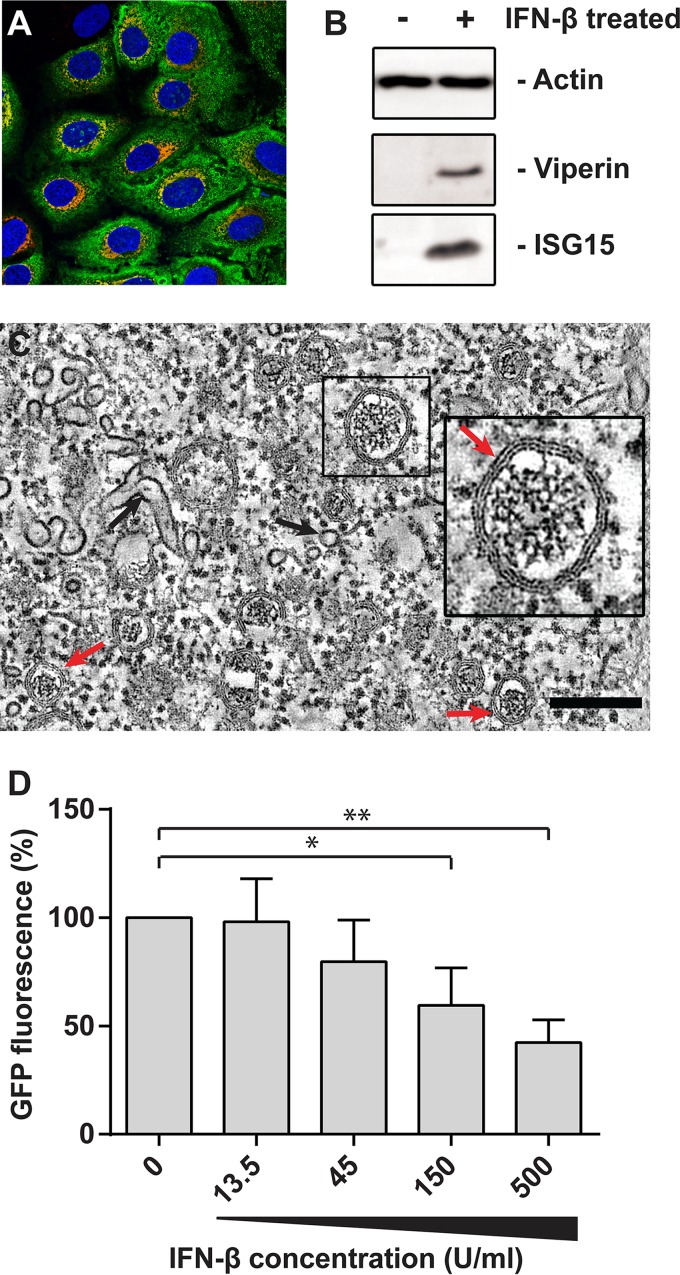
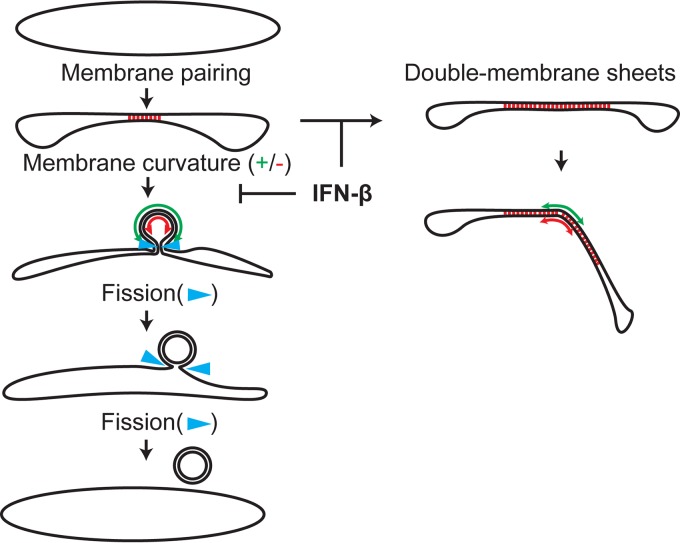
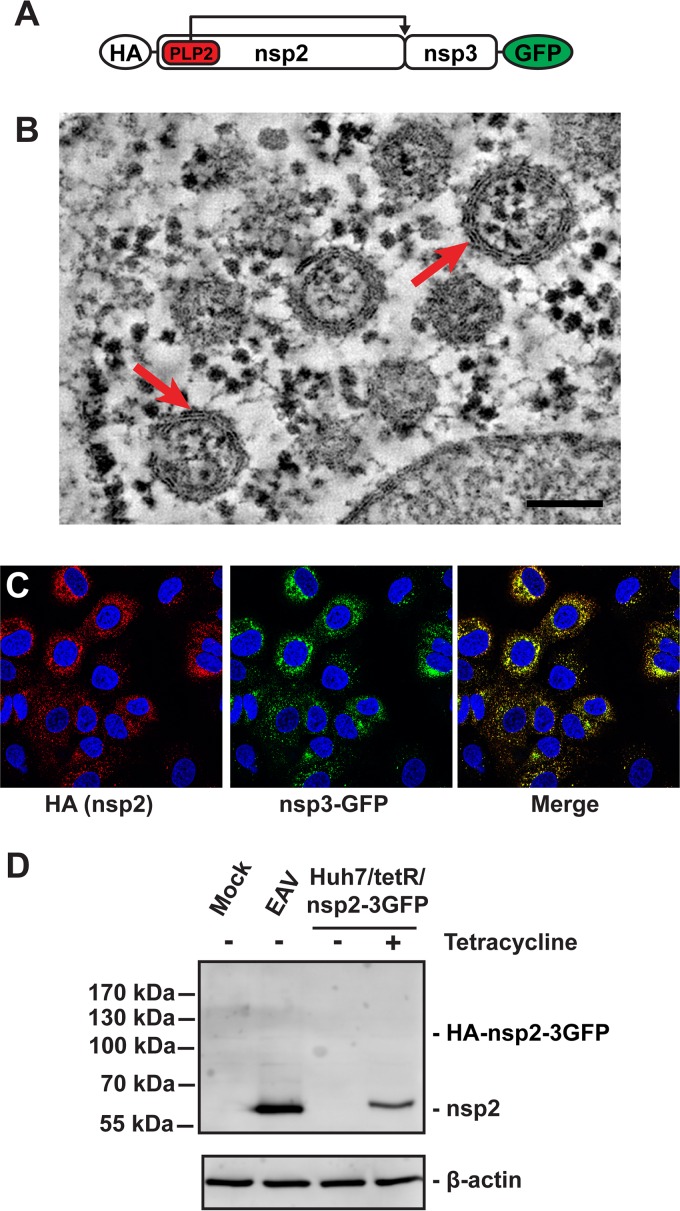
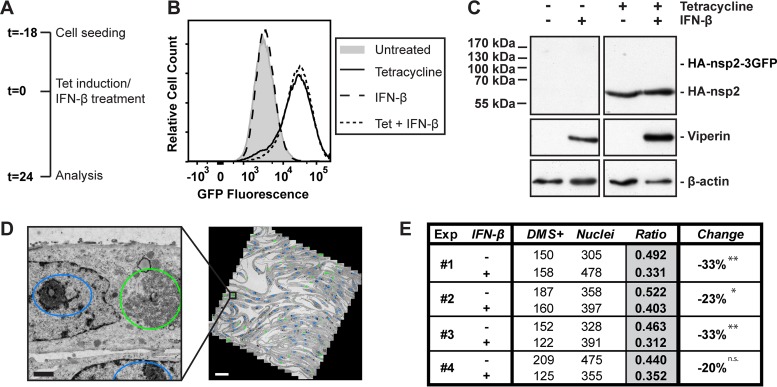
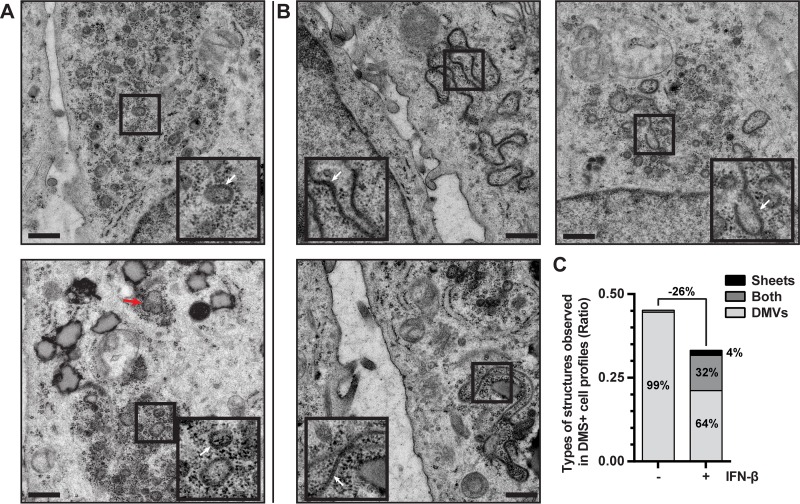
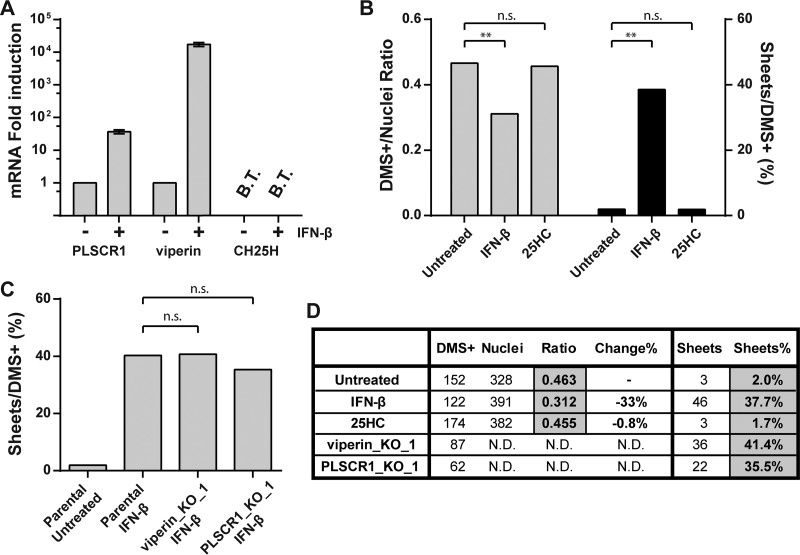
Infection with nidoviruses like corona- and arteriviruses induces a reticulovesicular network of interconnected endoplasmic reticulum (ER)-derived double-membrane vesicles (DMVs) and other membrane structures. This network is thought to accommodate the viral replication machinery and protect it from innate immune detection. We hypothesized that the innate immune response has tools to counteract the formation of these virus-induced replication organelles in order to inhibit virus replication. Here we have investigated the effect of type I interferon (IFN) treatment on the formation of arterivirus-induced membrane structures. Our approach involved ectopic expression of arterivirus nonstructural proteins nsp2 and nsp3, which induce DMV formation in the absence of other viral triggers of the interferon response, such as replicating viral RNA. Thus, this setup can be used to identify immune effectors that specifically target the (formation of) virus-induced membrane structures. Using large-scale electron microscopy mosaic maps, we found that IFN-β treatment significantly reduced the formation of the membrane structures. Strikingly, we also observed abundant stretches of double-membrane sheets (a proposed intermediate of DMV formation) in IFN-β-treated samples, suggesting the disruption of DMV biogenesis. Three interferon-stimulated gene products, two of which have been reported to target the hepatitis C virus replication structures, were tested for their possible involvement, but none of them affected membrane structure formation. Our study reveals the existence of a previously unknown innate immune mechanism that antagonizes the viral hijacking of host membranes. It also provides a solid basis for further research into the poorly understood interactions between the innate immune system and virus-induced replication structures.
Viruses with a positive-strand RNA genome establish a membrane-associated replication organelle by hijacking and remodeling intracellular host membranes, a process deemed essential for their efficient replication. It is unknown whether the cellular innate immune system can detect and/or inhibit the formation of these membrane structures, which could be an effective mechanism to delay viral RNA replication. In this study, using an expression system that closely mimics the formation of arterivirus replication structures, we show for the first time that IFN-β treatment clearly reduces the amount of induced membrane structures. Moreover, drastic morphological changes were observed among the remaining structures, suggesting that their biogenesis was impaired. Follow-up experiments suggested that host cells contain a hitherto unknown innate antiviral mechanism, which targets this common feature of positive-strand RNA virus replication. Our study provides a strong basis for further research into the interaction of the innate immune system with membranous viral replication organelles.
感染冠状病毒和动脉炎病毒等尼多病毒会诱导形成一个由相互连接的内质网(ER)衍生的双膜囊泡(DMV)和其他膜结构组成的网状囊泡网络。这个网络被认为容纳了病毒复制机制,并保护其免受先天性免疫检测。我们假设先天性免疫反应有工具来对抗这些病毒诱导的复制细胞器的形成,以抑制病毒复制。在这里,我们研究了I型干扰素(IFN)处理对动脉炎病毒诱导的膜结构形成的影响。我们的方法包括异位表达动脉炎病毒非结构蛋白nsp2和nsp3,它们在没有干扰素反应的其他病毒触发因素(如复制的病毒RNA)的情况下诱导DMV形成。因此,这种设置可用于识别特异性靶向病毒诱导的膜结构(形成)的免疫效应器。使用大规模电子显微镜镶嵌图,我们发现IFN-β处理显著减少了膜结构的形成。令人惊讶的是,我们还在IFN-β处理的样品中观察到大量的双膜片层(一种推测的DMV形成中间体),这表明DMV生物发生受到破坏。测试了三种干扰素刺激基因产物,其中两种已被报道靶向丙型肝炎病毒复制结构,以确定它们是否可能参与其中,但它们都没有影响膜结构的形成。我们的研究揭示了一种以前未知的先天性免疫机制的存在,该机制对抗病毒对宿主膜的劫持。它还为进一步研究先天性免疫系统与病毒诱导的复制结构之间了解甚少的相互作用提供了坚实的基础。
具有正链RNA基因组的病毒通过劫持和重塑细胞内宿主膜来建立膜相关的复制细胞器,这一过程被认为对其有效复制至关重要。尚不清楚细胞先天性免疫系统是否能够检测和/或抑制这些膜结构的形成,这可能是延迟病毒RNA复制的有效机制。在这项研究中,使用一种紧密模拟动脉炎病毒复制结构形成的表达系统,我们首次表明IFN-β处理明显减少了诱导的膜结构的数量。此外,在剩余的结构中观察到了剧烈的形态变化,这表明它们的生物发生受到了损害。后续实验表明,宿主细胞含有一种迄今未知的先天性抗病毒机制,该机制靶向正链RNA病毒复制的这一共同特征。我们的研究为进一步研究先天性免疫系统与膜性病毒复制细胞器之间的相互作用提供了有力的基础。