Cramer Angélique O J, van Borkulo Claudia D, Giltay Erik J, van der Maas Han L J, Kendler Kenneth S, Scheffer Marten, Borsboom Denny
Psychological Methods, University of Amsterdam, Amsterdam, the Netherlands.
Department of Psychiatry, Leids Universitair Medisch Centrum, Leiden, the Netherlands.
PLoS One. 2016 Dec 8;11(12):e0167490. doi: 10.1371/journal.pone.0167490. eCollection 2016.
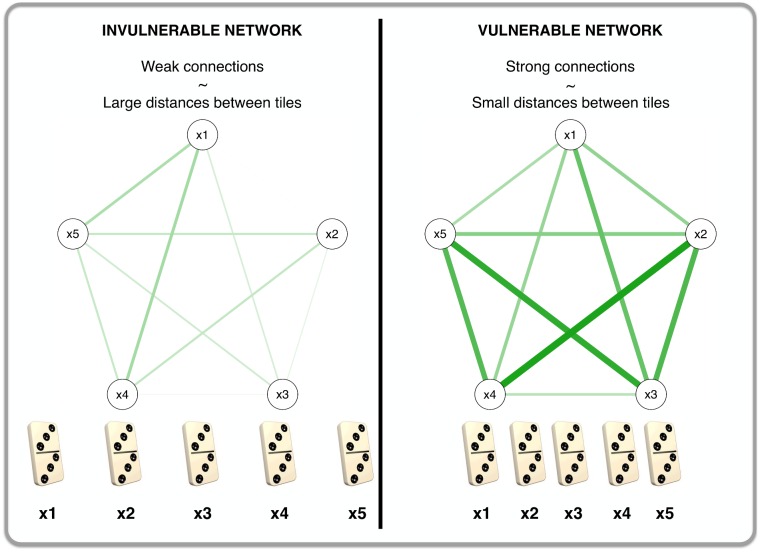
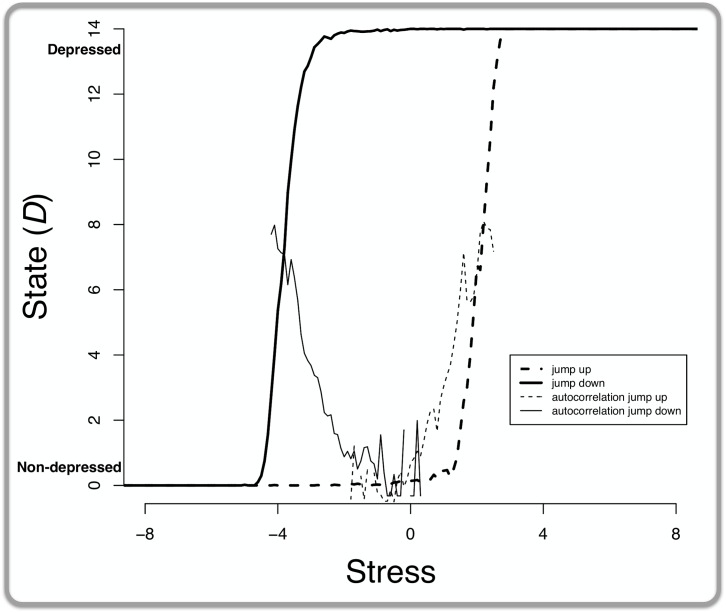
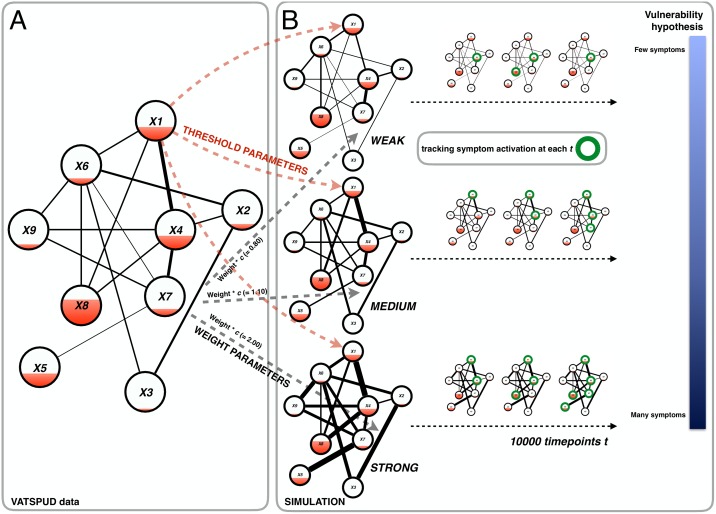
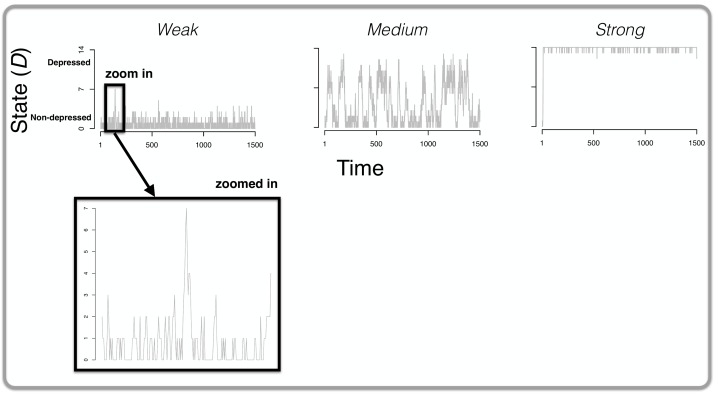
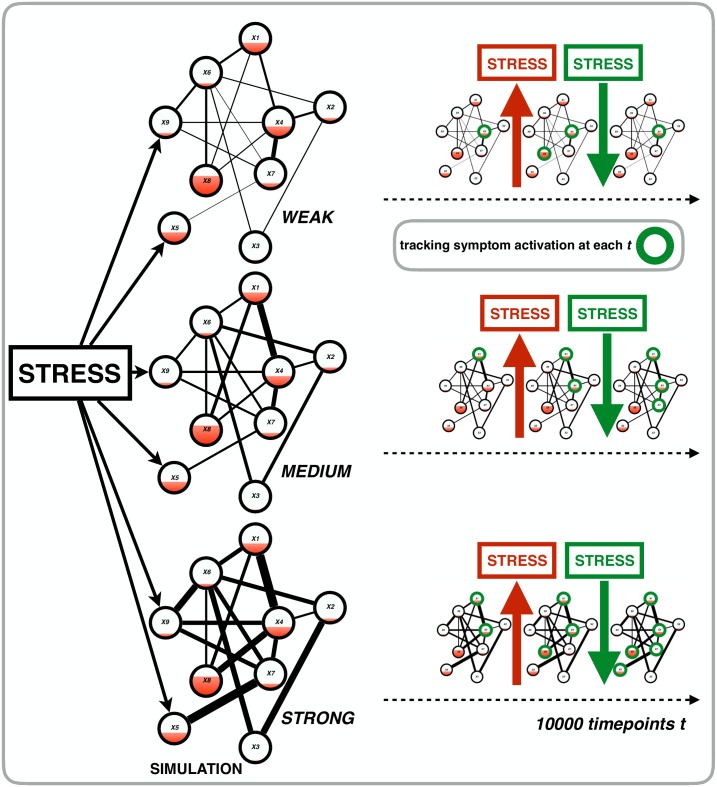
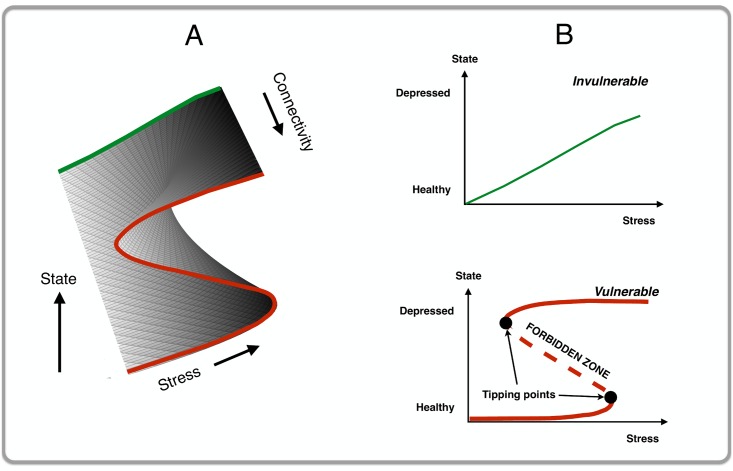
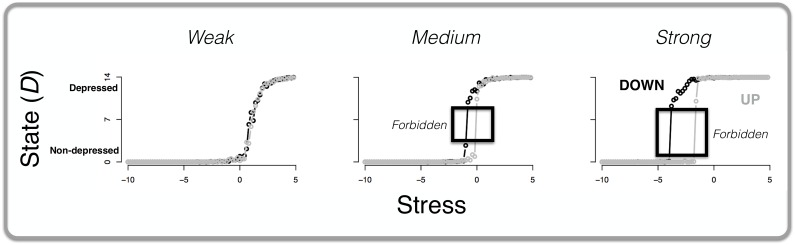
In this paper, we characterize major depression (MD) as a complex dynamic system in which symptoms (e.g., insomnia and fatigue) are directly connected to one another in a network structure. We hypothesize that individuals can be characterized by their own network with unique architecture and resulting dynamics. With respect to architecture, we show that individuals vulnerable to developing MD are those with strong connections between symptoms: e.g., only one night of poor sleep suffices to make a particular person feel tired. Such vulnerable networks, when pushed by forces external to the system such as stress, are more likely to end up in a depressed state; whereas networks with weaker connections tend to remain in or return to a non-depressed state. We show this with a simulation in which we model the probability of a symptom becoming 'active' as a logistic function of the activity of its neighboring symptoms. Additionally, we show that this model potentially explains some well-known empirical phenomena such as spontaneous recovery as well as accommodates existing theories about the various subtypes of MD. To our knowledge, we offer the first intra-individual, symptom-based, process model with the potential to explain the pathogenesis and maintenance of major depression.
在本文中,我们将重度抑郁症(MD)描述为一个复杂的动态系统,其中症状(如失眠和疲劳)在网络结构中直接相互关联。我们假设个体可以通过其具有独特架构和由此产生的动态变化的自身网络来表征。关于架构,我们表明易患MD的个体是那些症状之间联系紧密的个体:例如,仅仅一晚睡眠不佳就足以使某个特定的人感到疲倦。当受到诸如压力等系统外部力量的推动时,这种易损网络更有可能最终陷入抑郁状态;而联系较弱的网络则倾向于保持或恢复到非抑郁状态。我们通过一个模拟展示了这一点,在该模拟中,我们将一个症状变得“活跃”的概率建模为其相邻症状活动的逻辑函数。此外,我们表明该模型有可能解释一些著名的实证现象,如自发恢复,同时也能容纳关于MD各种亚型的现有理论。据我们所知,我们提供了第一个基于个体内部症状的过程模型,该模型有潜力解释重度抑郁症的发病机制和维持机制。