Lubaki Ndongala Michel, Younan Patrick, Santos Rodrigo I, Meyer Michelle, Iampietro Mathieu, Koup Richard A, Bukreyev Alexander
Department of Pathology, the University of Texas Medical Branch, Galveston, Texas, United States of America.
Galveston National Laboratory, the University of Texas Medical Branch, Galveston, Texas, United States of America.
PLoS Pathog. 2016 Dec 8;12(12):e1006031. doi: 10.1371/journal.ppat.1006031. eCollection 2016 Dec.
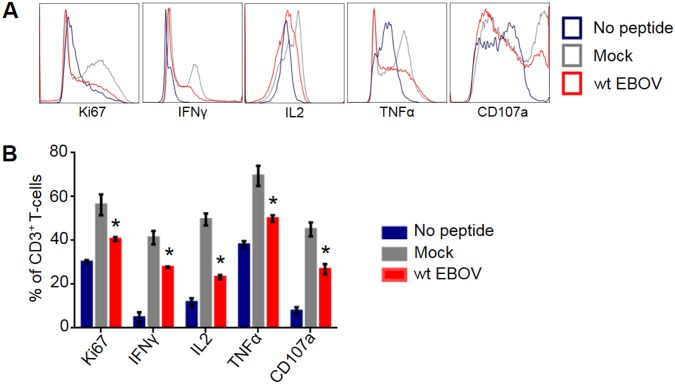
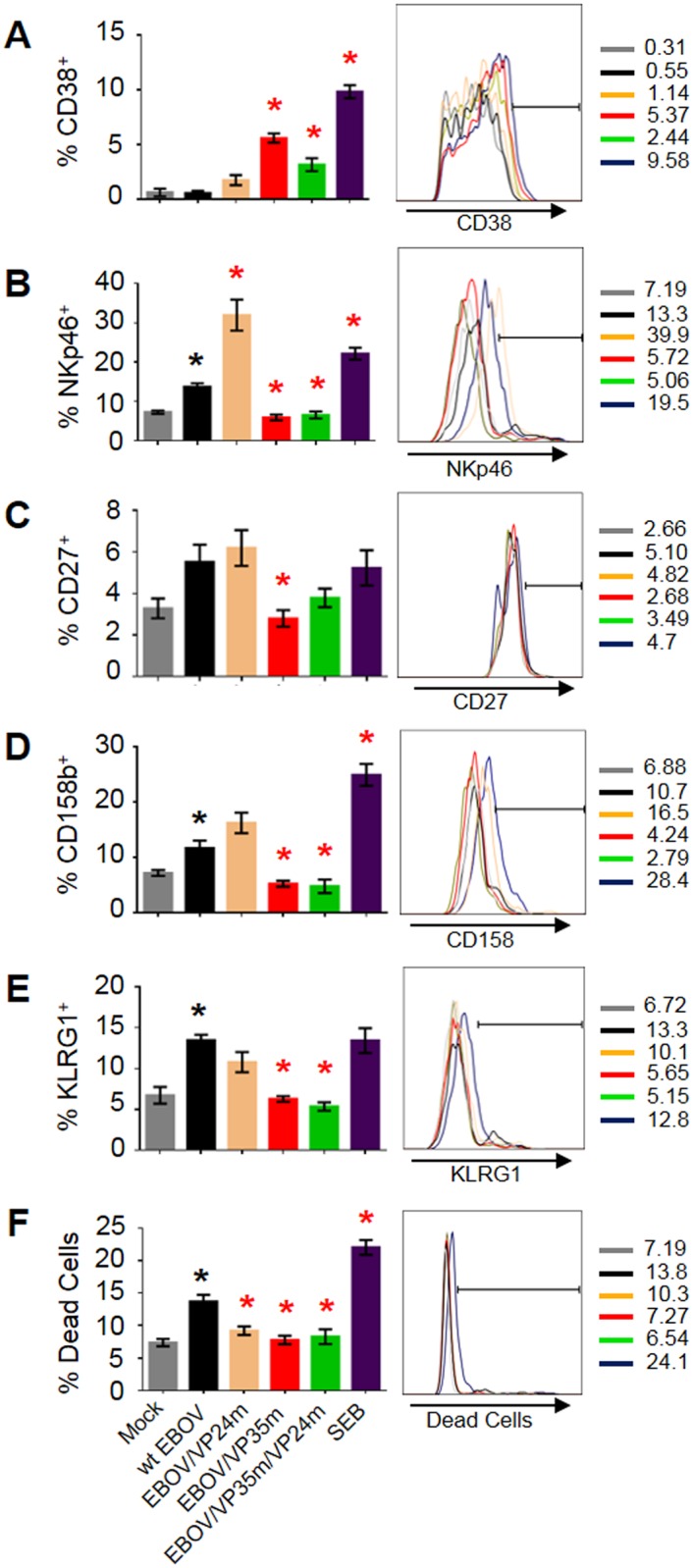
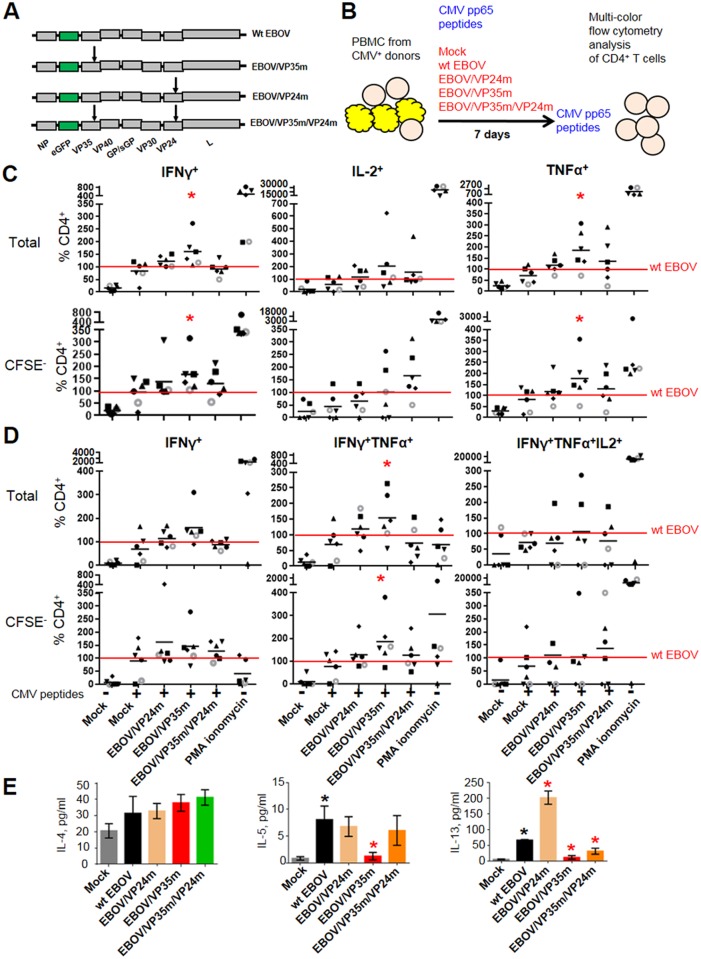
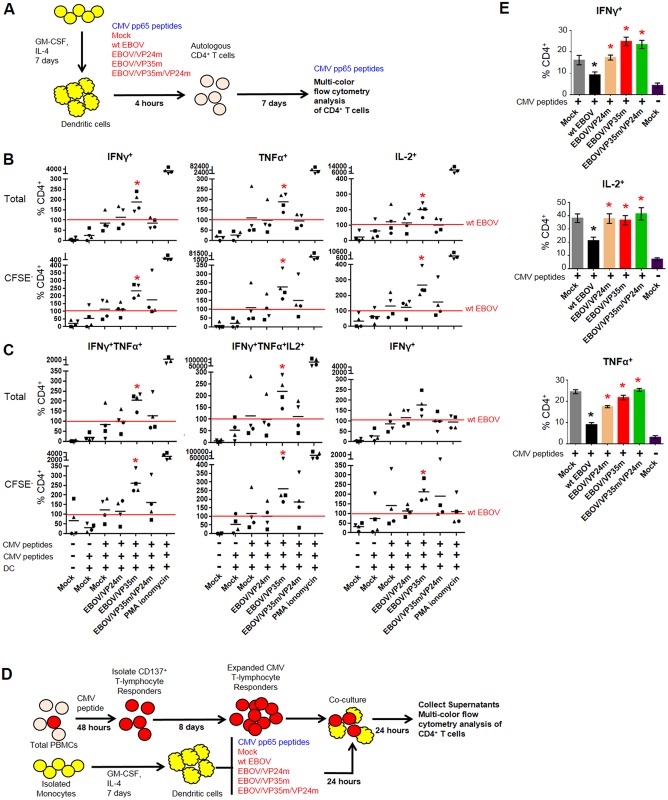
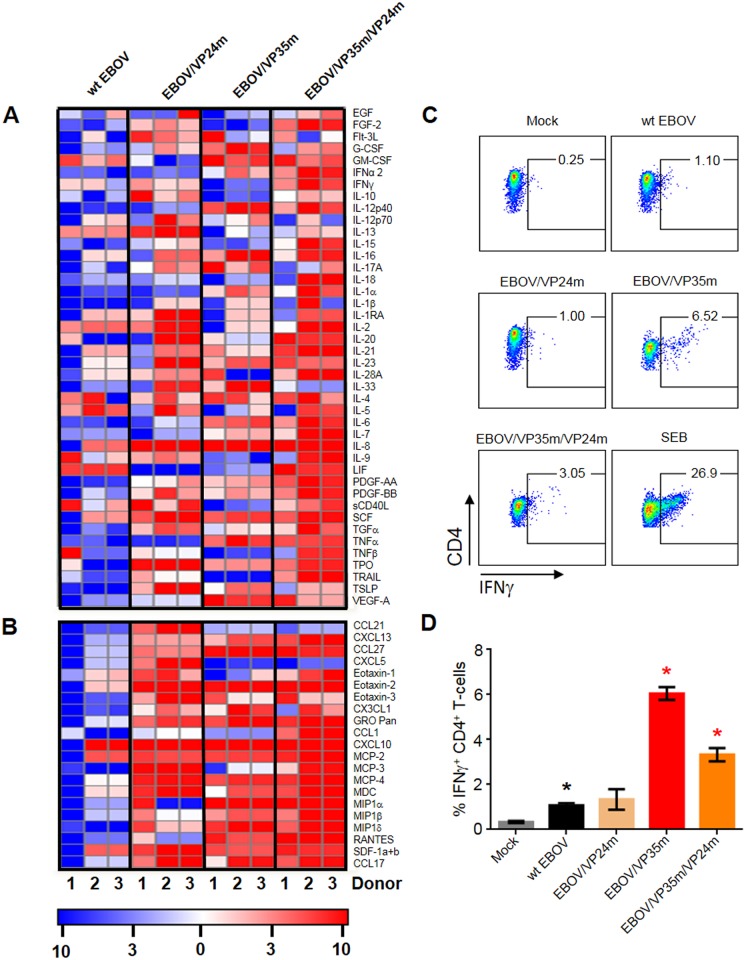
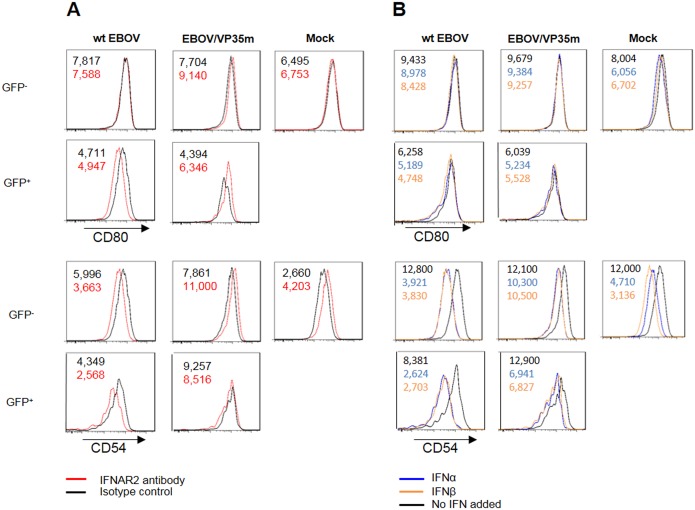
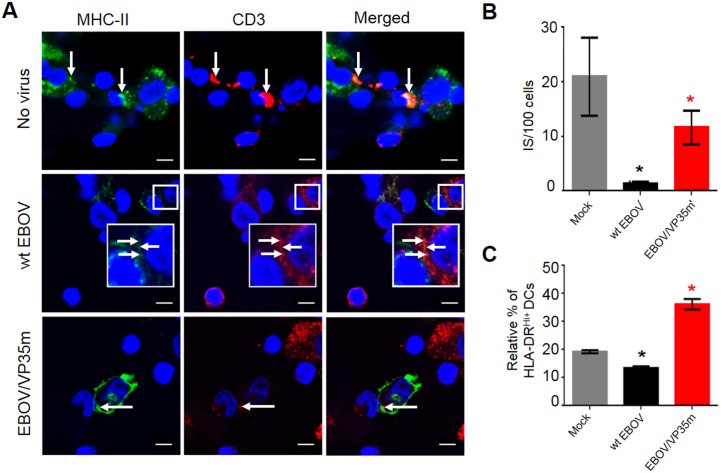
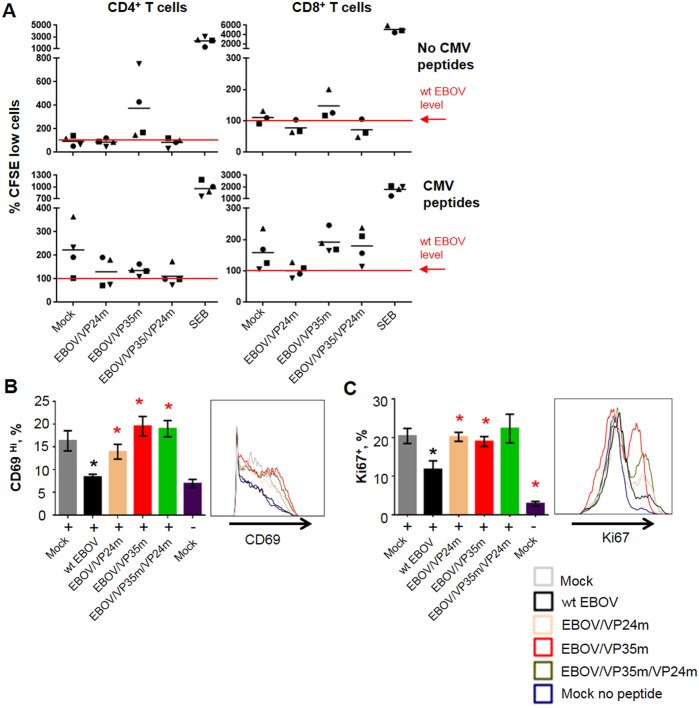
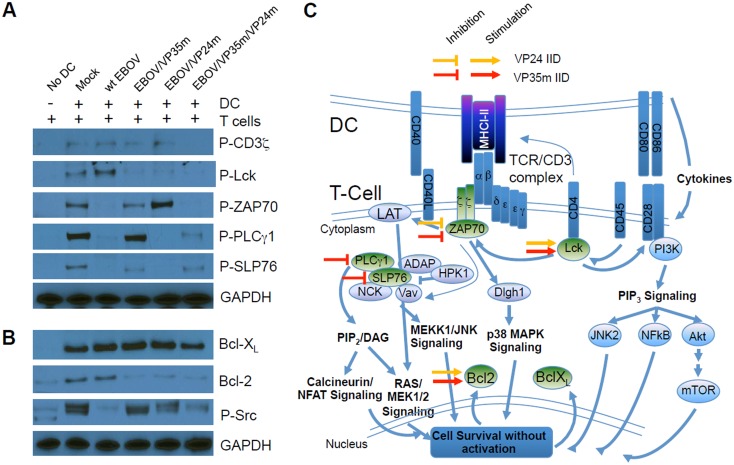
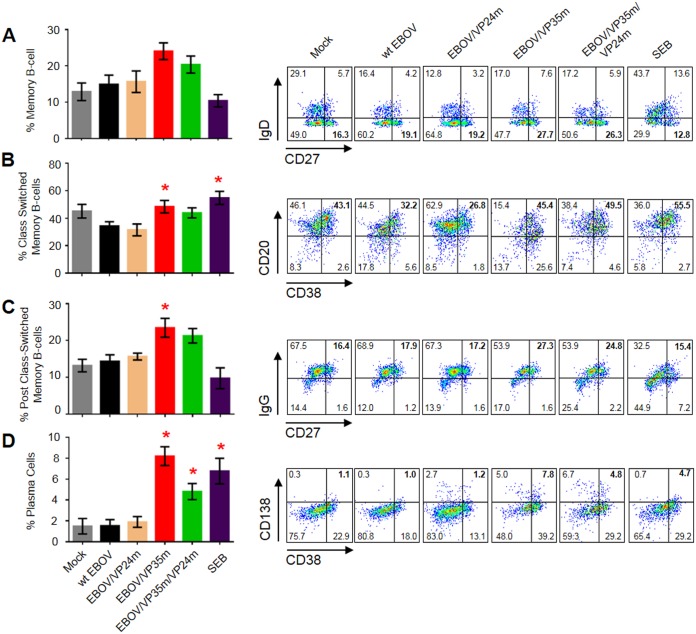
Ebola virus (EBOV) infections are characterized by deficient T-lymphocyte responses, T-lymphocyte apoptosis and lymphopenia. We previously showed that disabling of interferon-inhibiting domains (IIDs) in the VP24 and VP35 proteins effectively unblocks maturation of dendritic cells (DCs) and increases the secretion of cytokines and chemokines. Here, we investigated the role of IIDs in adaptive and innate cell-mediated responses using recombinant viruses carrying point mutations, which disabled IIDs in VP24 (EBOV/VP24m), VP35 (EBOV/VP35m) or both (EBOV/VP35m/VP24m). Peripheral blood mononuclear cells (PBMCs) from cytomegalovirus (CMV)-seropositive donors were inoculated with the panel of viruses and stimulated with CMV pp65 peptides. Disabling of the VP35 IID resulted in increased proliferation and higher percentages of CD4+ T cells secreting IFNγ and/or TNFα. To address the role of aberrant DC maturation in the IID-mediated suppression of T cell responses, CMV-stimulated DCs were infected with the panel of viruses and co-cultured with autologous T-lymphocytes. Infection with EBOV/VP35m infection resulted in a significant increase, as compared to wt EBOV, in proliferating CD4+ cells secreting IFNγ, TNFα and IL-2. Experiments with expanded CMV-specific T cells demonstrated their increased activation following co-cultivation with CMV-pulsed DCs pre-infected with EBOV/VP24m, EBOV/VP35m and EBOV/VP35m/VP24m, as compared to wt EBOV. Both IIDs were found to block phosphorylation of TCR complex-associated adaptors and downstream signaling molecules. Next, we examined the effects of IIDs on the function of B cells in infected PBMC. Infection with EBOV/VP35m and EBOV/VP35m/VP24m resulted in significant increases in the percentages of phenotypically distinct B-cell subsets and plasma cells, as compared to wt EBOV, suggesting inhibition of B cell function and differentiation by VP35 IID. Finally, infection with EBOV/VP35m increased activation of NK cells, as compared to wt EBOV. These results demonstrate a global suppression of cell-mediated responses by EBOV IIDs and identify the role of DCs in suppression of T-cell responses.
埃博拉病毒(EBOV)感染的特征是T淋巴细胞反应不足、T淋巴细胞凋亡和淋巴细胞减少。我们之前表明,使VP24和VP35蛋白中的干扰素抑制结构域(IIDs)失活可有效解除树突状细胞(DCs)的成熟阻滞,并增加细胞因子和趋化因子的分泌。在此,我们使用携带点突变的重组病毒研究了IIDs在适应性和先天性细胞介导反应中的作用,这些点突变使VP24(EBOV/VP24m)、VP35(EBOV/VP35m)或两者(EBOV/VP35m/VP24m)中的IIDs失活。用该组病毒接种来自巨细胞病毒(CMV)血清学阳性供体的外周血单个核细胞(PBMCs),并用CMV pp65肽进行刺激。VP35 IID的失活导致分泌IFNγ和/或TNFα的CD4 + T细胞增殖增加且百分比更高。为了研究异常DC成熟在IID介导的T细胞反应抑制中的作用,用该组病毒感染CMV刺激的DCs,并与自体T淋巴细胞共培养。与野生型EBOV相比,EBOV/VP35m感染导致分泌IFNγ、TNFα和IL-2的增殖CD4 +细胞显著增加。对扩增的CMV特异性T细胞进行的实验表明,与野生型EBOV相比,它们在与预先感染EBOV/VP24m、EBOV/VP35m和EBOV/VP35m/VP24m的CMV脉冲DCs共培养后激活增加。发现两个IIDs均阻断TCR复合物相关衔接子和下游信号分子的磷酸化。接下来,我们研究了IIDs对感染的PBMC中B细胞功能的影响。与野生型EBOV相比,EBOV/VP35m和EBOV/VP35m/VP24m感染导致表型不同的B细胞亚群和浆细胞百分比显著增加,提示VP35 IID抑制B细胞功能和分化。最后,与野生型EBOV相比,EBOV/VP35m感染增加了NK细胞的激活。这些结果证明了EBOV IIDs对细胞介导反应的全面抑制,并确定了DCs在抑制T细胞反应中的作用。