Zheng Shengxing, D'Souza Vijay K, Bartis Domokos, Dancer Rachel C A, Parekh Dhruv, Naidu Babu, Gao-Smith Fang, Wang Qian, Jin Shengwei, Lian Qingquan, Thickett David R
Dept of Anaesthesia and Critical Care, Second Affiliated Hospital of Wenzhou Medical University, Zhejiang , China; Centre for Translational Inflammation and Fibrosis Research, Institute of Inflammation and Ageing, University of Birmingham, Birmingham, UK; Both authors contributed equally.
Centre for Translational Inflammation and Fibrosis Research, Institute of Inflammation and Ageing, University of Birmingham, Birmingham, UK; Both authors contributed equally.
ERJ Open Res. 2016 Oct 3;2(3). doi: 10.1183/23120541.00079-2015. eCollection 2016 Jul.
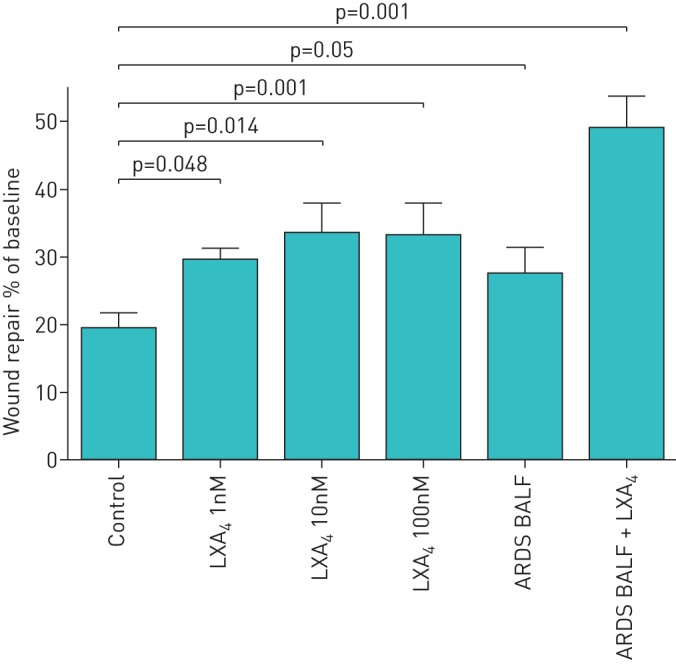
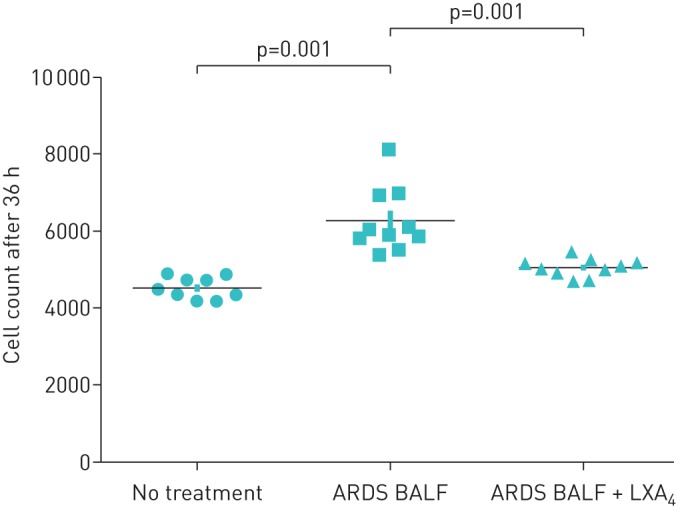
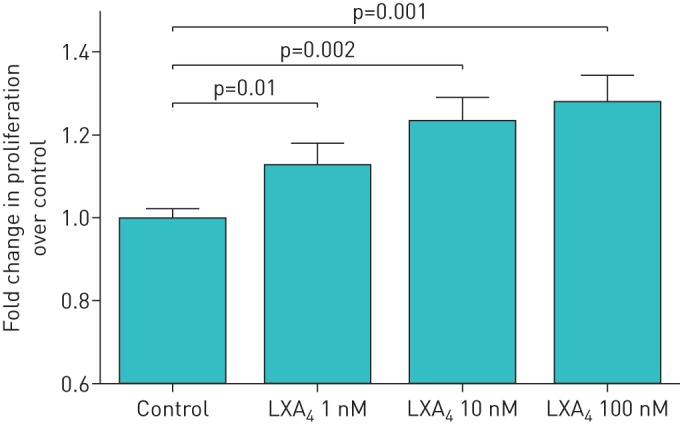
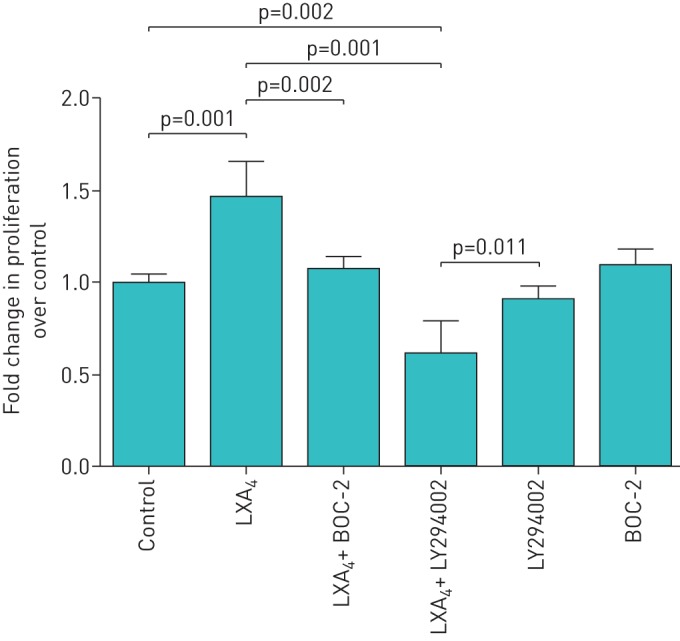
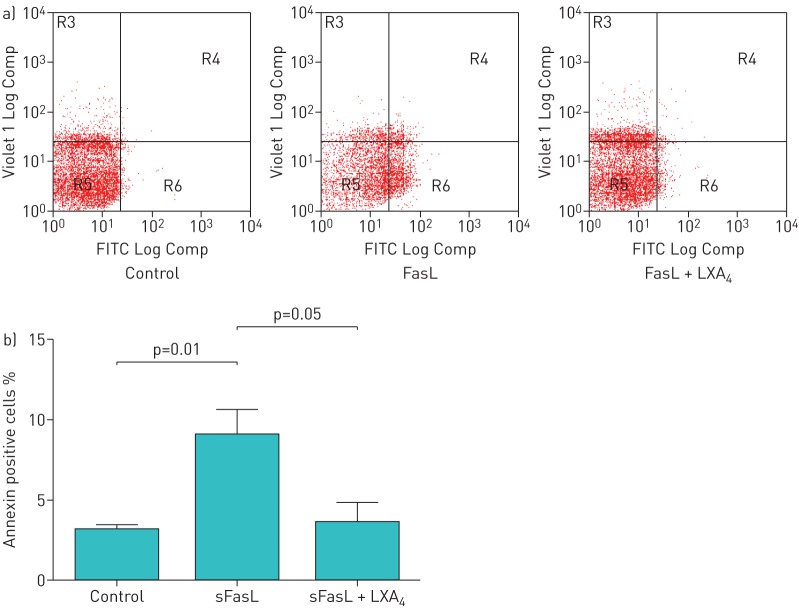
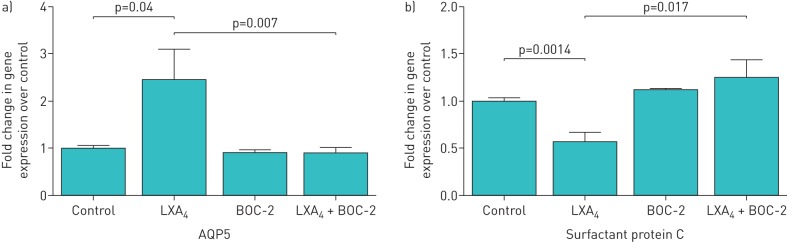
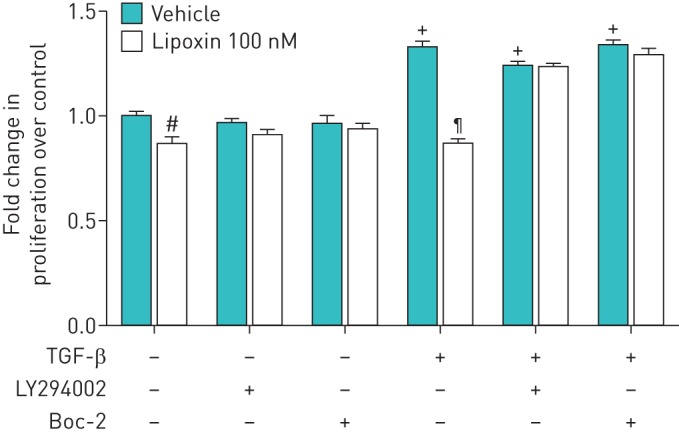
Therapy that promotes epithelial repair whilst protecting against fibroproliferation is critical for restoring lung function in acute and chronic respiratory diseases. Primary human alveolar type II cells were used to model the effects of lipoxin A upon wound repair, proliferation, apoptosis and transdifferention. Effects of lipoxin A upon primary human lung fibroblast proliferation, collagen production, and myofibroblast differentiation were also assessed. Lipoxin A promoted type II cell wound repair and proliferation, blocked the negative effects of soluble Fas ligand/tumour necrosis factor α upon cell proliferation, viability and apoptosis, and augmented the epithelial cell proliferative response to bronchoaveolar lavage fluid (BALF) from acute respiratory distress syndrome (ARDS). In contrast, Lipoxin A reduced fibroblast proliferation, collagen production and myofibroblast differentiation induced by transforming growth factor β and BALF from ARDS. The effects of Lipoxin A were phosphatidylinositol 3'-kinase dependent and mediated the lipoxin A receptor. Lipoxin A appears to promote alveolar epithelial repair by stimulating epitheial cell wound repair, proliferation, reducing apoptosis and promoting trans-differentiation of alveolar type II cells into type I cells. Lipoxin A reduces fibroblast proliferation, collagen production and myofibroblast differentiation. These data suggest that targeting lipoxin actions may be a therapeutic strategy for treating the resolution phase of ARDS.
在急性和慢性呼吸道疾病中,促进上皮修复同时防止纤维增生的治疗方法对于恢复肺功能至关重要。原代人肺泡II型细胞被用于模拟脂氧素A对伤口修复、增殖、凋亡和转分化的影响。还评估了脂氧素A对原代人肺成纤维细胞增殖、胶原蛋白产生和成肌纤维细胞分化的影响。脂氧素A促进II型细胞伤口修复和增殖,阻断可溶性Fas配体/肿瘤坏死因子α对细胞增殖、活力和凋亡的负面影响,并增强上皮细胞对急性呼吸窘迫综合征(ARDS)支气管肺泡灌洗液(BALF)的增殖反应。相比之下,脂氧素A减少了由转化生长因子β和ARDS的BALF诱导的成纤维细胞增殖、胶原蛋白产生和成肌纤维细胞分化。脂氧素A的作用依赖于磷脂酰肌醇3'-激酶,并通过脂氧素A受体介导。脂氧素A似乎通过刺激上皮细胞伤口修复、增殖、减少凋亡以及促进肺泡II型细胞向I型细胞的转分化来促进肺泡上皮修复。脂氧素A减少成纤维细胞增殖、胶原蛋白产生和成肌纤维细胞分化。这些数据表明,靶向脂氧素的作用可能是治疗ARDS消退期的一种治疗策略。