Kubo Takeshi, Ohno Yoshiharu, Takenaka Daisuke, Nishino Mizuki, Gautam Shiva, Sugimura Kazuro, Kauczor Hans Ulrich, Hatabu Hiroto
Department of Diagnostic Imaging and Nuclear Medicine, Kyoto University Graduate School of Medicine, 54 Shogoin Kawahara-cho, Sakyo-ku, Kyoto 606-8507, Japan.
Department of Radiology, Kobe University Graduate School of Medicine, 7-5-2 Kusunoki-cho, Chuo-ku, Kobe 650-0017, Japan.
Eur J Radiol Open. 2016 Mar 24;3:67-73. doi: 10.1016/j.ejro.2016.03.002. eCollection 2016.
To determine the lesion characterization capability by low dose CT for localized lung lesions in comparison with standard dose CT.
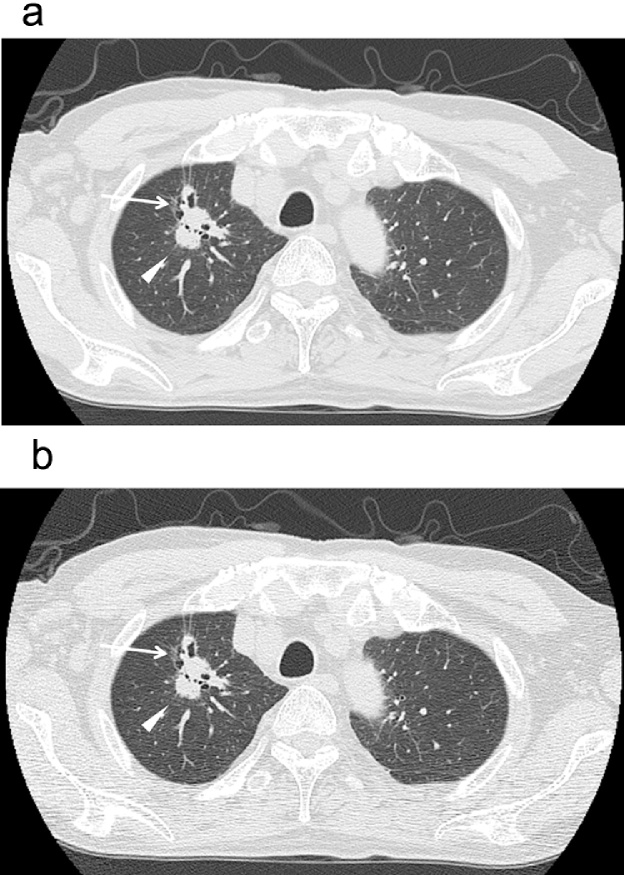
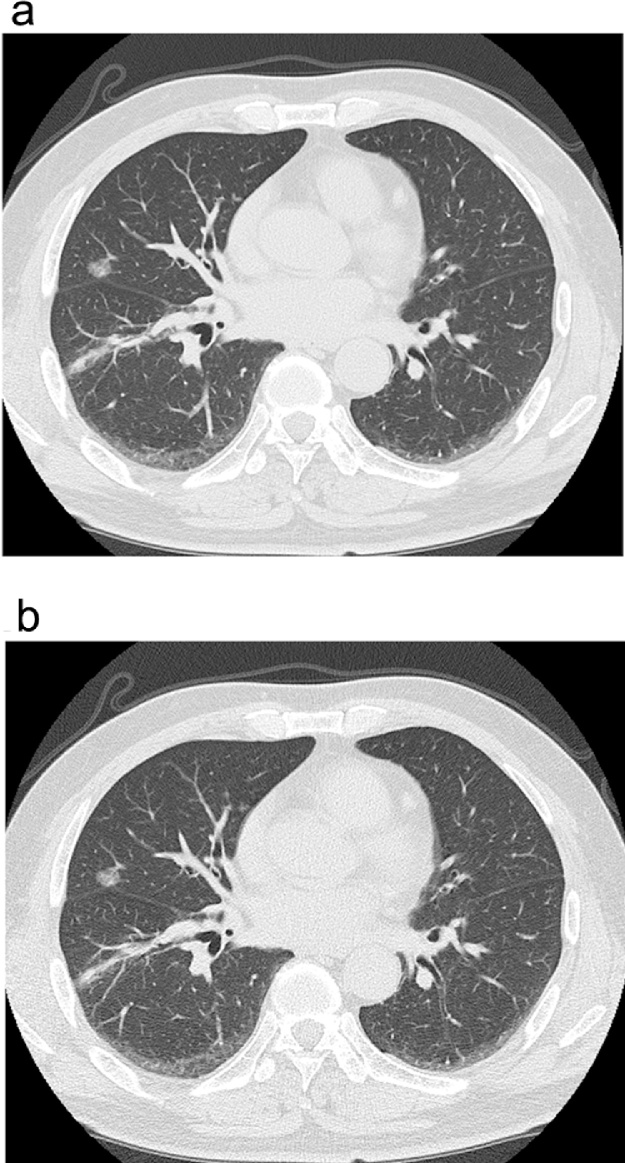
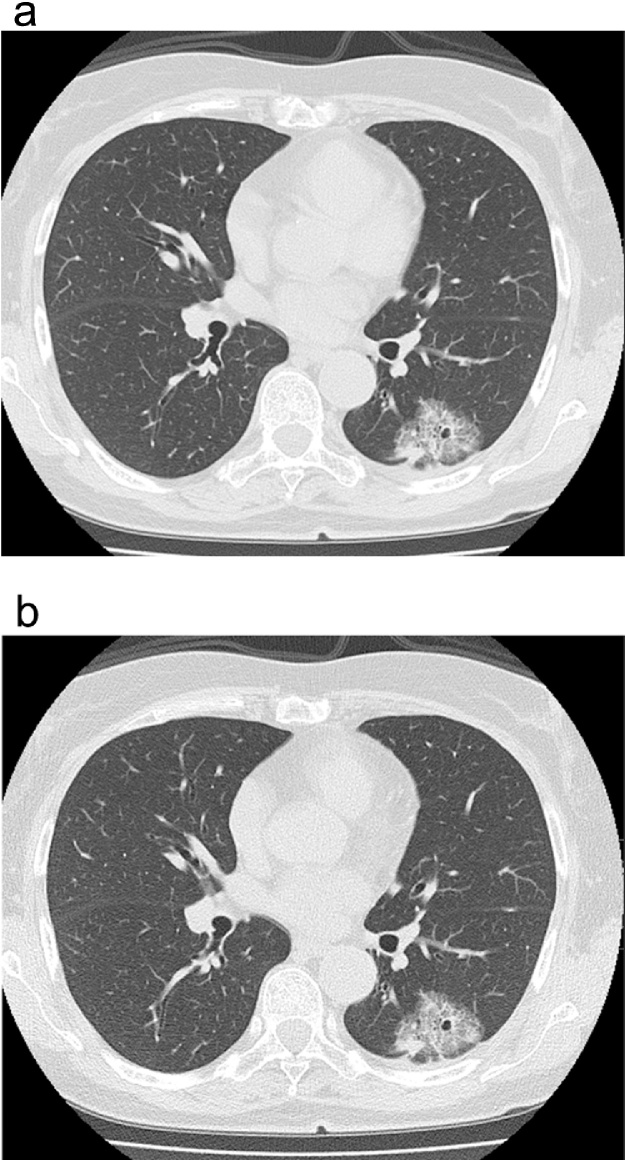
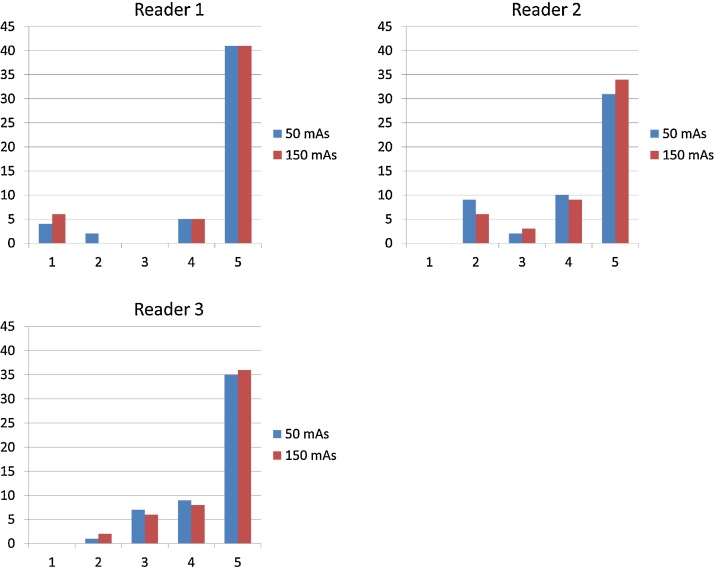
Approval for this study was granted by our Institutional Review Board. Fifty-two consecutive patients (36 males and 16 females, median age of 71 years.) who had CT examinations for evaluation of lung lesions comprise the study population. Two chest CT scans were performed with current time product of 50 and 150 mAs at 120 kVp, with the same scan length with a 16 detector-row CT scanner. Three readers evaluated 52 target lesions and assigned an overall impression score to each target lesion, using a 5 point scale from 1 (definitely benign) to 5 (definitely malignant). Six features of the lesions including lesion type, margin characteristics, calcification, lobulation, speculation, and pleural indentation were also reported with 5-point scales. The weighted kappa analyses and receiver operating characteristic analysis were used for analysis.
The mean kappa value between low-and standard-dose CT was 0.82 for overall impression of the lesions, showing almost perfect agreement. Area under the curve of low-dose CT (Az = 0.74) had no significant difference from that of standard-dose CT (Az = 0.74) (p = 0.61). The kappa values for six lesion features ranged from 0.45 to 0.83, showing moderate to almost perfect agreement.
Lesion characterization capability by low-dose CT images was comparable to that by standard-dose CT images and therefore sufficient for evaluation of localized lung lesions.
与标准剂量CT相比,确定低剂量CT对局限性肺病变的病变特征描述能力。
本研究获得了我院机构审查委员会的批准。连续52例因评估肺病变而接受CT检查的患者(36例男性和16例女性,中位年龄71岁)组成了研究人群。使用16排探测器CT扫描仪,在120 kVp下分别以50和150 mAs的管电流时间乘积进行两次胸部CT扫描,扫描长度相同。三位阅片者对52个目标病变进行评估,并使用从1(肯定为良性)到5(肯定为恶性)的5分制为每个目标病变给出总体印象评分。还对病变的六个特征,包括病变类型、边缘特征、钙化、分叶、毛刺和胸膜凹陷,采用5分制进行报告。采用加权kappa分析和受试者操作特征分析进行分析。
低剂量CT与标准剂量CT之间病变总体印象的平均kappa值为0.82,显示出几乎完全一致。低剂量CT的曲线下面积(Az = 0.74)与标准剂量CT的曲线下面积(Az = 0.74)无显著差异(p = 0.61)。六个病变特征的kappa值范围为0.45至0.83,显示出中度至几乎完全一致。
低剂量CT图像的病变特征描述能力与标准剂量CT图像相当,因此足以用于评估局限性肺病变。