Sartor Francesco, Bonato Matteo, Papini Gabriele, Bosio Andrea, Mohammed Rahil A, Bonomi Alberto G, Moore Jonathan P, Merati Giampiero, La Torre Antonio, Kubis Hans-Peter
Personal Health, Philips Research, Eindhoven, The Netherlands.
Department of Biomedical Sciences for Health, Università degli Studi di Milano, Milan, Italy.
PLoS One. 2016 Dec 13;11(12):e0168154. doi: 10.1371/journal.pone.0168154. eCollection 2016.
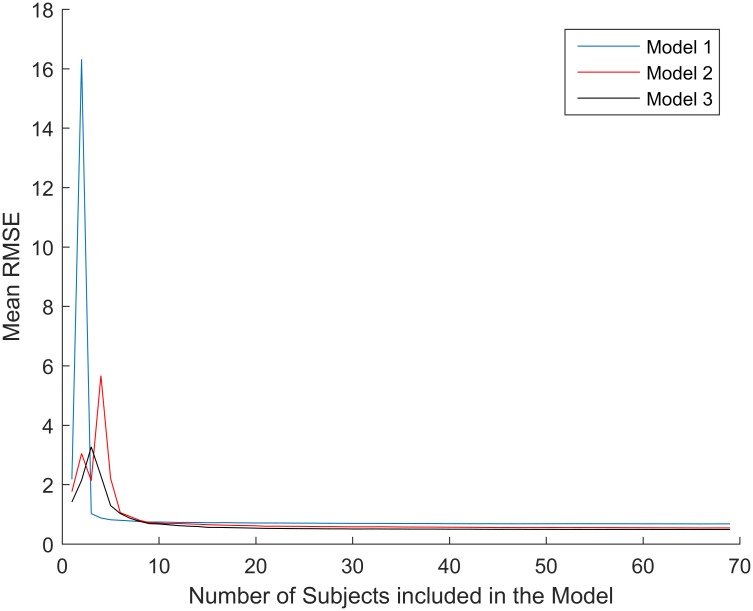
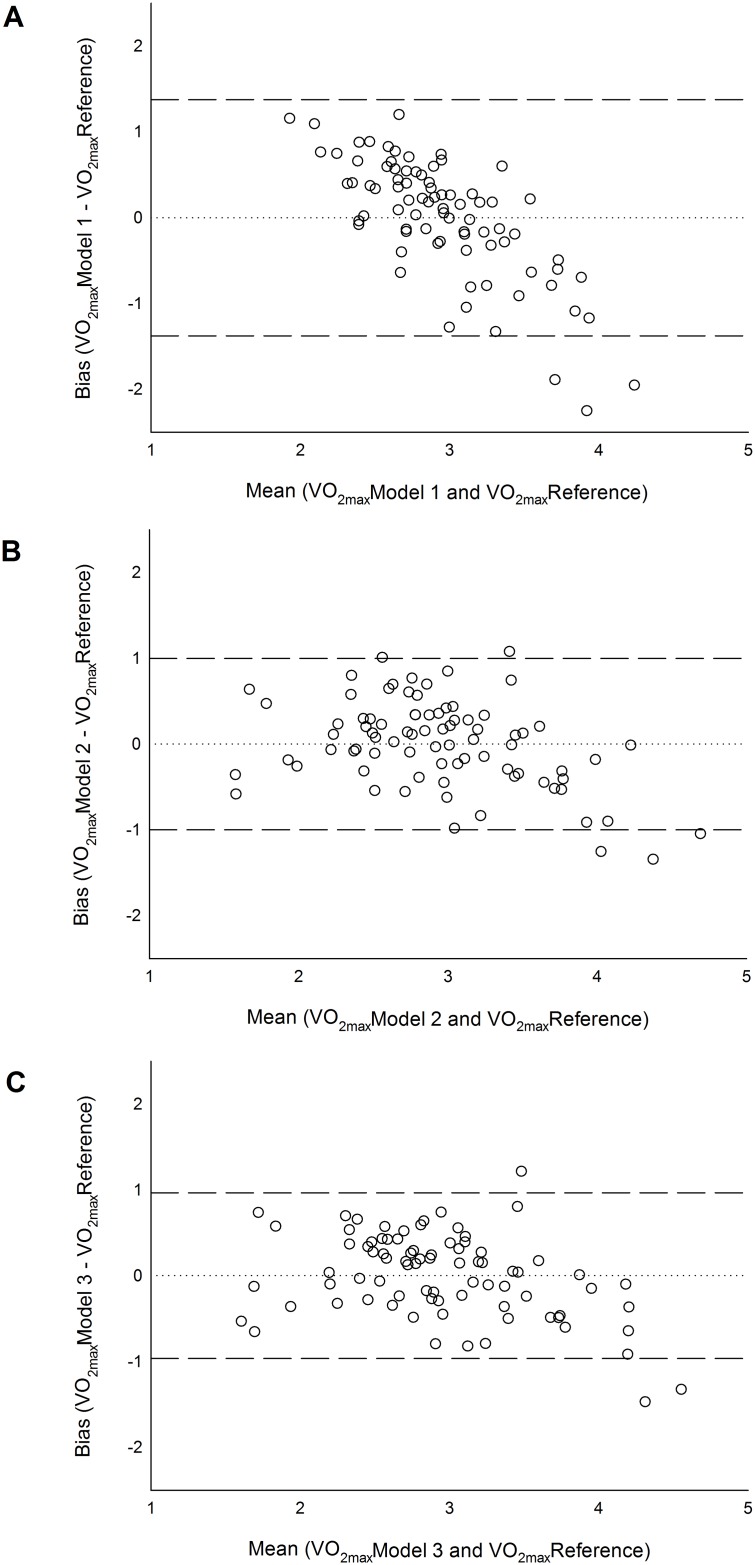
Cardio-respiratory fitness (CRF) is a widespread essential indicator in Sports Science as well as in Sports Medicine. This study aimed to develop and validate a prediction model for CRF based on a 45 second self-test, which can be conducted anywhere. Criterion validity, test re-test study was set up to accomplish our objectives. Data from 81 healthy volunteers (age: 29 ± 8 years, BMI: 24.0 ± 2.9), 18 of whom females, were used to validate this test against gold standard. Nineteen volunteers repeated this test twice in order to evaluate its repeatability. CRF estimation models were developed using heart rate (HR) features extracted from the resting, exercise, and the recovery phase. The most predictive HR feature was the intercept of the linear equation fitting the HR values during the recovery phase normalized for the height2 (r2 = 0.30). The Ruffier-Dickson Index (RDI), which was originally developed for this squat test, showed a negative significant correlation with CRF (r = -0.40), but explained only 15% of the variability in CRF. A multivariate model based on RDI and sex, age and height increased the explained variability up to 53% with a cross validation (CV) error of 0.532 L ∙ min-1 and substantial repeatability (ICC = 0.91). The best predictive multivariate model made use of the linear intercept of HR at the beginning of the recovery normalized for height2 and age2; this had an adjusted r2 = 0. 59, a CV error of 0.495 L·min-1 and substantial repeatability (ICC = 0.93). It also had a higher agreement in classifying CRF levels (κ = 0.42) than RDI-based model (κ = 0.29). In conclusion, this simple 45 s self-test can be used to estimate and classify CRF in healthy individuals with moderate accuracy and large repeatability when HR recovery features are included.
心肺适能(CRF)在运动科学和运动医学领域是一项广泛应用的重要指标。本研究旨在基于一项可在任何地点进行的45秒自我测试,开发并验证一种用于CRF的预测模型。为此,开展了标准效度和重测研究以实现我们的目标。来自81名健康志愿者(年龄:29±8岁,体重指数:24.0±2.9)的数据被用于对照金标准验证该测试,其中18名女性。19名志愿者重复进行该测试两次以评估其重复性。利用从静息、运动和恢复阶段提取的心率(HR)特征开发了CRF估计模型。最具预测性的HR特征是恢复阶段拟合HR值的线性方程的截距,该截距按身高²进行了归一化(r² = 0.30)。最初为此深蹲测试开发的鲁菲耶 - 迪克森指数(RDI)与CRF呈显著负相关(r = -0.40),但仅解释了CRF变异性的15%。基于RDI以及性别、年龄和身高的多变量模型在交叉验证(CV)误差为0.532 L·min⁻¹且具有较高重复性(组内相关系数ICC = 0.91)的情况下,将可解释的变异性提高到了53%。最佳预测多变量模型利用了恢复开始时按身高²和年龄²归一化的HR线性截距;其调整后的r² = 0.59,CV误差为0.495 L·min⁻¹且具有较高重复性(ICC = 0.93)。在对CRF水平进行分类时,它的一致性(κ = 0.42)也高于基于RDI的模型(κ = 0.29)。总之,当纳入HR恢复特征时,这种简单的45秒自我测试可用于以中等准确度和较高重复性估计和分类健康个体的CRF。