Li Bing, Luo Xiumei, Li Tao, Zheng Changyue, Ji Shunmei, Ma Yuanyuan, Zhang Shuangshuang, Zhou Xiaodong
Central Laboratory, Jinshan Hospital affiliated to Fudan University, Shanghai, China.
Department of Ophthalmology, Jinshan Hospital affiliated to Fudan University, Shanghai, China.
PLoS One. 2016 Dec 13;11(12):e0167902. doi: 10.1371/journal.pone.0167902. eCollection 2016.
To investigate the effects of constant flickering light on refractive development, the role of serotonin (i.e.5-hydroxytryptamine, 5-HT)and 5-HT2A receptor in myopia induced by flickering light in guinea pigs.
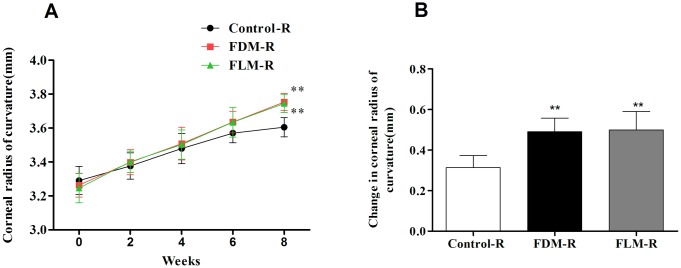
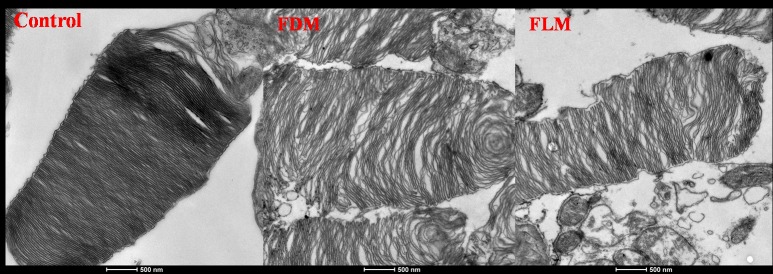
Forty-five guinea pigs were randomly divided into three groups: control, form deprivation myopia (FDM) and flickering light induced myopia (FLM) groups(n = 15 for each group). The right eyes of the FDM group were covered with semitransparent hemispherical plastic shells serving as eye diffusers. Guinea pigs in FLM group were raised with illumination of a duty cycle of 50% at a flash frequency of 0.5Hz. The refractive status, axial length (AL), corneal radius of curvature(CRC) were measured by streak retinoscope, A-scan ultrasonography and keratometer, respectively. Ultramicroscopy images were taken by electron microscopy. The concentrations of 5-HTin the retina, vitreous body and retinal pigment epithelium (RPE) were assessed by high performance liquid chromatography, the retinal 5-HT2A receptor expression was evaluated by immunohistofluorescence and western blot.
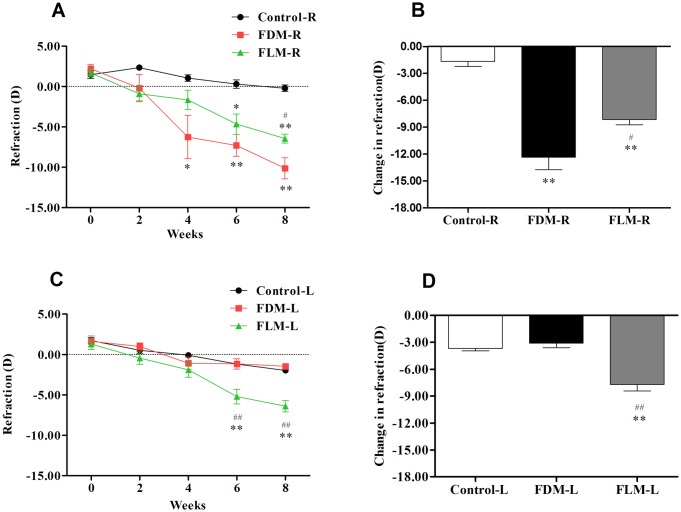
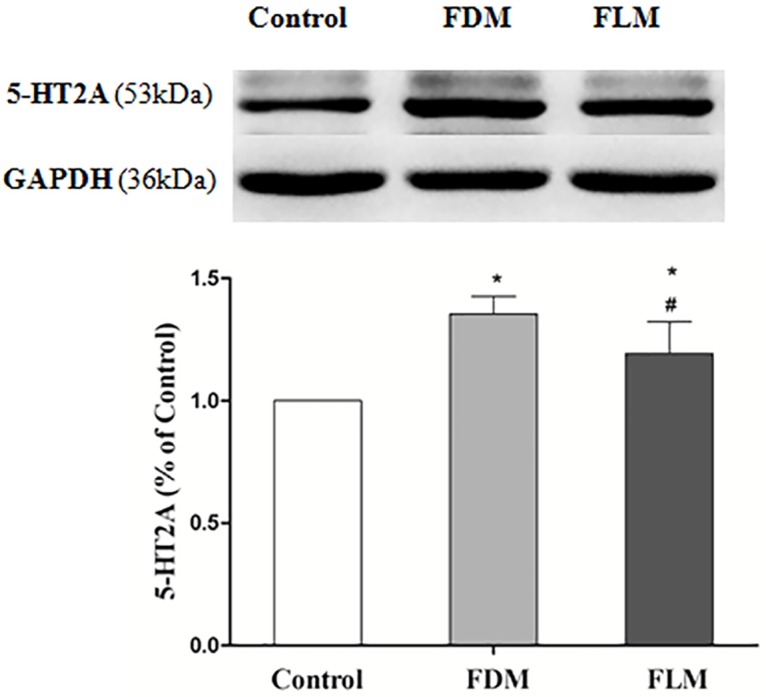
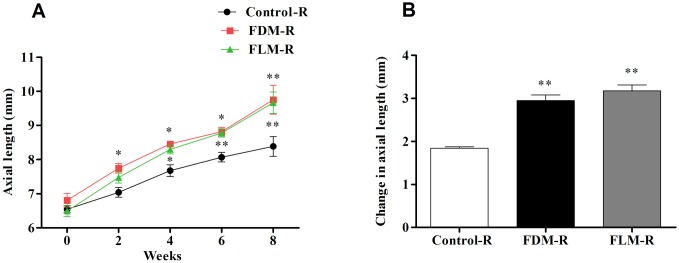
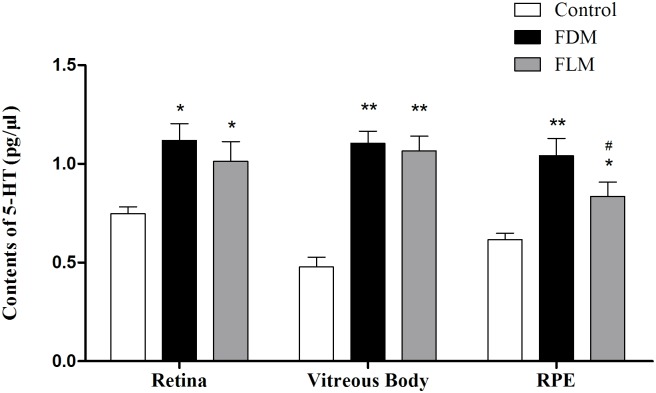
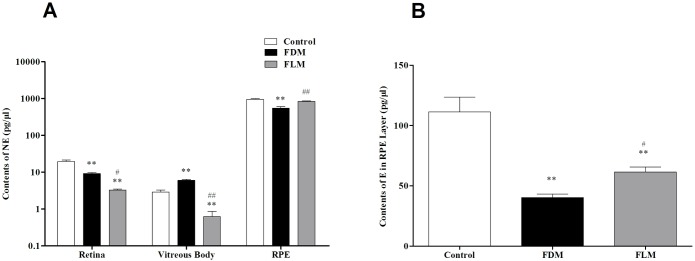
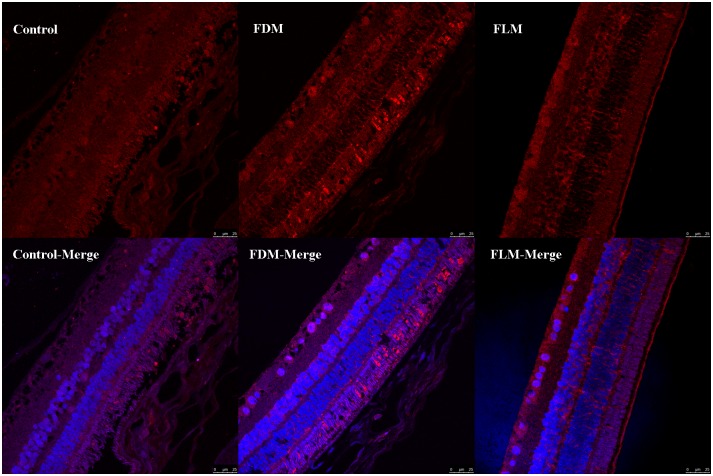
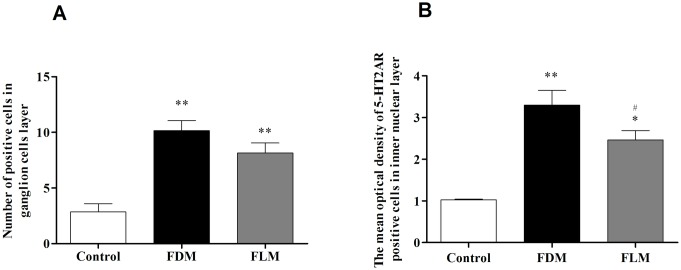
The refraction of FDM and FLM eyes became myopic from some time point (the 4th week and the 6th week, respectively) in the course of the experiment, which was indicated by significantly decreased refraction and longer AL when compared with the controls (p<0.05). The concentrations of 5-HT in the retina, vitreous body and RPE of FDM and FLM eyes were significantly increased in comparison with those of control eyes (both p<0.05). Similar to FDM eyes, the expression of retinal 5-HT2A receptor in FLM eyes was significantly up-regulated compared to that of control eyes (both p<0.05). Western blot analysis showed that retinal 5-HT2A receptor level elevated less in the FLM eyes than that in the FDM eyes. Moreover, the levels of norepinephrine and epinephrine in FDM and FLM groups generally decreased when compared with control groups (all p<0.05).
Constant flickering light could cause progressive myopia in guinea pigs. 5-HT and 5-HT2A receptor increased both in form deprivation myopia and flickering light induced myopia, indicating that 5-HT possibly involved in myopic development via binding to5-HT2A receptor.
研究持续闪烁光对屈光发育的影响,以及血清素(即5-羟色胺,5-HT)和5-HT2A受体在豚鼠闪烁光诱导近视中的作用。
45只豚鼠随机分为三组:对照组、形觉剥夺性近视(FDM)组和闪烁光诱导近视(FLM)组(每组n = 15)。FDM组右眼覆盖半透明半球形塑料壳作为眼扩散器。FLM组豚鼠在占空比为50%、闪光频率为0.5Hz的光照下饲养。分别用带状检眼镜、A超超声检查仪和角膜曲率计测量屈光状态、眼轴长度(AL)、角膜曲率半径(CRC)。用电子显微镜拍摄超微结构图像。采用高效液相色谱法评估视网膜、玻璃体和视网膜色素上皮(RPE)中5-HT的浓度,通过免疫荧光和蛋白质印迹法评估视网膜5-HT2A受体的表达。
在实验过程中,FDM组和FLM组的眼睛从某个时间点(分别为第4周和第6周)开始出现近视,与对照组相比,屈光明显降低,AL更长(p<0.05)。与对照组相比,FDM组和FLM组眼睛的视网膜、玻璃体和RPE中5-HT的浓度显著增加(均p<0.05)。与FDM组眼睛相似,FLM组眼睛视网膜5-HT2A受体的表达与对照组相比显著上调(均p<0.05)。蛋白质印迹分析表明,FLM组眼睛视网膜5-HT2A受体水平的升高低于FDM组眼睛。此外,与对照组相比,FDM组和FLM组中去甲肾上腺素和肾上腺素的水平普遍降低(均p<0.05)。
持续闪烁光可导致豚鼠渐进性近视。在形觉剥夺性近视和闪烁光诱导近视中,5-HT和5-HT2A受体均增加,表明5-HT可能通过与5-HT2A受体结合参与近视发展。