Labhart Thomas
Institute of Molecular Life Sciences, University of Zurich, Winterthurerstrasse 190, Zürich CH 8057, Switzerland
J Exp Biol. 2016 Dec 15;219(Pt 24):3844-3856. doi: 10.1242/jeb.139899.
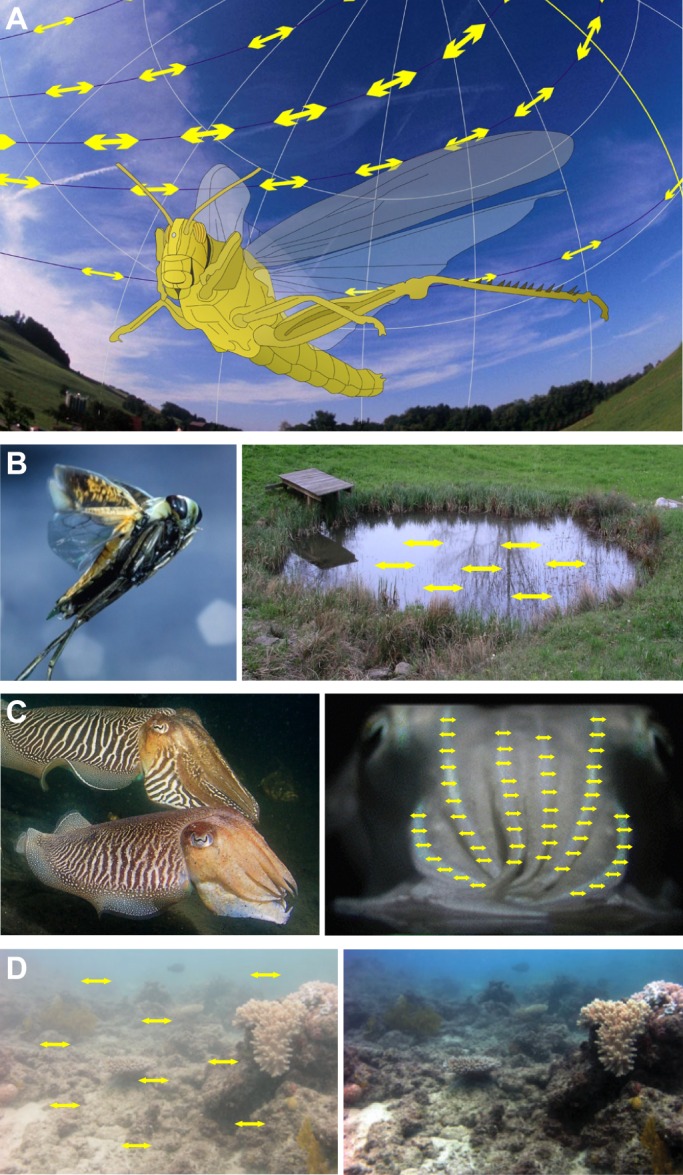
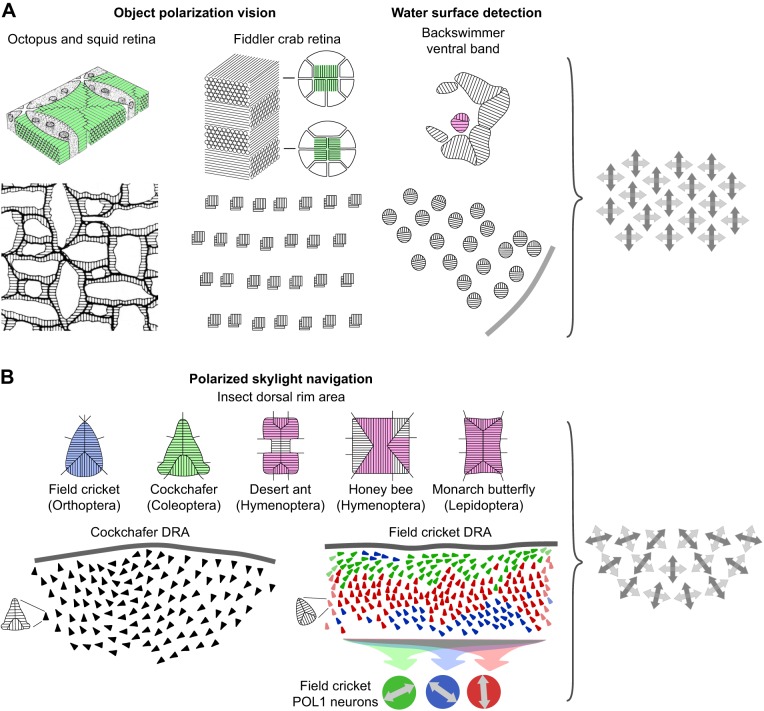
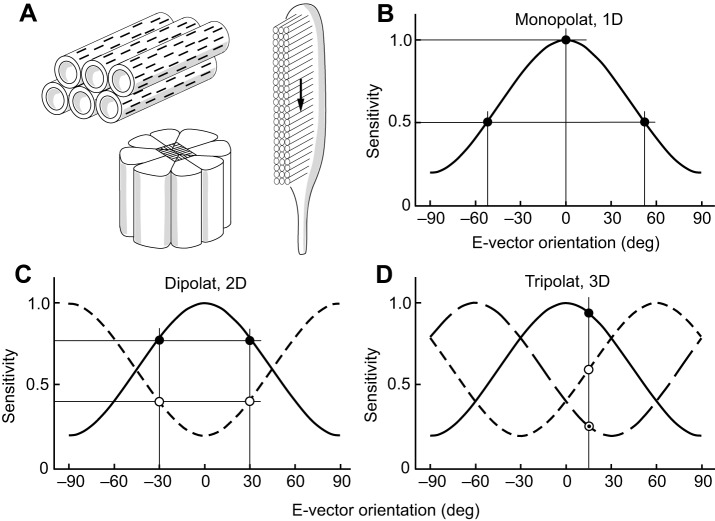
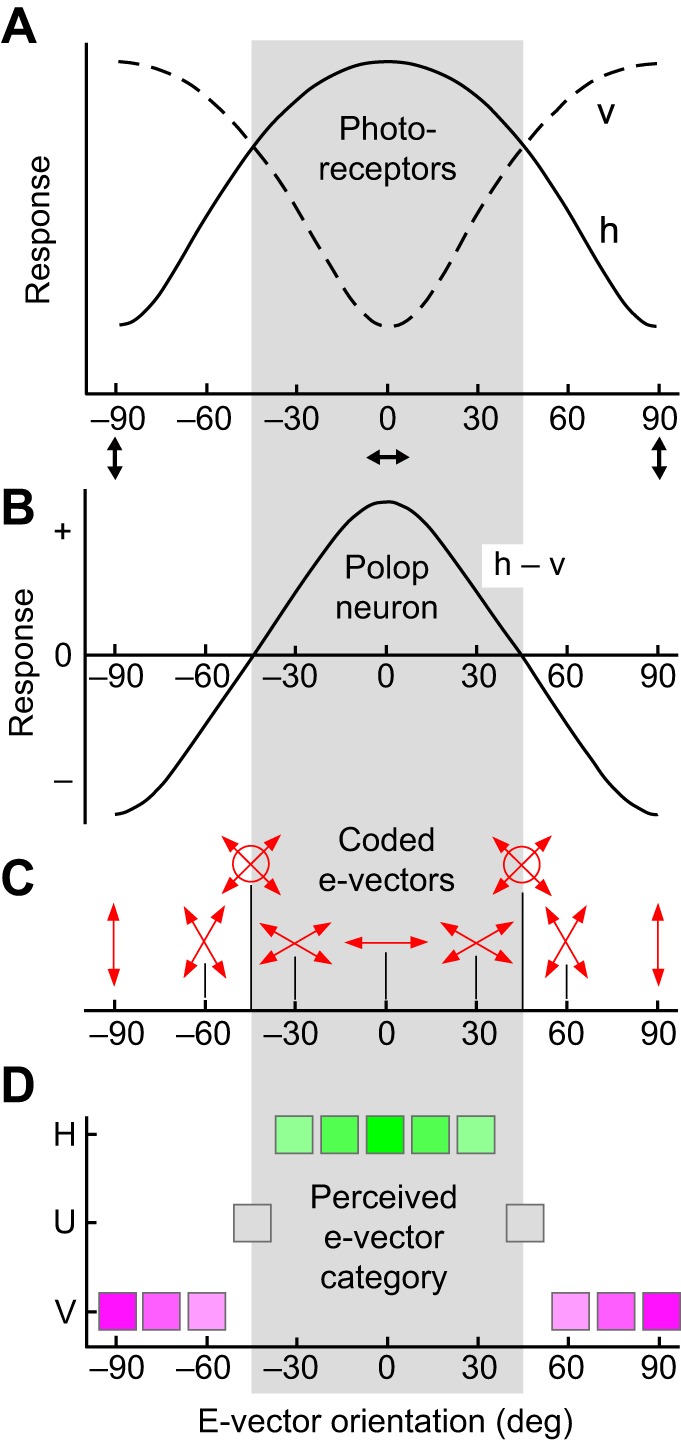
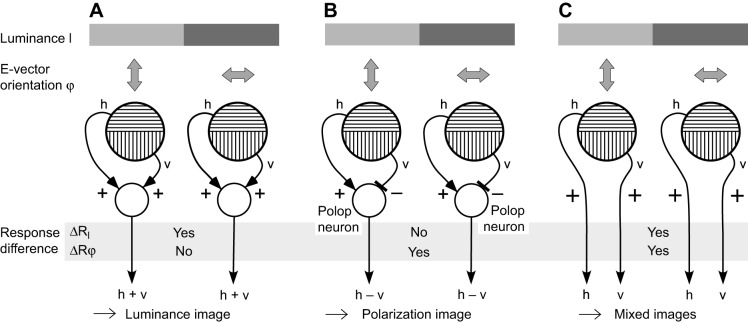
The visual world is rich in linearly polarized light stimuli, which are hidden from the human eye. But many invertebrate species make use of polarized light as a source of valuable visual information. However, exploiting light polarization does not necessarily imply that the electric (e)-vector orientation of polarized light can be perceived as a separate modality of light. In this Review, I address the question of whether invertebrates can detect specific e-vector orientations in a manner similar to that of humans perceiving spectral stimuli as specific hues. To analyze e-vector orientation, the signals of at least three polarization-sensitive sensors (analyzer channels) with different e-vector tuning axes must be compared. The object-based, imaging polarization vision systems of cephalopods and crustaceans, as well as the water-surface detectors of flying backswimmers, use just two analyzer channels. Although this excludes the perception of specific e-vector orientations, a two-channel system does provide a coarse, categoric analysis of polarized light stimuli, comparable to the limited color sense of dichromatic, 'color-blind' humans. The celestial compass of insects employs three or more analyzer channels. However, that compass is multimodal, i.e. e-vector information merges with directional information from other celestial cues, such as the solar azimuth and the spectral gradient in the sky, masking e-vector information. It seems that invertebrate organisms take no interest in the polarization details of visual stimuli, but polarization vision grants more practical benefits, such as improved object detection and visual communication for cephalopods and crustaceans, compass readings to traveling insects, or the alert 'water below!' to water-seeking bugs.
视觉世界中存在着丰富的线偏振光刺激,但人类肉眼却无法察觉。然而,许多无脊椎动物能够利用偏振光作为有价值的视觉信息来源。不过,利用光的偏振并不一定意味着偏振光的电(e)矢量方向能够被视为一种独立的光模态。在这篇综述中,我探讨了一个问题:无脊椎动物是否能够以类似于人类将光谱刺激感知为特定色调的方式,检测特定的e矢量方向。为了分析e矢量方向,必须比较至少三个具有不同e矢量调谐轴的偏振敏感传感器(分析通道)的信号。头足类动物和甲壳类动物基于物体的成像偏振视觉系统,以及仰泳蝽的水面探测器,仅使用两个分析通道。虽然这排除了对特定e矢量方向的感知,但双通道系统确实能对偏振光刺激进行粗略的、分类的分析,这类似于二色性的“色盲”人类有限的色觉。昆虫的天体罗盘使用三个或更多的分析通道。然而,那个罗盘是多模态的,即e矢量信息与来自其他天体线索的方向信息合并,如太阳方位和天空中的光谱梯度,从而掩盖了e矢量信息。似乎无脊椎动物对视觉刺激的偏振细节并不感兴趣,但偏振视觉能带来更多实际益处,比如对头足类动物和甲壳类动物来说,能改善物体检测和视觉交流;对迁徙的昆虫来说,能提供罗盘读数;对寻找水源的虫子来说,能发出“下方有水!”的警报。