Radiobiology Lab, Greater Poland Cancer Centre, 61- 866, Poznan, Poland.
Department of Electroradiology, Poznan University of Medical Sciences, 61-866, Poznan, Poland.
Stem Cell Rev Rep. 2017 Apr;13(2):299-308. doi: 10.1007/s12015-016-9708-y.
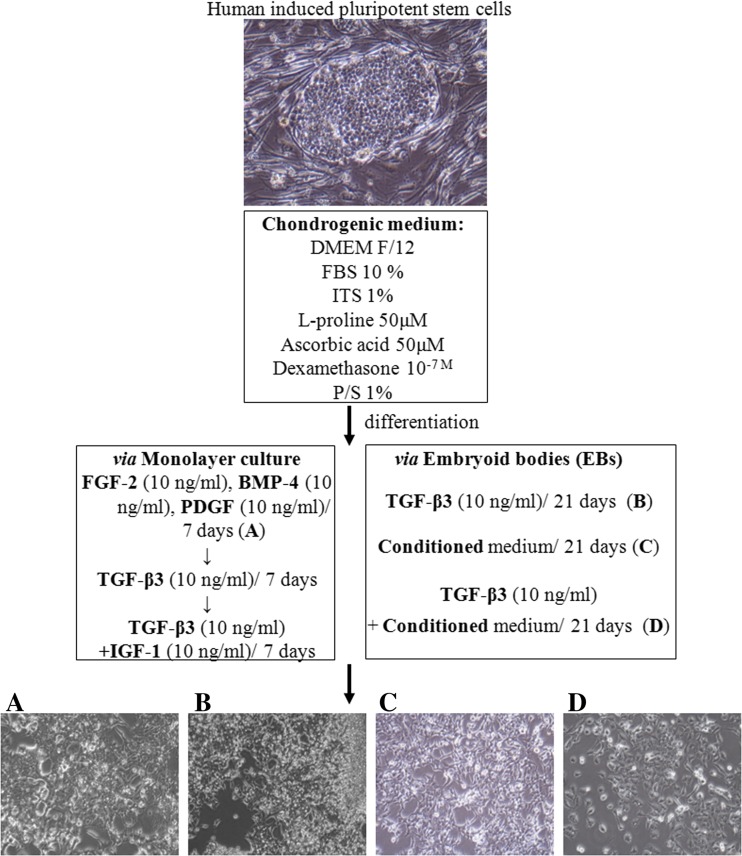
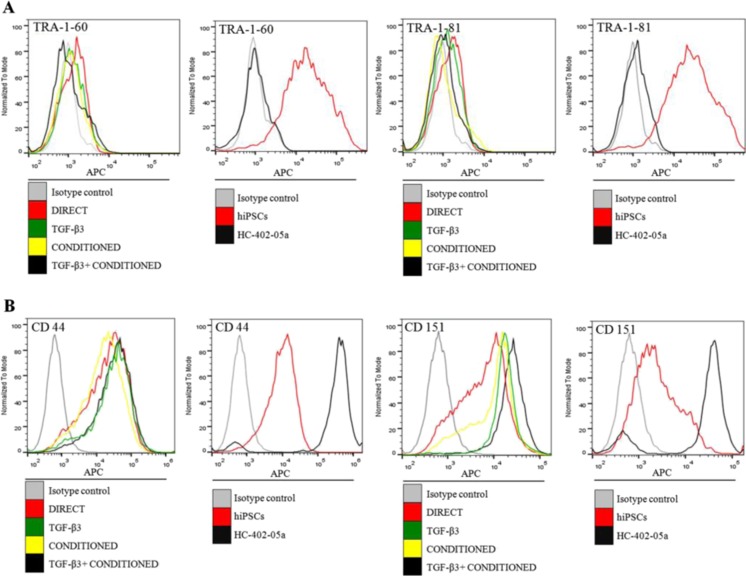
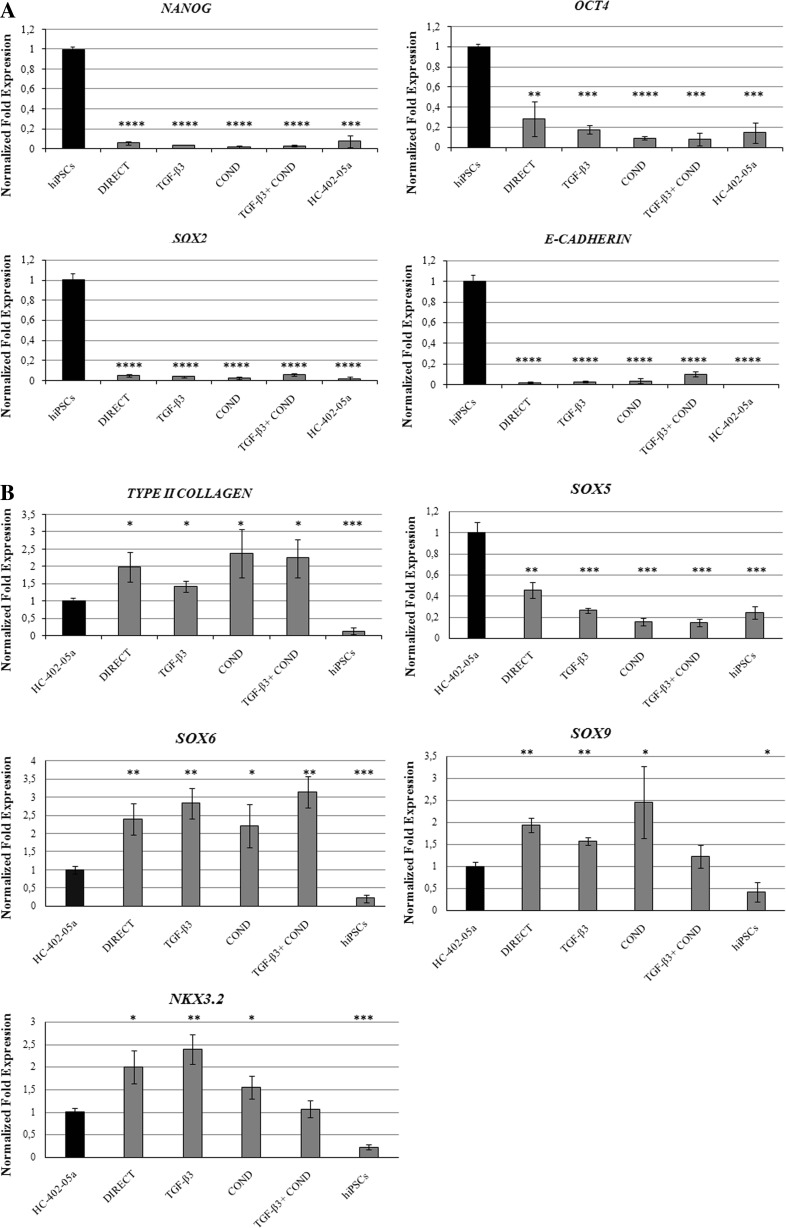
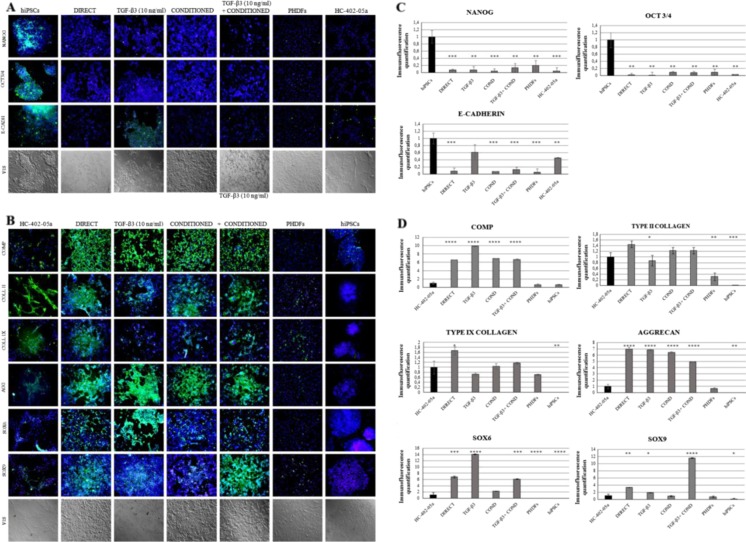
Stem cells (SCs) are a promising approach to regenerative medicine, with the potential to treat numerous orthopedic disorders, including osteo-degenerative diseases. The development of human-induced pluripotent stem cells (hiPSCs) has increased the potential of SCs for new treatments. However, current methods of differentiating hiPSCs into chondrocyte-like cells are suboptimal and better methods are needed. The aim of the present study was to assess four different chondrogenic differentiation protocols to identify the most efficient method of generating hiPSC-derived chondrocytes. For this study, hiPSCs were obtained from primary human dermal fibroblasts (PHDFs) and differentiated into chondrocyte-like cells using four different protocols: 1) monolayer culture with defined growth factors (GF); 2) embryoid bodies (EBs) in a chondrogenic medium with TGF-β3 cells; 3) EBs in chondrogenic medium conditioned with human chondrocytes (HC-402-05a cell line) and 4) EBs in chondrogenic medium conditioned with human chondrocytes and supplemented with TGF-β3. The cells obtained through these four protocols were evaluated and compared at the mRNA and protein levels. Although chondrogenic differentiation of hiPSCs was successfully achieved with all of these protocols, the two fastest and most cost-effective methods were the monolayer culture with GFs and the medium conditioned with human chondrocytes. Both of these methods are superior to other available techniques. The main advantage of the conditioned medium is that the technique is relatively simple and inexpensive while the directed method (i.e., monolayer culture with GFs) is faster than any protocol described to date because it is does not require additional steps such as EB formation.
干细胞(SCs)是再生医学的一种有前途的方法,具有治疗多种骨科疾病的潜力,包括骨退行性疾病。人诱导多能干细胞(hiPSCs)的发展增加了SCs 用于新治疗的潜力。然而,目前将 hiPSCs 分化为类软骨细胞的方法并不理想,需要更好的方法。本研究旨在评估四种不同的软骨分化方案,以确定生成 hiPSC 来源的软骨细胞的最有效方法。在这项研究中,hiPSCs 从原代人真皮成纤维细胞(PHDF)中获得,并使用四种不同的方案分化为类软骨细胞:1)在含有定义生长因子(GF)的单层培养物中;2)在含有 TGF-β3 的软骨形成培养基中的胚胎体(EBs)中;3)在经人软骨细胞(HC-402-05a 细胞系)条件化的软骨形成培养基中的 EBs 中和 4)在经人软骨细胞条件化并补充 TGF-β3 的软骨形成培养基中的 EBs。通过这四种方案获得的细胞在 mRNA 和蛋白水平上进行评估和比较。尽管所有这些方案都成功地实现了 hiPSCs 的软骨分化,但两种最快和最具成本效益的方法是使用 GF 的单层培养物和用人软骨细胞条件化的培养基。这两种方法都优于其他可用技术。条件培养基的主要优点是该技术相对简单且廉价,而定向方法(即使用 GF 的单层培养物)比迄今为止描述的任何方案都更快,因为它不需要形成 EB 等额外步骤。