Markey A, Workman V L, Bruce I A, Woolford T J, Derby B, Miller A F, Cartmell S H, Saiani A
School of Materials, University of Manchester, Oxford Road M13 9PL, Manchester, UK.
Manchester Institute of Biotechnology, University of Manchester, Oxford Road M13 9PL, Manchester, UK.
J Pept Sci. 2017 Feb;23(2):148-154. doi: 10.1002/psc.2940. Epub 2016 Dec 19.
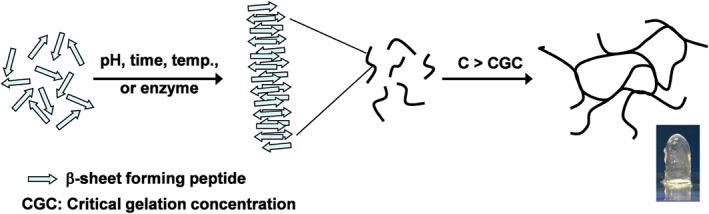
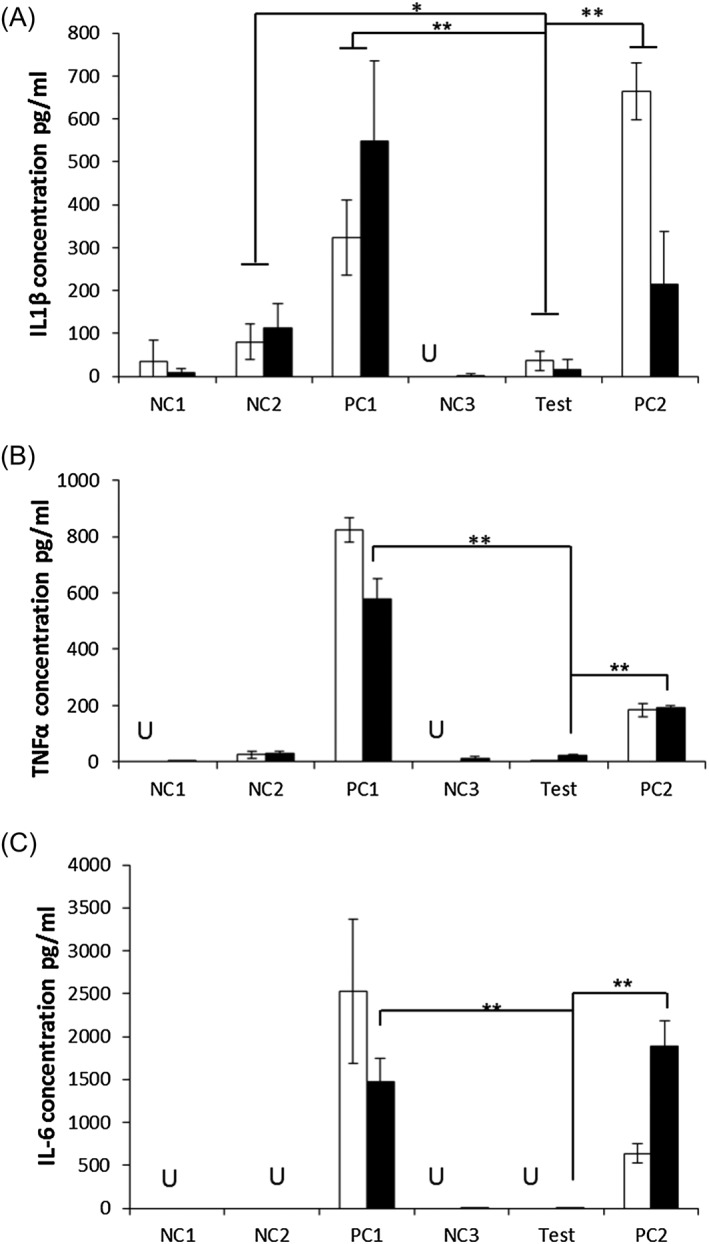
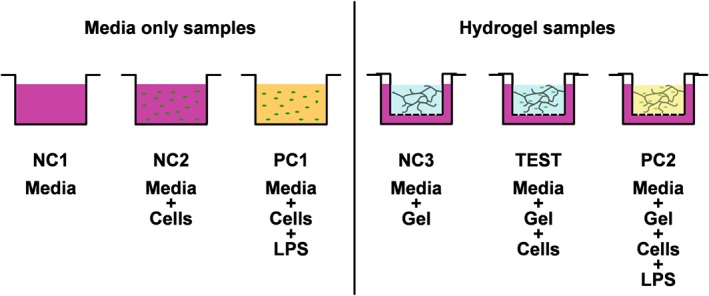
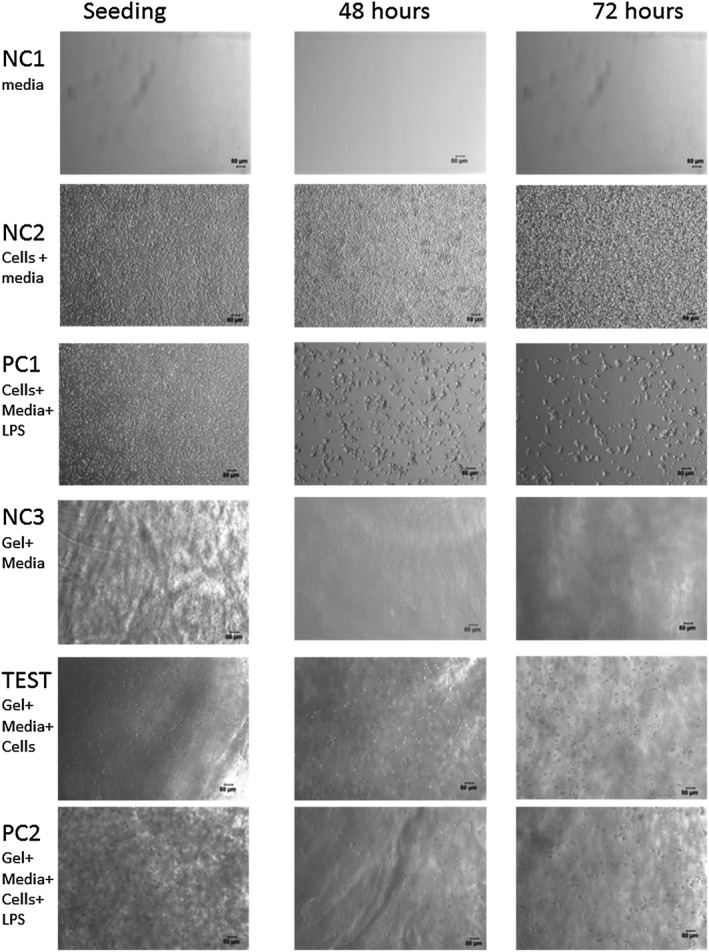
Peptide-based hydrogels have attracted significant interest in recent years as these soft, highly hydrated materials can be engineered to mimic the cell niche with significant potential applications in the biomedical field. Their potential use in vivo in particular is dependent on their biocompatibility, including their potential to cause an inflammatory response. In this work, we investigated in vitro the inflammatory potential of a β-sheet forming peptide (FEFEFKFK; F: phenylalanine, E: glutamic acid; K: lysine) hydrogel by encapsulating murine monocytes within it (3D culture) and using the production of cytokines, IL-β, IL-6 and TNFα, as markers of inflammatory response. No statistically significant release of cytokines in our test sample (media + gel + cells) was observed after 48 or 72 h of culture showing that our hydrogels do not incite a pro-inflammatory response in vitro. These results show the potential biocompatibility of these hydrogels and therefore their potential for in vivo use. The work also highlighted the difference in monocyte behaviour, proliferation and morphology changes when cultured in 2D vs. 3D. © 2016 The Authors Journal of Peptide Science published by European Peptide Society and John Wiley & Sons Ltd.
近年来,基于肽的水凝胶引起了广泛关注,因为这些柔软、高度水合的材料可以被设计成模拟细胞微环境,在生物医学领域具有重大潜在应用。它们在体内的潜在用途尤其取决于其生物相容性,包括引发炎症反应的可能性。在这项工作中,我们通过将小鼠单核细胞包裹在β-折叠形成肽(FEFEFKFK;F:苯丙氨酸,E:谷氨酸;K:赖氨酸)水凝胶中(3D培养),并使用细胞因子IL-β、IL-6和TNFα的产生作为炎症反应的标志物,在体外研究了该水凝胶的炎症潜力。培养48或72小时后,在我们的测试样品(培养基+凝胶+细胞)中未观察到细胞因子的统计学显著释放,这表明我们的水凝胶在体外不会引发促炎反应。这些结果显示了这些水凝胶的潜在生物相容性,因此也显示了它们在体内使用的潜力。这项工作还突出了单核细胞在二维与三维培养时行为、增殖和形态变化的差异。©2016作者 肽科学杂志 由欧洲肽协会和约翰·威利父子有限公司出版