Department of Medicine and Health Sciences, University of Sonora, Hermosillo, Sonora, Mexico.
West Biomedical Research Center, National Council of Science and Technology, Guadalajara, Jalisco, Mexico.
Int J Nanomedicine. 2020 Dec 21;15:10349-10370. doi: 10.2147/IJN.S278189. eCollection 2020.
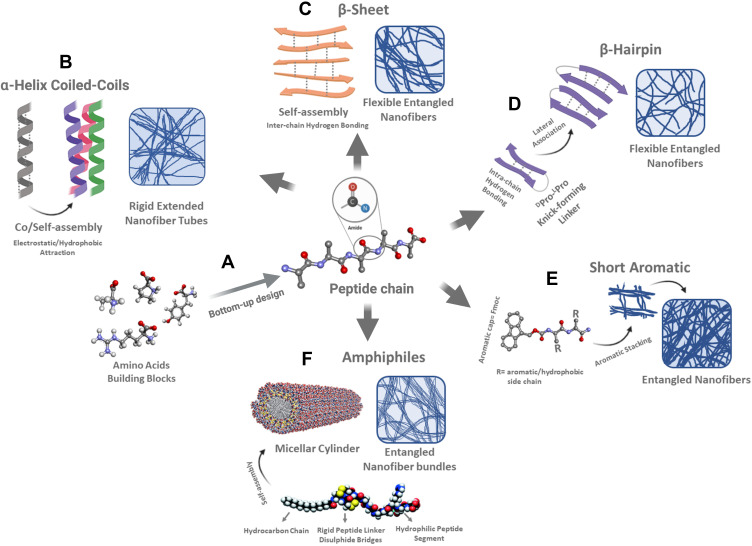
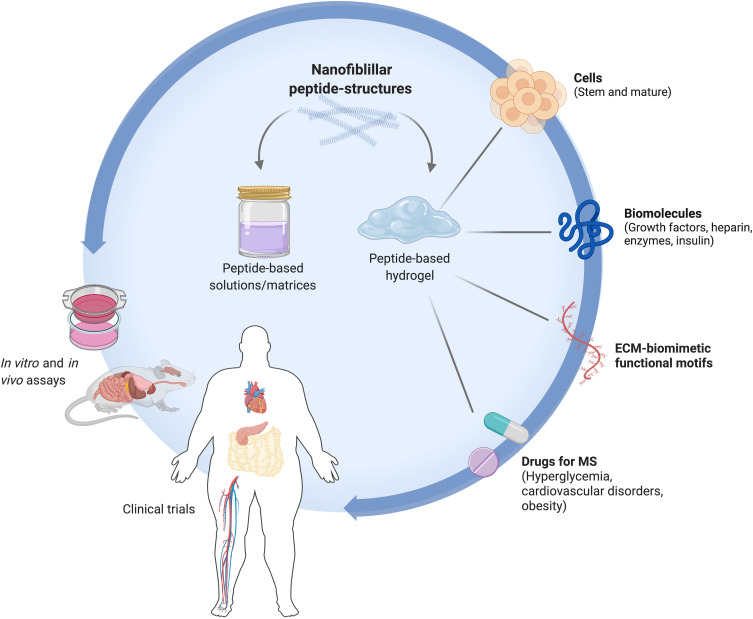
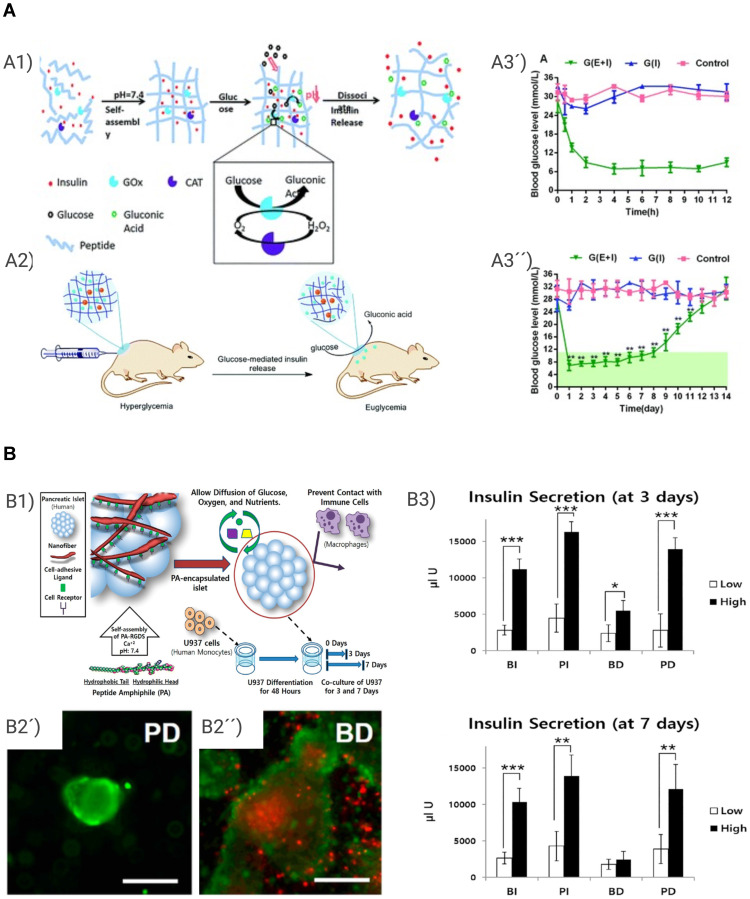
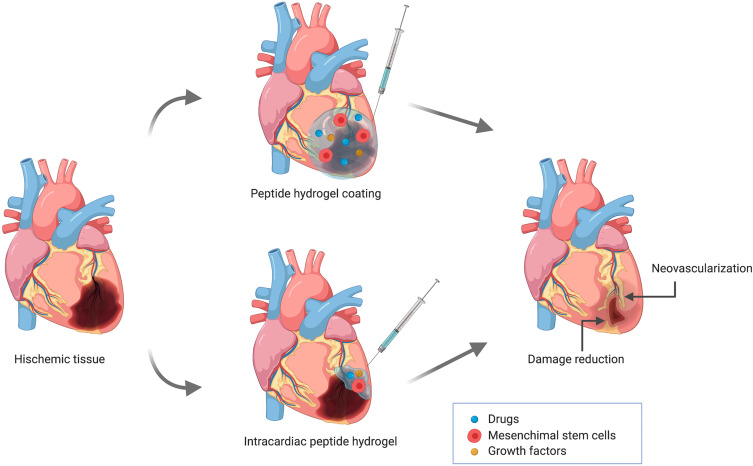
Metabolic syndrome comprises a cluster of comorbidities that represent a major risk of developing chronic diseases, such as type II diabetes, cardiovascular diseases, and stroke. Alarmingly, metabolic syndrome reaches epidemic proportions worldwide. Today, lifestyle changes and multiple drug-based therapies represent the gold standard to address metabolic syndrome. However, such approaches face two major limitations: complicated drug therapeutic regimes, which in most cases could lead to patient incompliance, and limited drug efficacy. This has encouraged scientists to search for novel routes to deal with metabolic syndrome and related diseases. Within such approaches, self-assembled peptide formulations have emerged as a promising alternative for treating metabolic syndrome. In particular, self-assembled peptide hydrogels, either as acellular or cell-load three-dimensional scaffoldings have reached significant relevance in the biomedical field to prevent and restore euglycemia, as well as for controlling cardiovascular diseases and obesity. This has been possible thanks to the physicochemical tunability of peptides, which are developed from a chemical toolbox of versatile amino acids enabling flexibility of designing a wide range of self-assembled/co-assembled nanostructures forming biocompatible viscoelastic hydrogels. Peptide hydrogels can be combined with several biological entities, such as extracellular matrix proteins, drugs or cells, forming functional biologics with therapeutic ability for treatment of metabolic syndrome-comorbidities. Additionally, self-assembly peptides combine safety, tolerability, and effectivity attributes; by this presenting a promising platform for the development of novel pharmaceuticals capable of addressing unmet therapeutic needs for diabetes, cardiovascular disorders and obesity. In this review, recent advances in developing self-assembly peptide nanostructures tailored for improving treatment of metabolic syndrome and related diseases will be discussed from basic research to preclinical research studies. Challenges facing the development of approved medicinal products based on self-assembling peptide nanomaterials will be discussed in light of regulatory requirement for clinical authorization.
代谢综合征是一组共病,代表了发展为慢性疾病(如 2 型糖尿病、心血管疾病和中风)的主要风险。令人震惊的是,代谢综合征在全球范围内达到了流行程度。如今,生活方式的改变和多种基于药物的治疗方法代表了治疗代谢综合征的金标准。然而,这些方法面临着两个主要限制:复杂的药物治疗方案,在大多数情况下可能导致患者不遵守治疗方案,以及药物疗效有限。这促使科学家们寻找治疗代谢综合征和相关疾病的新途径。在这些方法中,自组装肽制剂已成为治疗代谢综合征的一种有前途的替代方法。特别是,自组装肽水凝胶,无论是作为无细胞还是细胞负载的三维支架,在生物医学领域都具有重要意义,可以预防和恢复血糖正常,以及控制心血管疾病和肥胖。这是由于肽的物理化学可调性,这些肽是从多功能氨基酸的化学工具箱中开发出来的,可以灵活设计形成生物相容的粘弹性水凝胶的各种自组装/共组装纳米结构。肽水凝胶可以与几种生物实体结合,如细胞外基质蛋白、药物或细胞,形成具有治疗代谢综合征共病能力的功能性生物制剂。此外,自组装肽具有安全性、耐受性和有效性的特点;因此,为开发能够解决糖尿病、心血管疾病和肥胖症等未满足治疗需求的新型药物提供了一个有前途的平台。在这篇综述中,将从基础研究到临床前研究讨论为改善代谢综合征和相关疾病治疗而开发的定制自组装肽纳米结构的最新进展。将根据临床授权的监管要求讨论基于自组装肽纳米材料的批准药物开发所面临的挑战。