Kjærgaard Kristian, Dreyer Chris H, Ditzel Nicholas, Andreasen Christina M, Chen Li, Sheikh Søren P, Overgaard Søren, Ding Ming
Orthopaedic Research Laboratory, Department of Orthopaedic Surgery and Traumatology, Odense University Hospital, Department of Clinical Research, University of Southern Denmark, Sdr. Boulevard 29, 5000 Odense C, Denmark.
Department of Endocrinology and Metabolism, Molecular Endocrinology Laboratory (KMEB), Odense University Hospital, University of Southern Denmark, J. B. Winsløws Vej 25.1, 5000 Odense C, Denmark.
Stem Cells Int. 2016;2016:3846971. doi: 10.1155/2016/3846971. Epub 2016 Nov 23.
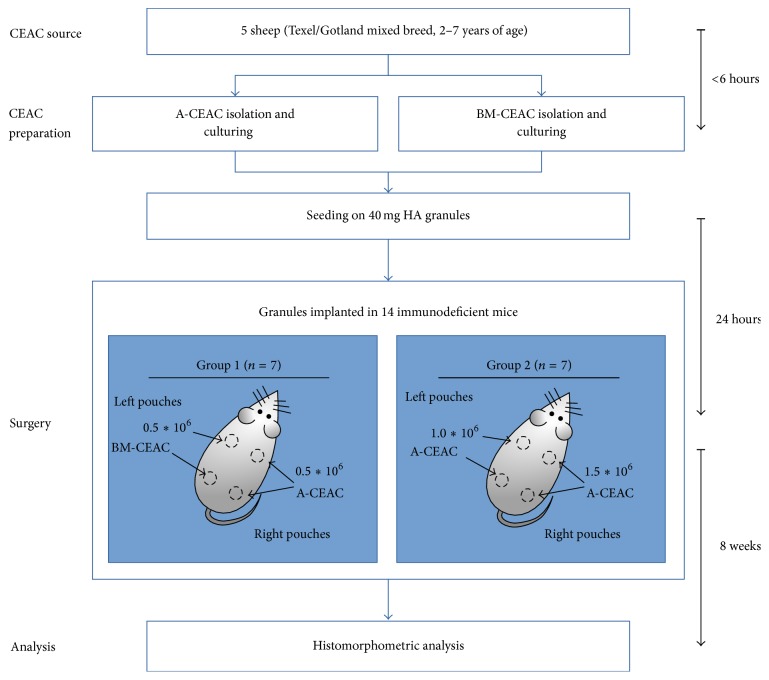
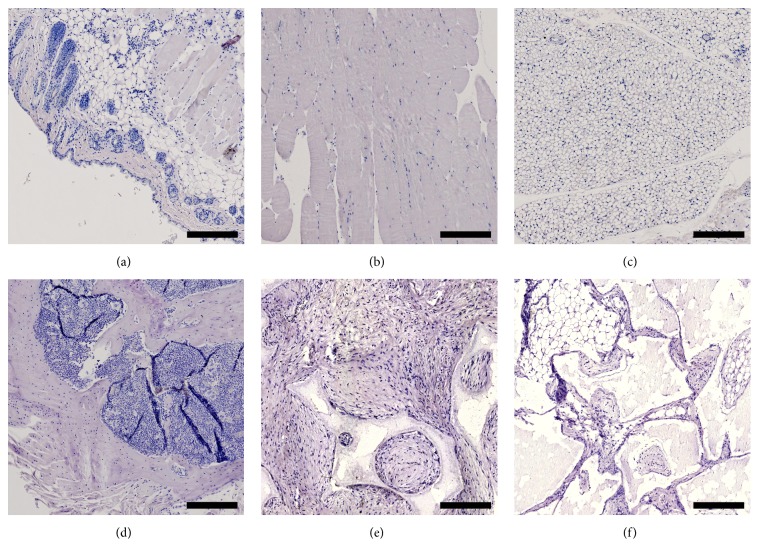
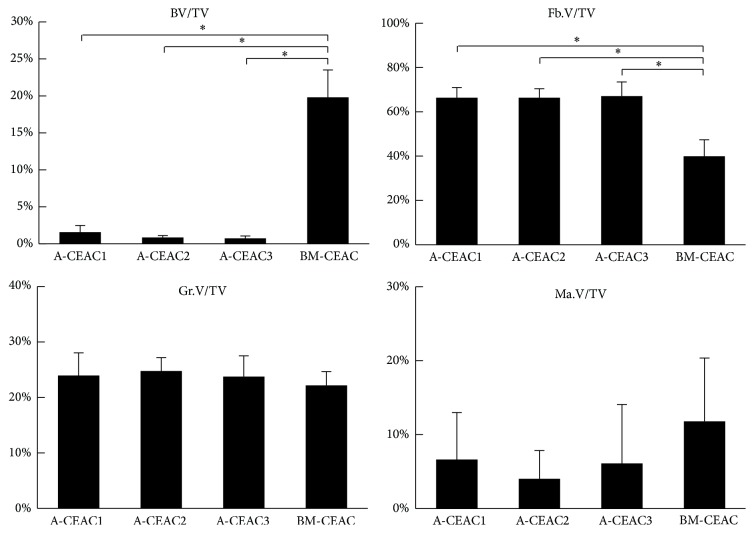
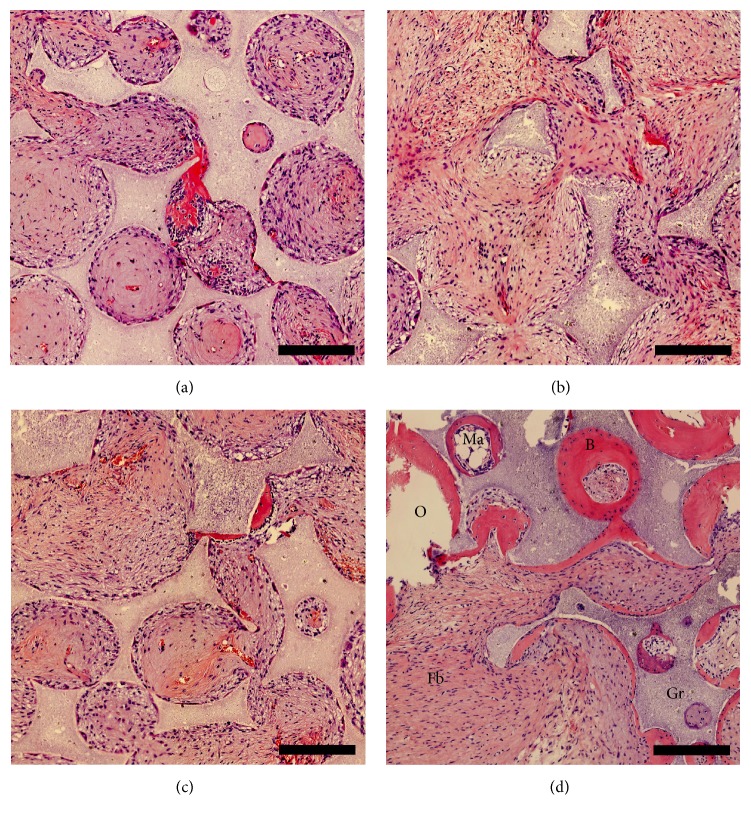
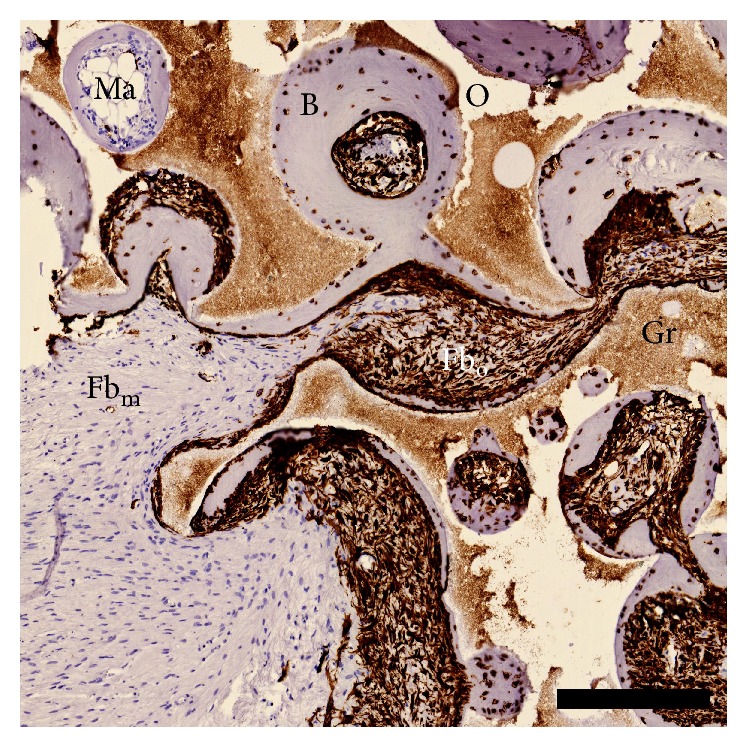
. Scaffolds for bone tissue engineering (BTE) can be loaded with stem and progenitor cells (SPC) from different sources to improve osteogenesis. SPC can be found in bone marrow, adipose tissue, and other tissues. Little is known about osteogenic potential of adipose-derived culture expanded, adherent cells (A-CEAC). This study compares osteogenic capacity between A-CEAC and bone marrow derived culture expanded, adherent cells (BM-CEAC). . A-CEAC and BM-CEAC were isolated from five female sheep and seeded on hydroxyapatite granules prior to subcutaneous implantation in immunodeficient mice. The doses of cells in the implants were 0.5 × 10, 1.0 × 10, or 1.5 × 10 A-CEAC and 0.5 × 10 BM-CEAC, respectively. After eight weeks, bone volume versus total tissue volume (BV/TV) was quantified using histomorphometry. Origin of new bone was assessed using human vimentin (HVIM) antibody staining. . BM-CEAC yielded significantly higher BV/TV than any A-CEAC group, and differences between A-CEAC groups were not statistically significant. HVIM antibody stain was successfully used to identify sheep cells in this model. . A-CEAC and BM-CEAC were capable of forming bone, and BM-CEAC yielded significantly higher BV/TV than any A-CEAC group. treatment to enhance osteogenic capacity of A-CEAC is suggested for further research in ovine bone tissue engineering.
骨组织工程(BTE)支架可负载来自不同来源的干细胞和祖细胞(SPC)以改善骨生成。SPC可存在于骨髓、脂肪组织和其他组织中。关于脂肪来源的培养扩增贴壁细胞(A-CEAC)的成骨潜力知之甚少。本研究比较了A-CEAC与骨髓来源的培养扩增贴壁细胞(BM-CEAC)之间的成骨能力。从五只雌性绵羊中分离出A-CEAC和BM-CEAC,并在皮下植入免疫缺陷小鼠之前接种到羟基磷灰石颗粒上。植入物中的细胞剂量分别为0.5×10、1.0×10或1.5×10个A-CEAC和0.5×10个BM-CEAC。八周后,使用组织形态计量学对骨体积与总组织体积之比(BV/TV)进行量化。使用人波形蛋白(HVIM)抗体染色评估新骨的来源。BM-CEAC产生的BV/TV显著高于任何A-CEAC组,且A-CEAC组之间的差异无统计学意义。HVIM抗体染色成功用于在该模型中鉴定绵羊细胞。A-CEAC和BM-CEAC都能够形成骨,且BM-CEAC产生的BV/TV显著高于任何A-CEAC组。建议进行处理以增强A-CEAC的成骨能力,以便在绵羊骨组织工程中进行进一步研究。