Department of Restorative Dentistry, Division of Operative Dentistry, Graduate School of Dentistry, Tohoku University, Sendai 980-8575, Japan.
OsteRenatos Ltd., Sendai Capital Tower 2F, 4-10-3 Central, Aoba-ku, Sendai 980-0021, Japan.
Cells. 2021 Oct 8;10(10):2687. doi: 10.3390/cells10102687.
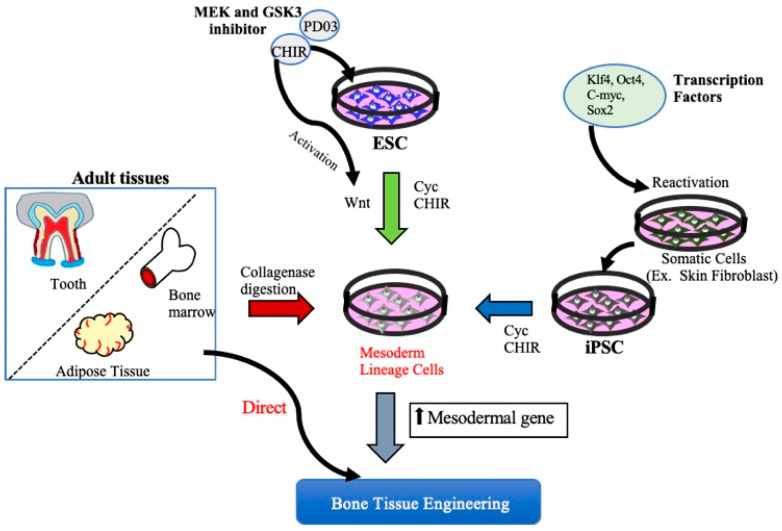
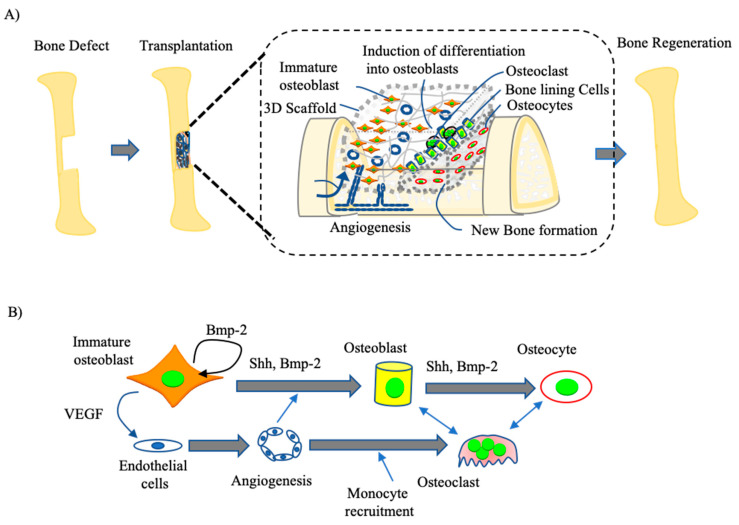
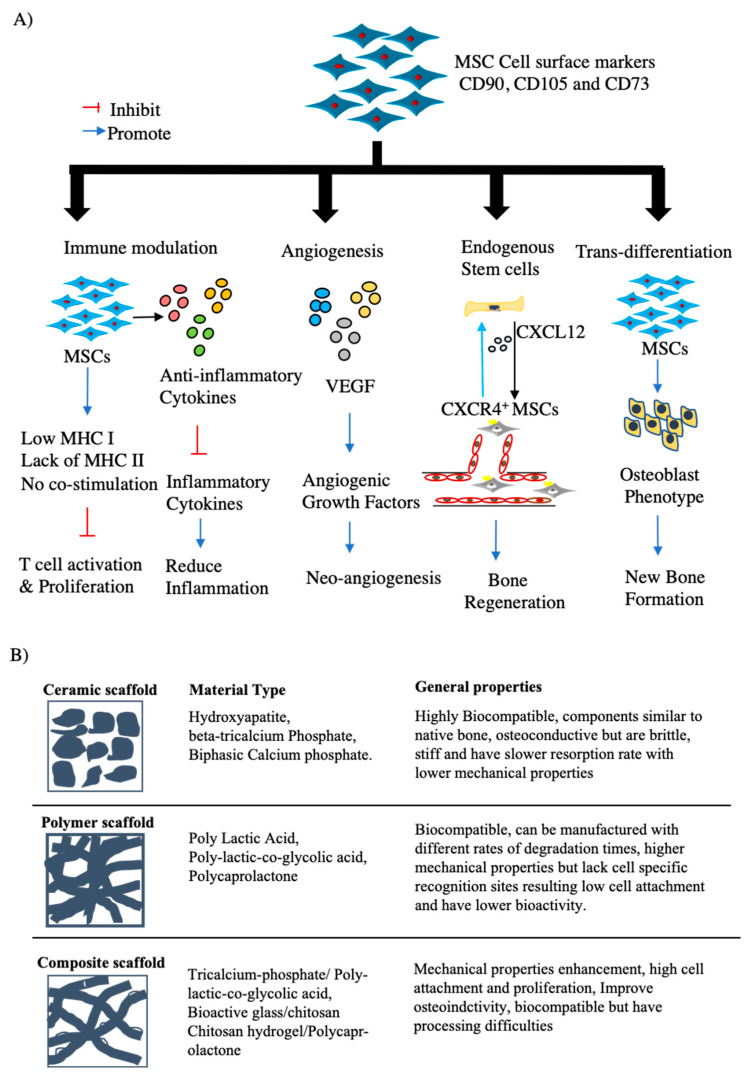
Bone tissue engineering (BTE) is a process of combining live osteoblast progenitors with a biocompatible scaffold to produce a biological substitute that can integrate into host bone tissue and recover its function. Mesenchymal stem cells (MSCs) are the most researched post-natal stem cells because they have self-renewal properties and a multi-differentiation capacity that can give rise to various cell lineages, including osteoblasts. BTE technology utilizes a combination of MSCs and biodegradable scaffold material, which provides a suitable environment for functional bone recovery and has been developed as a therapeutic approach to bone regeneration. Although prior clinical trials of BTE approaches have shown promising results, the regeneration of large bone defects is still an unmet medical need in patients that have suffered a significant loss of bone function. In this present review, we discuss the osteogenic potential of MSCs in bone tissue engineering and propose the use of immature osteoblasts, which can differentiate into osteoblasts upon transplantation, as an alternative cell source for regeneration in large bone defects.
骨组织工程(BTE)是一个将活性成骨细胞前体细胞与生物相容性支架相结合的过程,以产生可与宿主骨组织整合并恢复其功能的生物替代品。间充质干细胞(MSCs)是研究最多的成体干细胞,因为它们具有自我更新特性和多向分化能力,可以产生各种细胞谱系,包括成骨细胞。BTE 技术利用 MSCs 和可生物降解的支架材料的组合,为功能性骨恢复提供了合适的环境,并已被开发为一种治疗骨再生的方法。尽管之前的 BTE 方法的临床试验显示出了有希望的结果,但对于因骨功能严重丧失而遭受大量骨缺损的患者,仍然存在未满足的医疗需求。在本综述中,我们讨论了 MSCs 在骨组织工程中的成骨潜力,并提出了使用不成熟的成骨细胞(在移植后可分化为成骨细胞)作为大型骨缺损再生的替代细胞来源。