Orthopaedic Research Laboratory, Department of Orthopaedics and Traumatology, Odense University Hospital, Institute of Clinical Research, University of Southern Denmark, 5000 Odense C, Denmark.
Biomed Res Int. 2020 Mar 3;2020:9358989. doi: 10.1155/2020/9358989. eCollection 2020.
. In the field of orthopaedic surgery, the use of osteogenic material in larger defects is essential. Autograft and allograft are both known methods, and autograft is believed to be the best choice. But autograft is associated with additional invasive procedures which can prove difficult in fragile patients and can cause local side effect after bone harvest. For feasible purposes, the use of allograft is hereby rising and comparing efficacies, and the differences between autograft and allograft are essential for the clinical outcome for the patients.
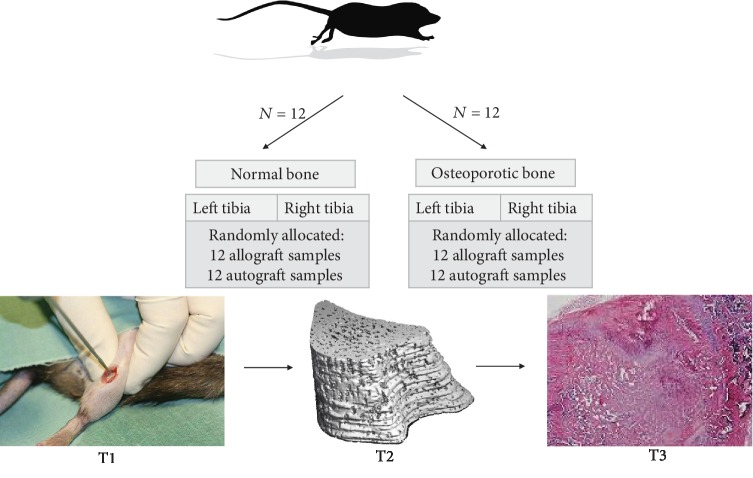
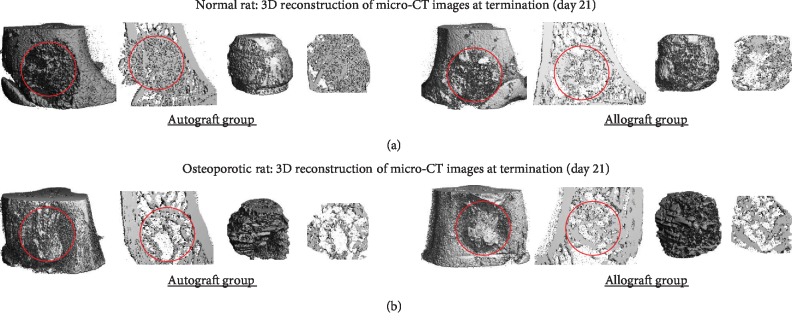
24 female Norwegian brown rats were included, 12 normal rats and 12 induced with osteoporosis (OP). OP inducement was verified in vivo by bone volume fraction (BV/TV) at 90 days after ovariectomy (OVX). The primary surgery in each rat consisted of a 2.5 × 3 mm hole in the proximal tibia, bilaterally. Autograft and allograft were randomly allocated in the right and left tibia. After an observation of 21 days, the rats were sacrificed. Tibia samples were harvested, micro-CT scanned for bone inducement and microarchitectural properties, and then embedded for histology.
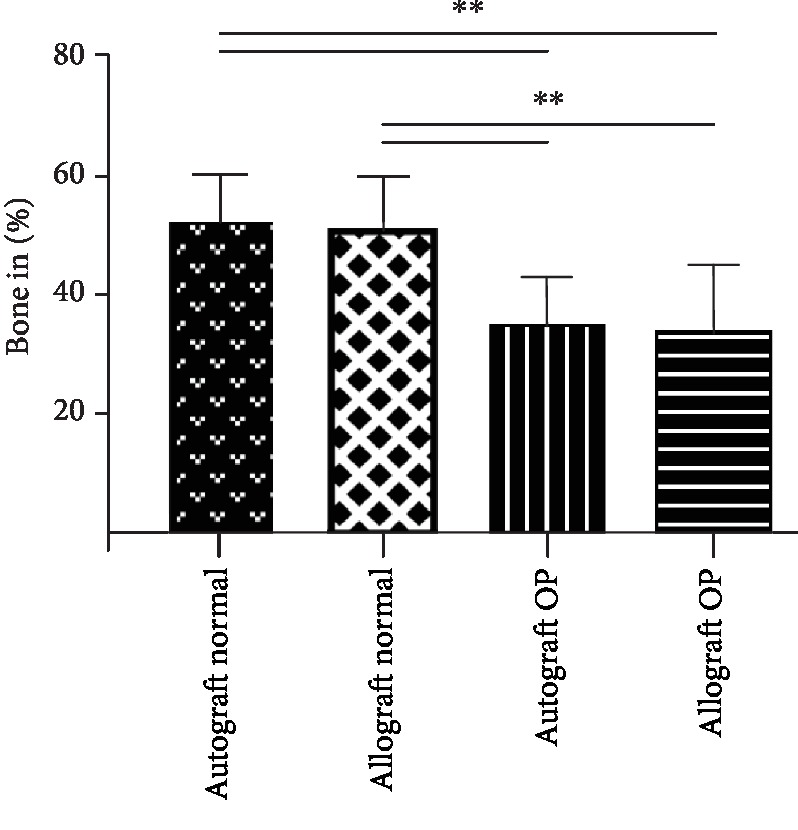
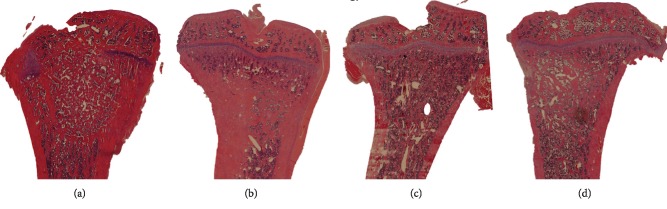
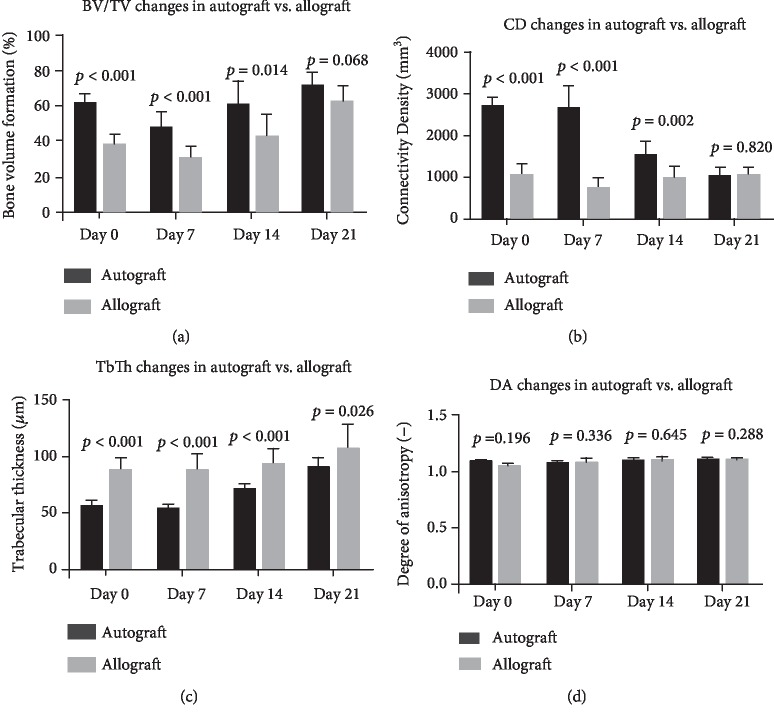
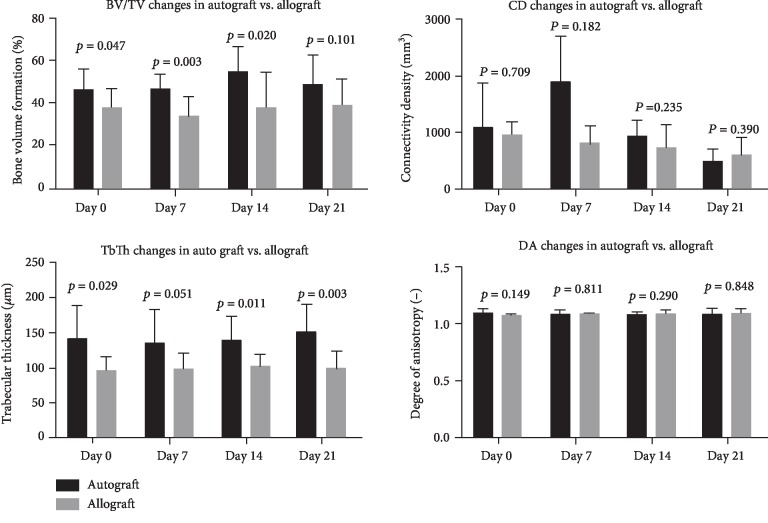
The OP induction was verified three months after the OVX by a reduction of 68.5% in the trabecular bone BV/TV compared to normal bone. Microarchitectural analysis and histology showed no significant differences in the bone-forming capabilities between autograft and allograft in normal or osteoporotic bone after 3 weeks.
This study did not demonstrate any difference between autograft and allograft in a normal or osteoporotic rat tibial defect model after 21 days, suggesting allograft is a good alternative to autograft.
在骨科手术领域,使用成骨材料治疗较大的缺损至关重要。自体移植物和同种异体移植物都是已知的方法,自体移植物被认为是最佳选择。但自体移植物需要额外的侵入性手术,在脆弱的患者中可能比较困难,并且在骨采集后会引起局部副作用。出于可行的目的,同种异体移植物的使用正在增加,并比较其疗效,自体移植物和同种异体移植物之间的差异对于患者的临床结果至关重要。
纳入 24 只雌性挪威棕色大鼠,12 只正常大鼠和 12 只诱导骨质疏松症(OP)大鼠。在卵巢切除(OVX)后 90 天,通过骨体积分数(BV/TV)在体内验证 OP 诱导。每只大鼠的初次手术均包括在双侧胫骨近端进行 2.5×3mm 的孔。将自体移植物和同种异体移植物随机分配到右侧和左侧胫骨。观察 21 天后,处死大鼠。采集胫骨样本,进行微 CT 扫描以评估骨诱导和微结构特性,然后进行组织学嵌入。
OVX 三个月后,通过与正常骨相比,小梁骨 BV/TV 减少 68.5%,验证了 OP 诱导。微结构分析和组织学显示,在正常或骨质疏松大鼠胫骨缺损模型中,在 3 周后,自体移植物和同种异体移植物在成骨能力方面没有差异。
本研究在 21 天后的正常或骨质疏松大鼠胫骨缺损模型中未显示自体移植物和同种异体移植物之间存在差异,表明同种异体移植物是自体移植物的良好替代品。