Department of Medical Oncology, Dana-Farber Cancer Institute and Harvard Medical School, Boston, Massachusetts.
Center for Immuno-oncology, Dana-Farber Cancer Institute and Harvard Medical School, Boston, Massachusetts.
Cancer Immunol Res. 2017 Jan;5(1):17-28. doi: 10.1158/2326-6066.CIR-16-0206. Epub 2016 Dec 21.
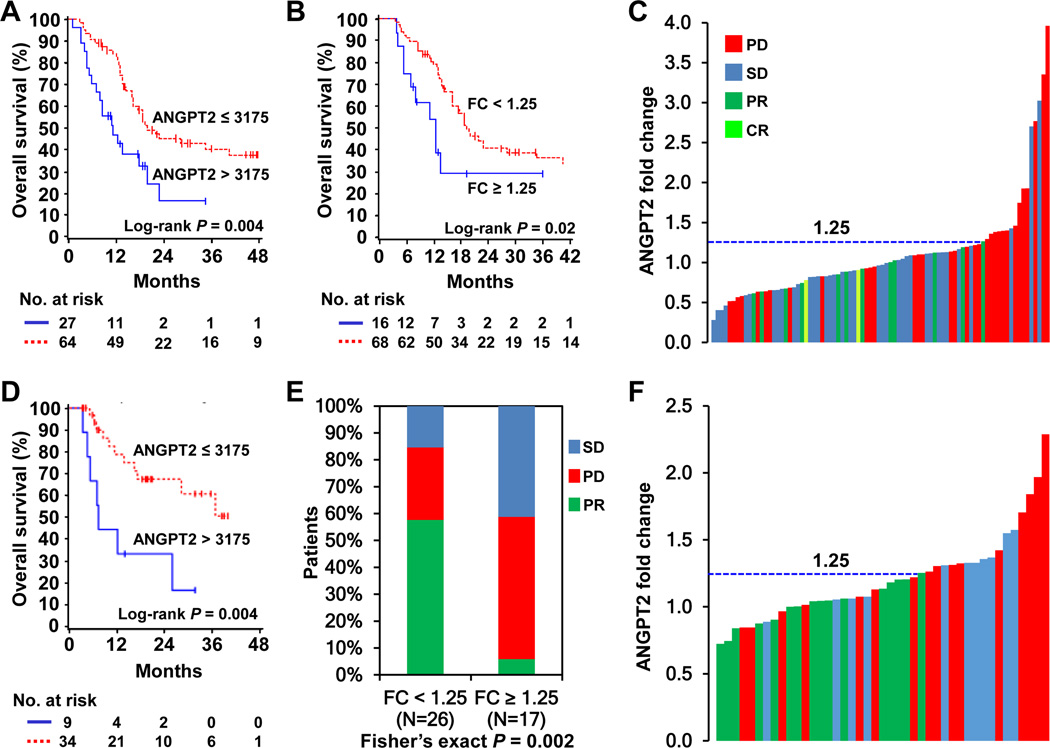
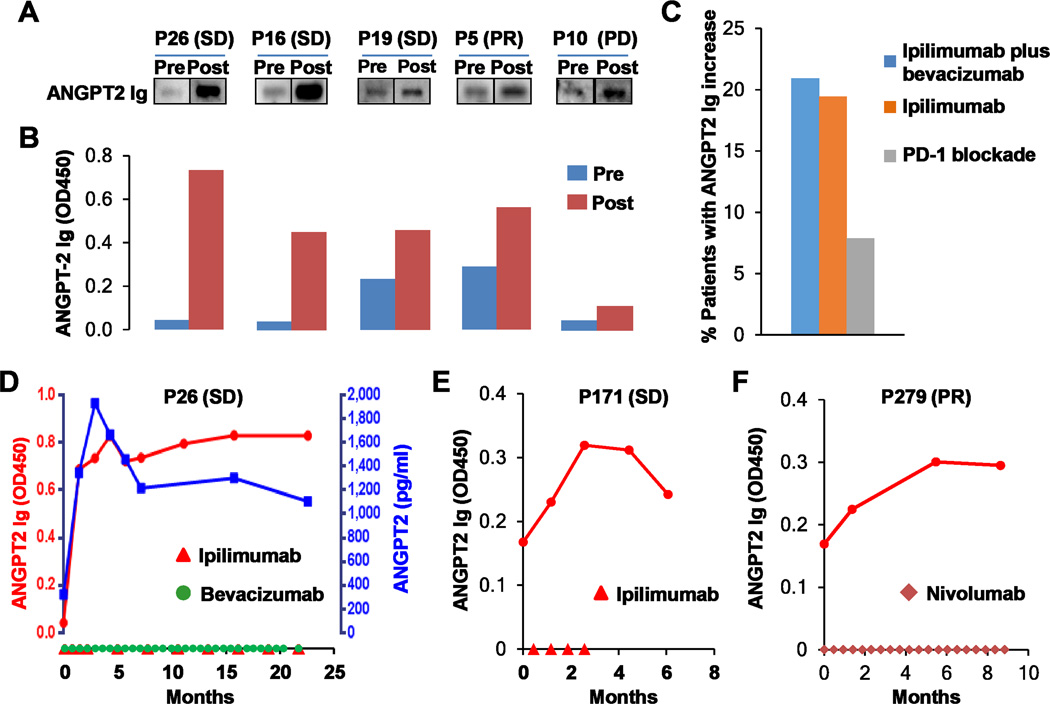
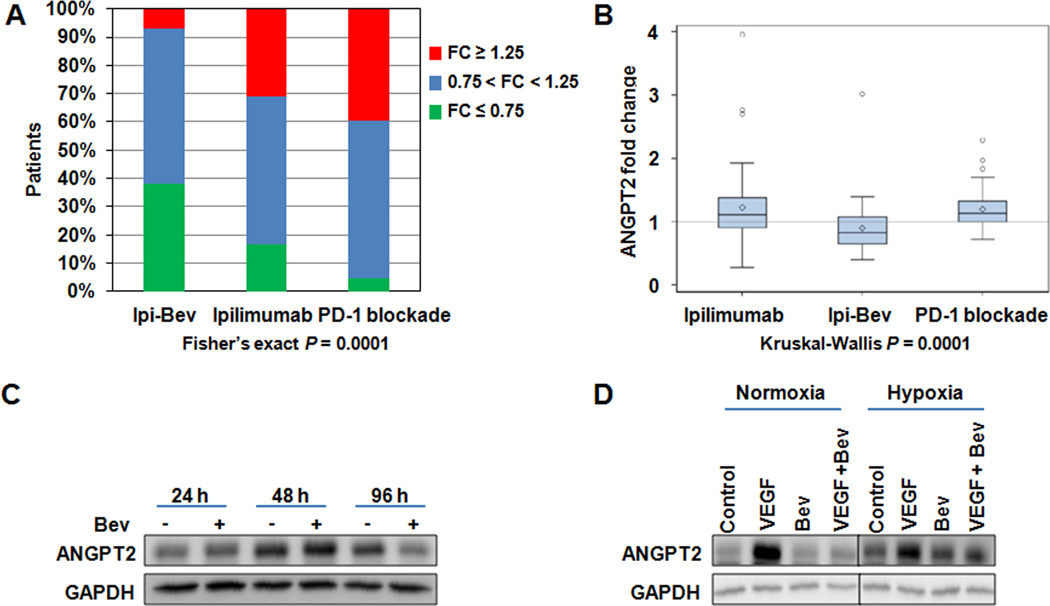
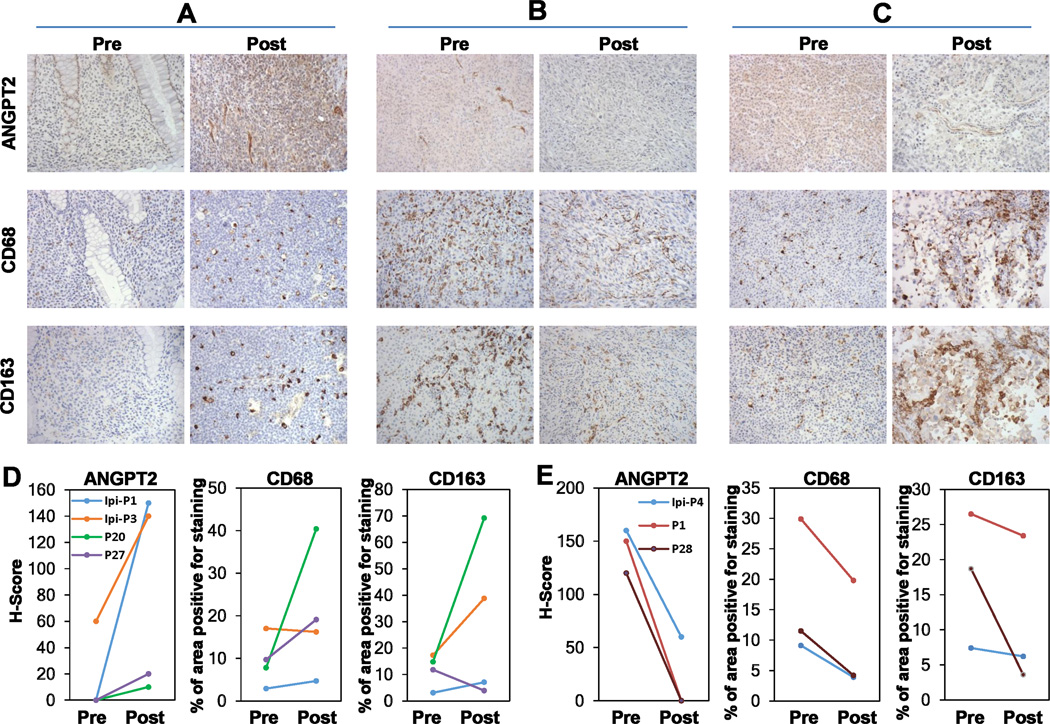
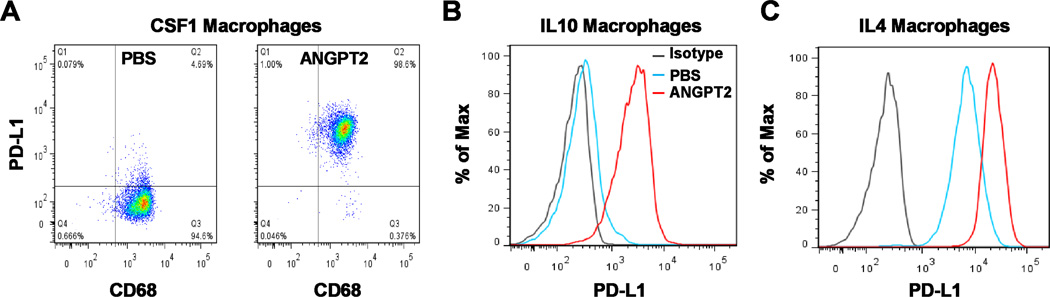
Immune checkpoint therapies targeting CTLA-4 and PD-1 have proven effective in cancer treatment. However, the identification of biomarkers for predicting clinical outcomes and mechanisms to overcome resistance remain as critical needs. Angiogenesis is increasingly appreciated as an immune modulator with potential for combinatorial use with checkpoint blockade. Angiopoietin-2 (ANGPT2) is an immune target in patients and is involved in resistance to anti-VEGF treatment with the monoclonal antibody bevacizumab. We investigated the predictive and prognostic value of circulating ANGPT2 in metastatic melanoma patients receiving immune checkpoint therapy. High pretreatment serum ANGPT2 was associated with reduced overall survival in CTLA-4 and PD-1 blockade-treated patients. These treatments also increased serum ANGPT2 in many patients early after treatment initiation, whereas ipilimumab plus bevacizumab treatment decreased serum concentrations. ANGPT2 increases were associated with reduced response and/or overall survival. Ipilimumab increased, and ipilimumab plus bevacizumab decreased, tumor vascular ANGPT2 expression in a subset of patients, which was associated with increased and decreased tumor infiltration by CD68 and CD163 macrophages, respectively. In vitro, bevacizumab blocked VEGF-induced ANGPT2 expression in tumor-associated endothelial cells, whereas ANGPT2 increased PD-L1 expression on M2-polarized macrophages. Treatments elicited long-lasting and functional antibody responses to ANGPT2 in a subset of patients receiving clinical benefit. Our findings suggest that serum ANGPT2 may be considered as a predictive and prognostic biomarker for immune checkpoint therapy and may contribute to treatment resistance via increasing proangiogenic and immunosuppressive activities in the tumor microenvironment. Targeting ANGPT2 provides a rational combinatorial approach to improve the efficacy of immune therapy. Cancer Immunol Res; 5(1); 17-28. ©2016 AACR.
免疫检查点疗法针对 CTLA-4 和 PD-1 已被证明在癌症治疗中有效。然而,鉴定预测临床结果的生物标志物和克服耐药性的机制仍然是至关重要的需求。血管生成越来越被认为是一种免疫调节剂,具有与检查点阻断联合使用的潜力。血管生成素-2 (ANGPT2) 是患者的免疫靶点,并且参与了抗血管内皮生长因子治疗单克隆抗体贝伐单抗的耐药性。我们研究了转移性黑色素瘤患者接受免疫检查点治疗时循环 ANGPT2 的预测和预后价值。高预处理血清 ANGPT2 与 CTLA-4 和 PD-1 阻断治疗患者的总生存时间缩短相关。这些治疗还在许多患者治疗开始后早期增加了血清 ANGPT2,而伊匹单抗加贝伐单抗治疗则降低了血清浓度。ANGPT2 增加与反应降低和/或总生存时间缩短相关。伊匹单抗增加,伊匹单抗加贝伐单抗降低,在一部分患者中肿瘤血管 ANGPT2 表达,这与肿瘤浸润 CD68 和 CD163 巨噬细胞分别增加和减少相关。在体外,贝伐单抗阻断了肿瘤相关内皮细胞中 VEGF 诱导的 ANGPT2 表达,而 ANGPT2 增加了 M2 极化巨噬细胞上的 PD-L1 表达。在接受临床获益的一部分患者中,治疗引起了针对 ANGPT2 的持久和功能性抗体反应。我们的研究结果表明,血清 ANGPT2 可能被认为是免疫检查点治疗的预测和预后生物标志物,并可能通过增加肿瘤微环境中的促血管生成和免疫抑制活性来导致治疗耐药性。靶向 ANGPT2 为提高免疫治疗的疗效提供了一种合理的联合方法。癌症免疫学研究;5(1);17-28. ©2016AACR。