Fogg Paul C M, Haley Joshua A, Stark W Marshall, Smith Margaret C M
Biology Department, University of York, York, United Kingdom
Biology Department, University of York, York, United Kingdom.
Appl Environ Microbiol. 2017 Feb 15;83(5). doi: 10.1128/AEM.02767-16. Print 2017 Mar 1.
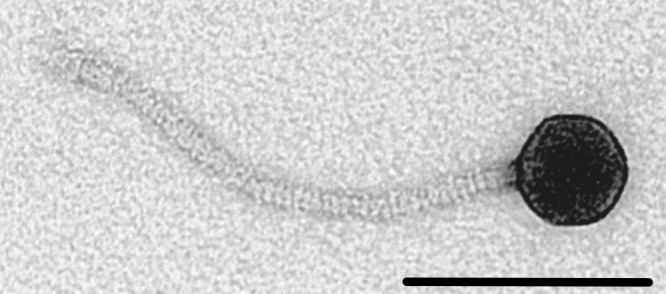
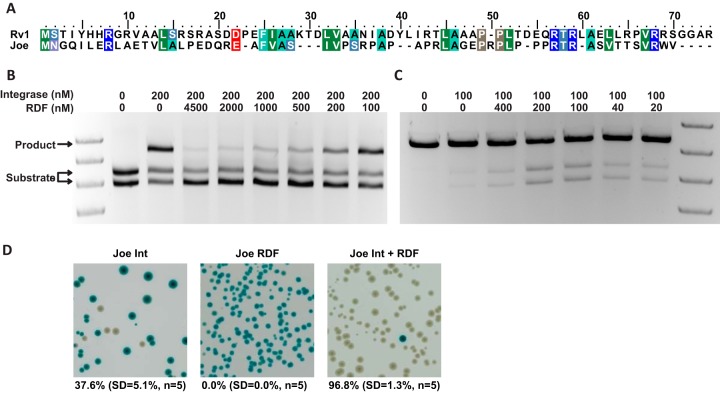
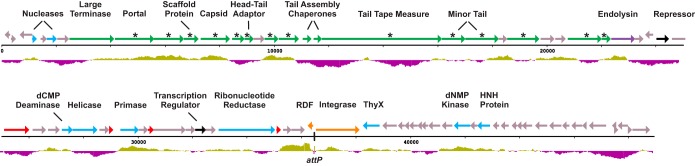
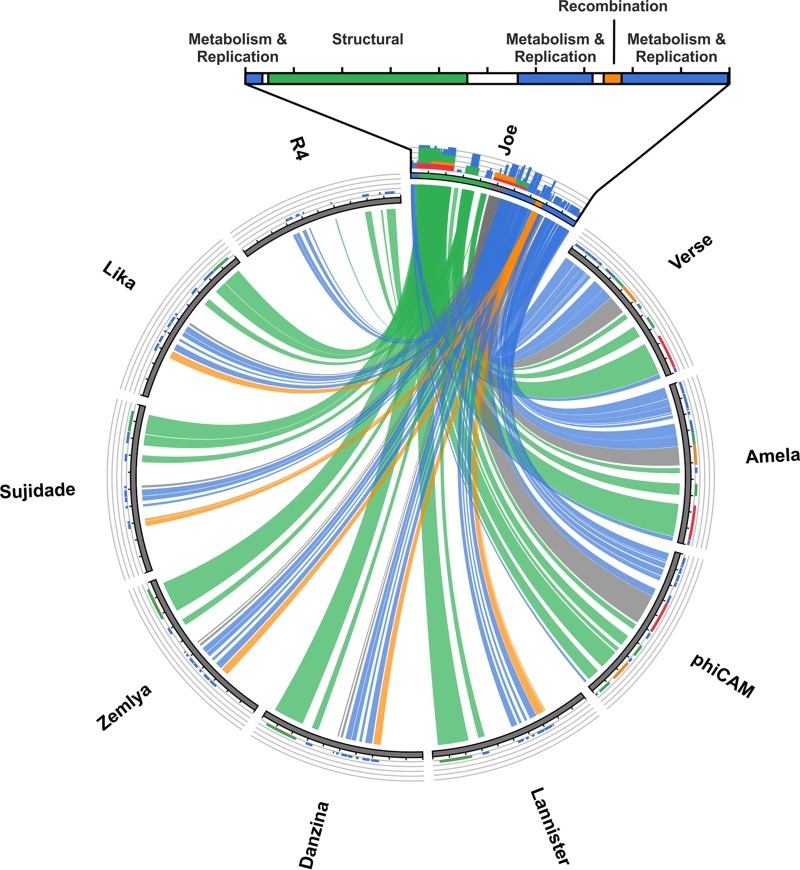
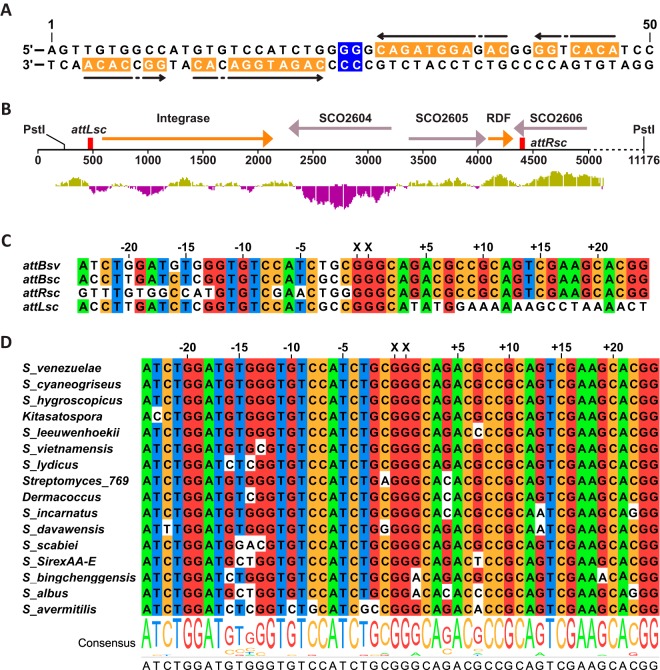
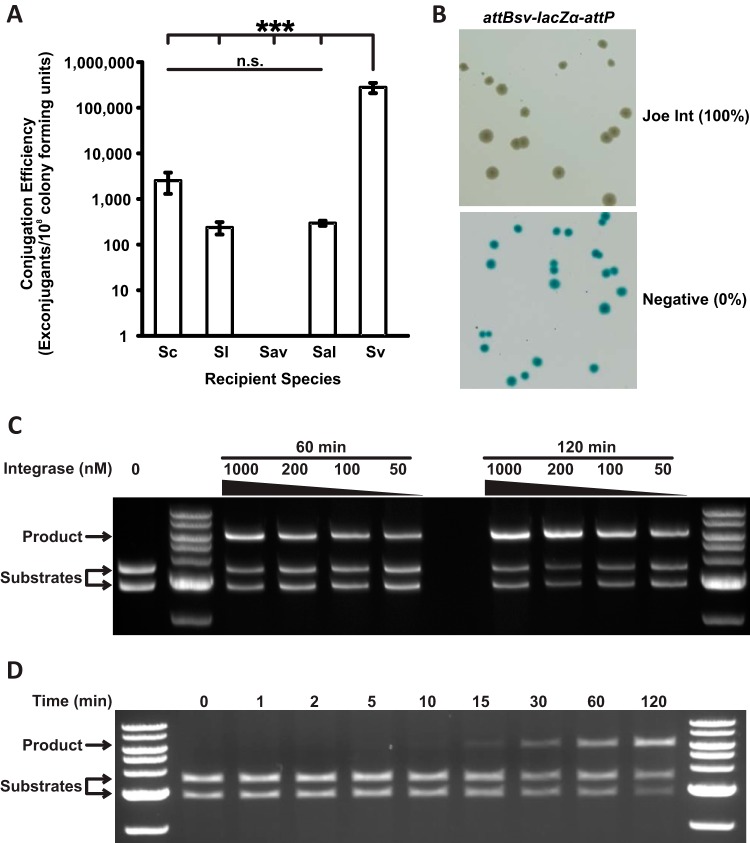
Bacteriophages are the source of many valuable tools for molecular biology and genetic manipulation. In , most DNA cloning vectors are based on serine integrase site-specific DNA recombination systems derived from phage. Because of their efficiency and simplicity, serine integrases are also used for diverse synthetic biology applications. Here, we present the genome of a new phage, ϕJoe, and investigate the conditions for integration and excision of the ϕJoe genome. ϕJoe belongs to the largest phage cluster (R4-like) and encodes a serine integrase. The site from was used efficiently by an integrating plasmid, pCMF92, constructed using the ϕJoe locus. The site for ϕJoe integrase was occupied in several genomes, including that of , by a mobile element that varies in gene content and size between host species. Serine integrases require a phage-encoded recombination directionality factor (RDF) to activate the excision reaction. The ϕJoe RDF was identified, and its function was confirmed Both the integrase and RDF were active in recombination assays. The ϕJoe site-specific recombination system is likely to be an important addition to the synthetic biology and genome engineering toolbox. spp. are prolific producers of secondary metabolites, including many clinically useful antibiotics. Bacteriophage-derived integrases are important tools for genetic engineering, as they enable integration of heterologous DNA into the chromosome with ease and high efficiency. Recently, researchers have been applying phage integrases for a variety of applications in synthetic biology, including rapid assembly of novel combinations of genes, biosensors, and biocomputing. An important requirement for optimal experimental design and predictability when using integrases, however, is the need for multiple enzymes with different specificities for their integration sites. In order to provide a broad platform of integrases, we identified and validated the integrase from a newly isolated phage, ϕJoe. ϕJoe integrase is active and The specific recognition site for integration is present in a wide range of different actinobacteria, including , an emerging model bacterium in research.
噬菌体是分子生物学和基因操作中许多有价值工具的来源。在分子生物学中,大多数DNA克隆载体都基于源自噬菌体的丝氨酸整合酶位点特异性DNA重组系统。由于其高效性和简易性,丝氨酸整合酶也被用于各种合成生物学应用。在此,我们展示了一种新型噬菌体ϕJoe的基因组,并研究了ϕJoe基因组整合和切除的条件。ϕJoe属于最大的噬菌体簇(R4样),并编码一种丝氨酸整合酶。使用ϕJoe位点构建的整合质粒pCMF92能够高效利用来自[未提及具体来源]的位点。ϕJoe整合酶的位点在包括[未提及具体物种]在内的多个[未提及具体物种]基因组中被一个移动元件占据,该移动元件在宿主物种之间的基因含量和大小有所不同。丝氨酸整合酶需要噬菌体编码的重组方向性因子(RDF)来激活切除反应。我们鉴定了ϕJoe的RDF,并证实了其功能。整合酶和RDF在[未提及具体实验名称]重组试验中均具有活性。ϕJoe位点特异性重组系统可能是合成生物学和基因组工程工具箱中的一项重要补充。[未提及具体物种]是次级代谢产物的丰富生产者,包括许多临床上有用的抗生素。噬菌体衍生的整合酶是基因工程的重要工具,因为它们能够轻松且高效地将异源DNA整合到[未提及具体物种]染色体中。最近,研究人员一直在将噬菌体整合酶应用于合成生物学的各种应用中,包括快速组装新的基因组合、生物传感器和生物计算。然而,在使用整合酶时,优化实验设计和可预测性的一个重要要求是需要多种对其整合位点具有不同特异性的酶。为了提供一个广泛的整合酶平台,我们从新分离的[未提及具体物种]噬菌体ϕJoe中鉴定并验证了整合酶。ϕJoe整合酶在[未提及具体物种]和[未提及具体物种]中具有活性。整合的特异性识别位点存在于广泛的不同放线菌中,包括[未提及具体物种],它是[未提及具体研究领域]研究中的一种新兴模式细菌。