Timar Romulus, Velea Iulian, Timar Bogdan, Lungeanu Diana, Oancea Cristian, Roman Deiana, Mazilu Octavian
Second Department of Internal Medicine.
Department of Pediatrics.
Patient Prefer Adherence. 2016 Dec 8;10:2471-2477. doi: 10.2147/PPA.S124858. eCollection 2016.
To evaluate the impact of several factors on the patient's perception on quality of life in a group of patients with type 2 diabetes mellitus (T2DM).
In this cross-sectional study, 198 patients with T2DM were enrolled according to a consecutive-case population-based study design. In all participants, the perception on the quality of life was measured using the quality of life index - diabetes version III proposed by Ferrans and Powers. We evaluated the impact of several anthropometric and diabetes-related (ie, diabetes history and quality of glycemic control) factors on the patient's perception on the quality of life.
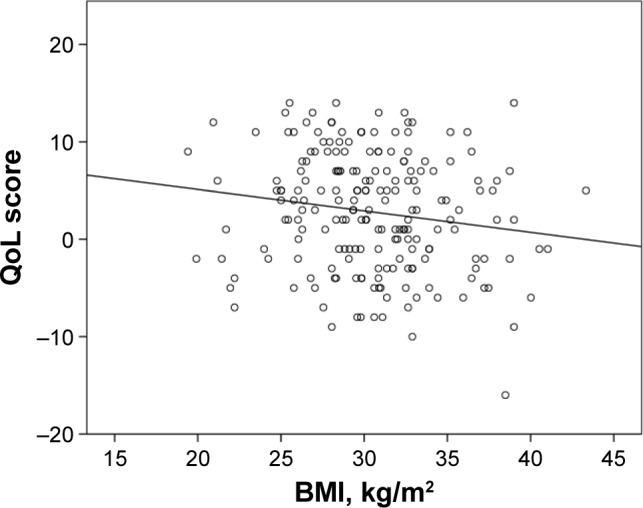
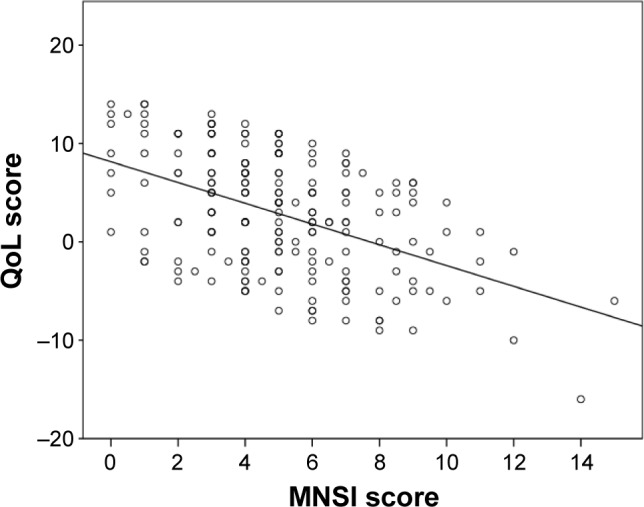
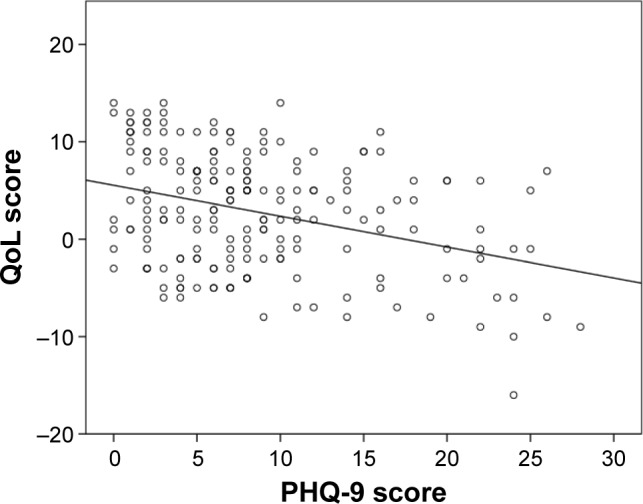
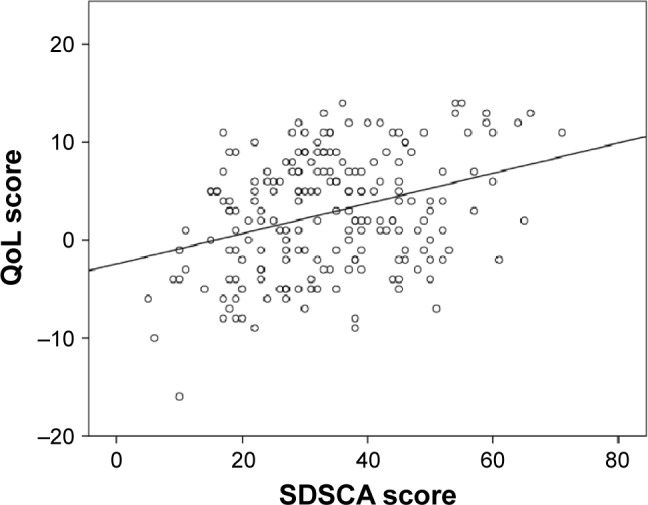
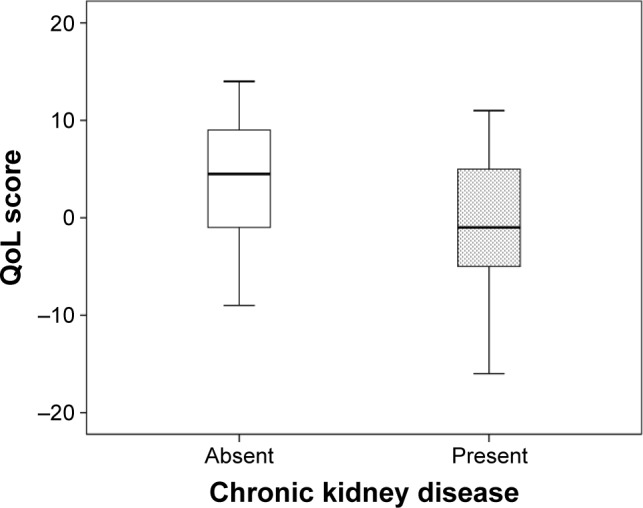
The presence of diabetes complications was associated with a decreased quality of life: retinopathy (1 vs 5 points; <0.001), chronic kidney disease (-1 vs 5 points; <0.001), and neuropathy (-1 vs 5 points; <0.001). A significant reverse correlation was found between the patient's quality of life and depression's severity (Spearman's =-0.345; <0.001) and body mass index (Spearman's =-0.158; =0.026). A positive association between the quality of life and the quality of diabetes-related self-care activities was found (Spearman's =0.338; <0.001). No significant association was found between the patient's quality of life and the quality of glycemic control, diabetes duration, age, gender, or smoking status.
To improve the patient's quality of life, special care should be given to the modifiable diabetes-related factors: the prevention and treatment of diabetes complications, treatment of depression, and weight loss in obese and overweight patients.
评估多种因素对一组2型糖尿病(T2DM)患者生活质量认知的影响。
在这项横断面研究中,根据基于连续病例人群的研究设计纳入了198例T2DM患者。在所有参与者中,使用Ferrans和Powers提出的生活质量指数-糖尿病III版来测量生活质量认知。我们评估了多种人体测量学和糖尿病相关因素(即糖尿病病史和血糖控制质量)对患者生活质量认知的影响。
糖尿病并发症的存在与生活质量下降相关:视网膜病变(1分对5分;<0.001)、慢性肾脏病(-1分对5分;<0.001)和神经病变(-1分对5分;<0.001)。发现患者的生活质量与抑郁严重程度(Spearman氏相关系数=-0.345;<0.001)和体重指数(Spearman氏相关系数=-0.158;=0.026)之间存在显著的负相关。发现生活质量与糖尿病相关自我护理活动质量之间存在正相关(Spearman氏相关系数=0.338;<0.001)。未发现患者的生活质量与血糖控制质量、糖尿病病程、年龄、性别或吸烟状况之间存在显著关联。
为改善患者的生活质量,应特别关注可改变的糖尿病相关因素:糖尿病并发症的预防和治疗、抑郁症的治疗以及肥胖和超重患者的体重减轻。