Zhang Ying, Cao Richard Y, Jia Xinling, Li Qing, Qiao Lei, Yan Guofeng, Yang Jian
Department of Rehabilitation.
Laboratory of Immunology, Shanghai Xuhui Central Hospital, Shanghai Clinical Research Center, Chinese Academy of Sciences.
Neuropsychiatr Dis Treat. 2016 Dec 12;12:3161-3173. doi: 10.2147/NDT.S121779. eCollection 2016.
Stroke is one of the major causes of morbidity and mortality worldwide, which is associated with serious physical deficits that affect daily living and quality of life and produces immense public health and economic burdens. Both clinical and experimental data suggest that early physical training after ischemic brain injury may reduce the extent of motor dysfunction. However, the exact mechanisms have not been fully elucidated. The aim of this study was to investigate the effects of aerobic exercise on neuroprotection and understand the underlying mechanisms.
Middle cerebral artery occlusion (MCAO) was conducted to establish a rat model of cerebral ischemia-reperfusion injury to mimic ischemic stroke. Experimental animals were divided into the following three groups: sham (n=34), MCAO (n=39), and MCAO plus treadmill exercise (n=28). The effects of aerobic exercise intervention on ischemic brain injury were evaluated using functional scoring, histological analysis, and Bio-Plex Protein Assays.
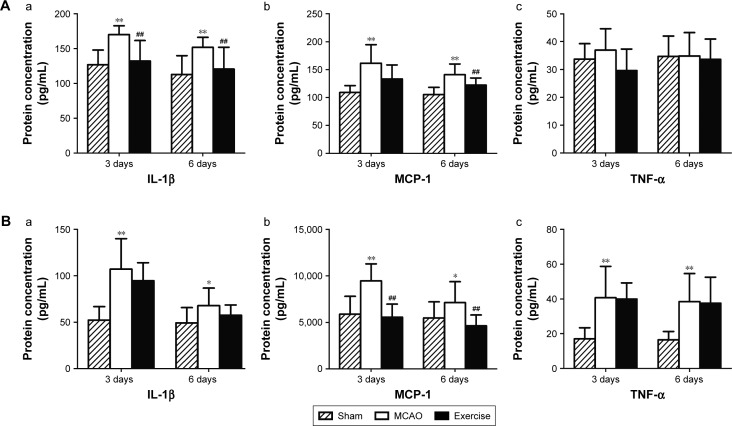
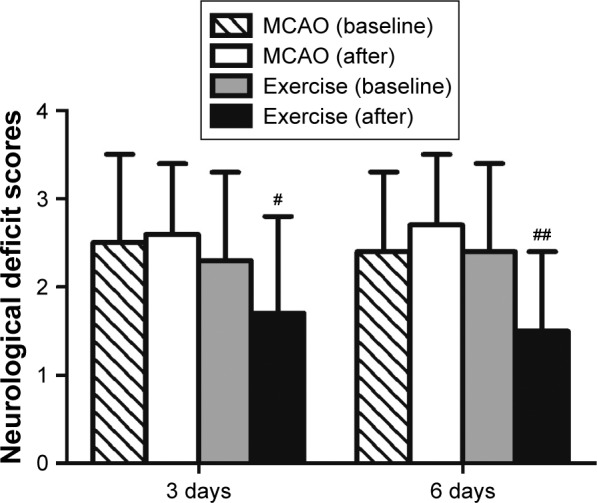
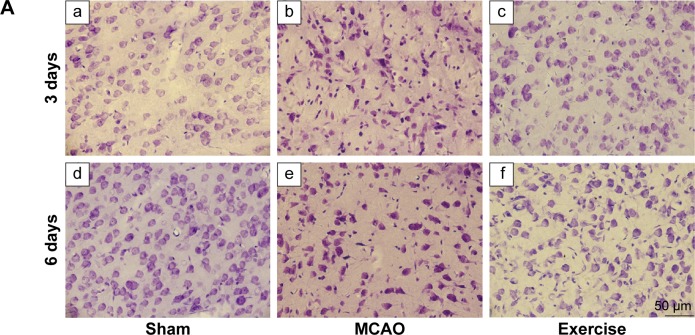
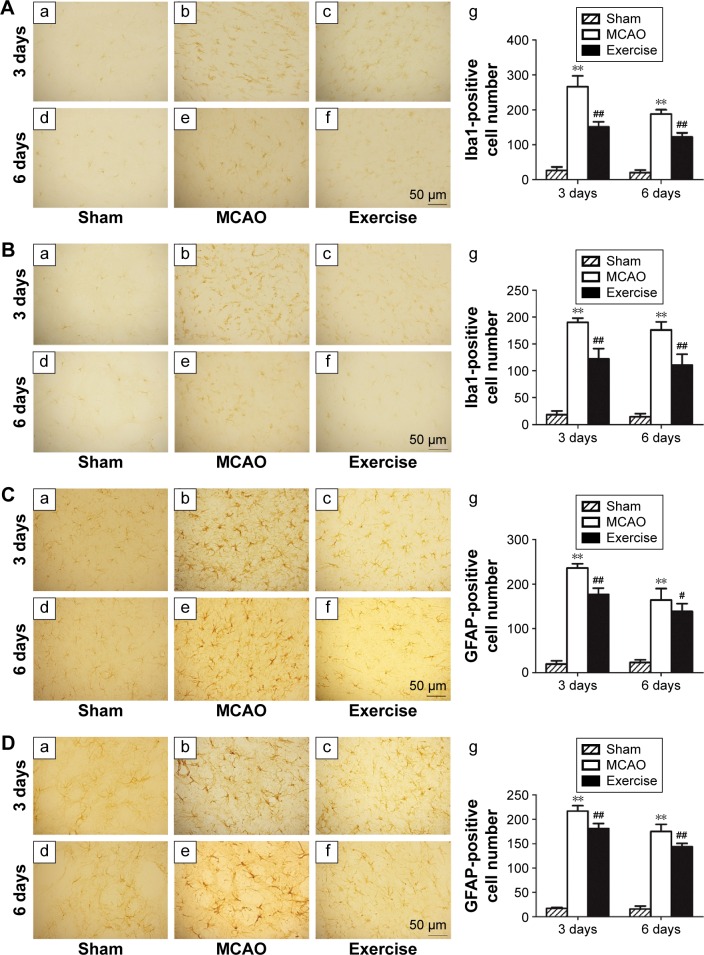
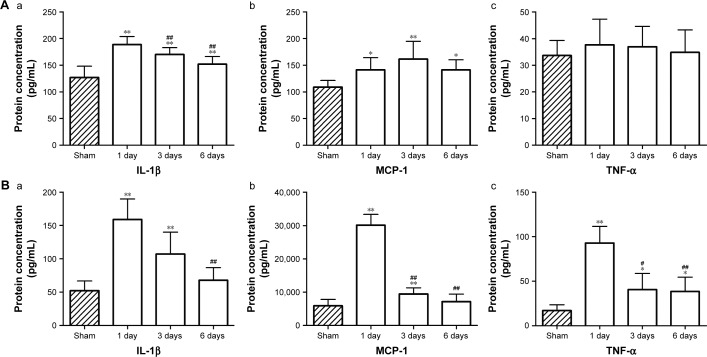
Early aerobic exercise intervention was found to improve motor function, prevent death of neuronal cells, and suppress the activation of microglial cells and astrocytes. Furthermore, it was observed that aerobic exercise downregulated the expression of the cytokine interleukin-1β and the chemokine monocyte chemotactic protein-1 after transient MCAO in experimental rats.
This study demonstrates that treadmill exercise rehabilitation promotes neuroprotection against cerebral ischemia-reperfusion injury via the downregulation of proinflammatory mediators.
中风是全球发病和死亡的主要原因之一,与影响日常生活和生活质量的严重身体缺陷相关,并产生巨大的公共卫生和经济负担。临床和实验数据均表明,缺血性脑损伤后早期进行体育锻炼可能会减轻运动功能障碍的程度。然而,确切机制尚未完全阐明。本研究旨在探讨有氧运动对神经保护的作用并了解其潜在机制。
采用大脑中动脉闭塞(MCAO)法建立大鼠脑缺血再灌注损伤模型以模拟缺血性中风。实验动物分为以下三组:假手术组(n = 34)、MCAO组(n = 39)和MCAO加跑步机运动组(n = 28)。通过功能评分、组织学分析和生物芯片蛋白质分析评估有氧运动干预对缺血性脑损伤的影响。
发现早期有氧运动干预可改善运动功能,预防神经元细胞死亡,并抑制小胶质细胞和星形胶质细胞的激活。此外,观察到有氧运动可下调实验大鼠短暂性MCAO后细胞因子白细胞介素-1β和趋化因子单核细胞趋化蛋白-1的表达。
本研究表明,跑步机运动康复通过下调促炎介质促进对脑缺血再灌注损伤的神经保护。