da Silva Marcelo A, Lenton Samuel, Hughes Matthew, Brockwell David J, Dougan Lorna
School of Physics and Astronomy and ‡Astbury Centre for Structural Molecular Biology, University of Leeds , Leeds LS2 9JT, United Kingdom.
Biomacromolecules. 2017 Feb 13;18(2):636-646. doi: 10.1021/acs.biomac.6b01877. Epub 2017 Jan 11.
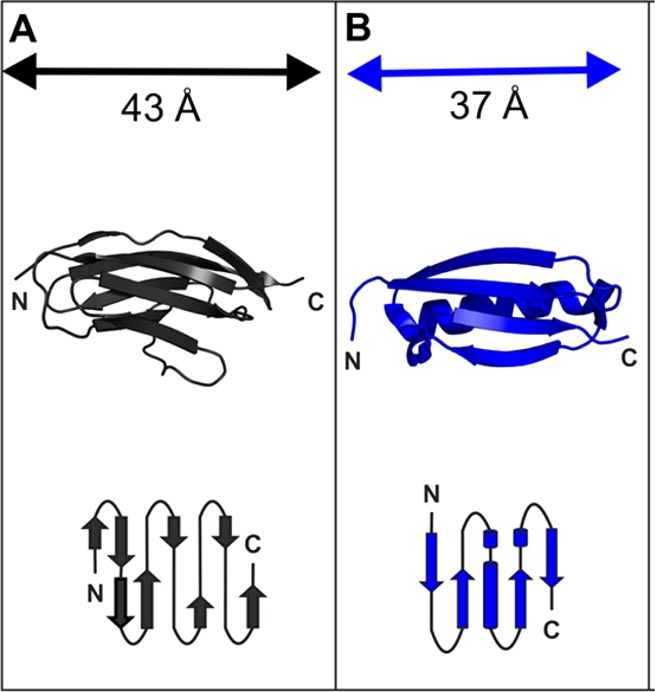
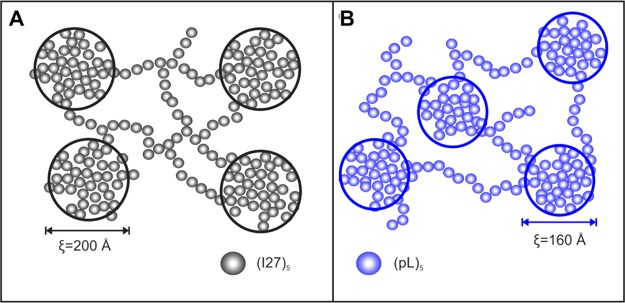
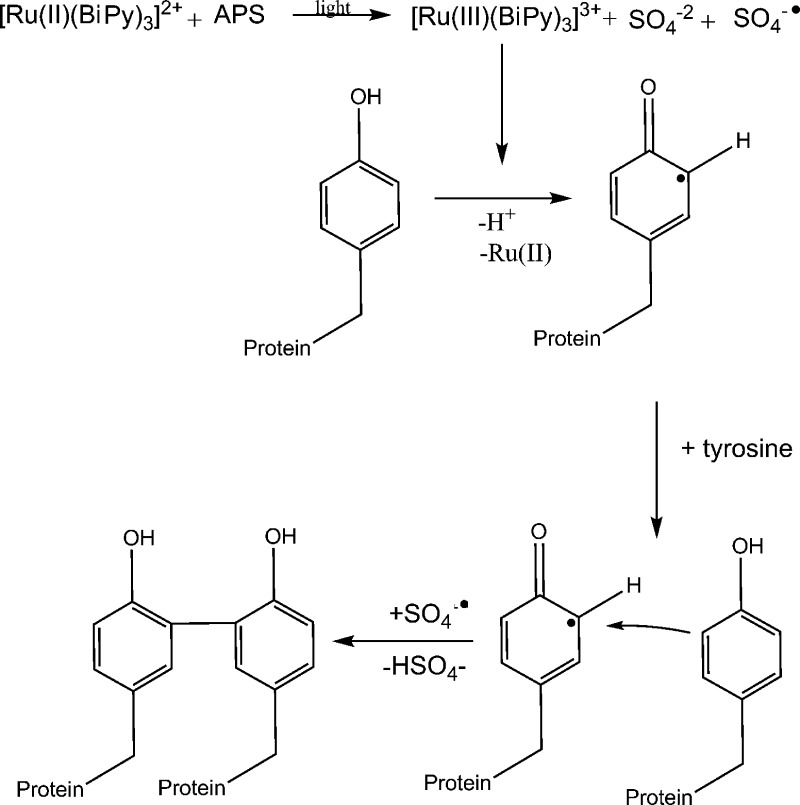
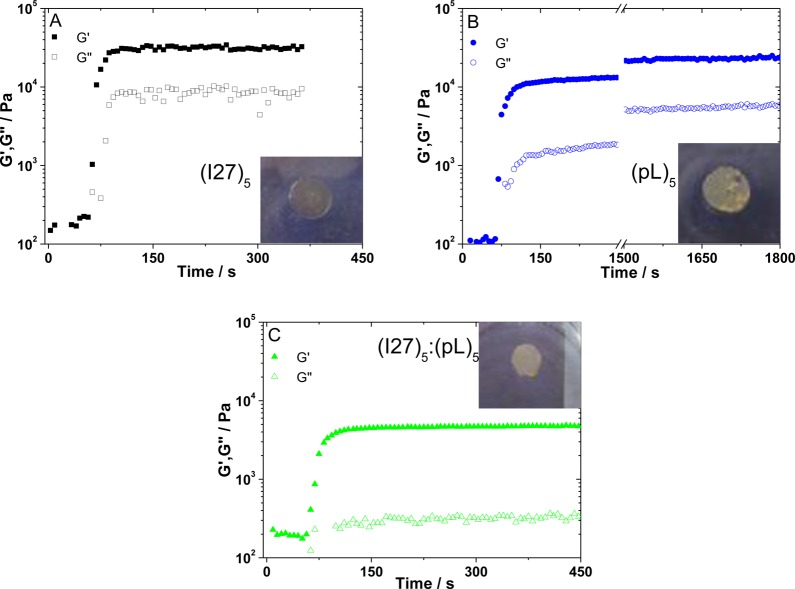
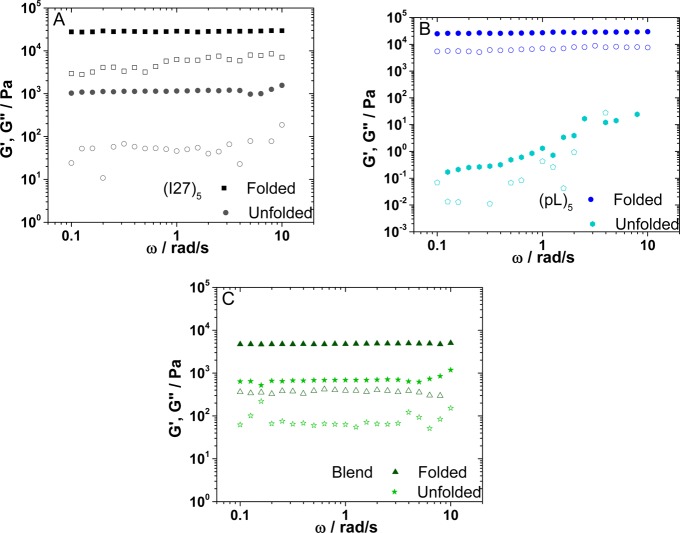
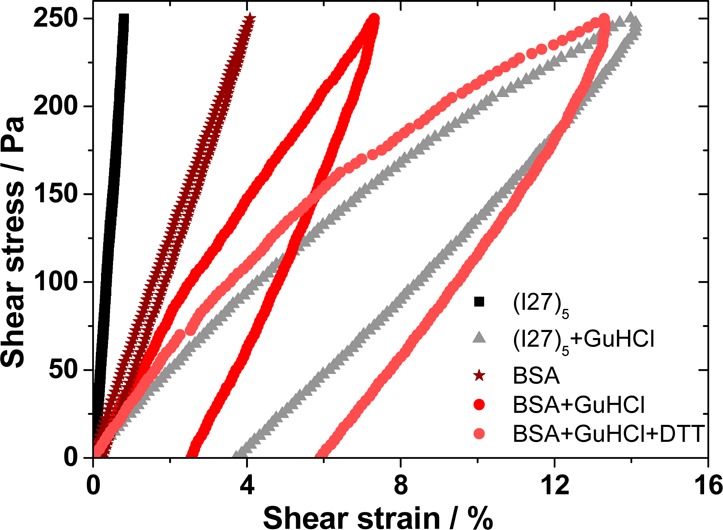
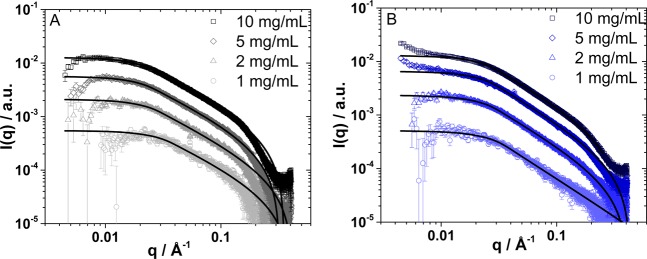
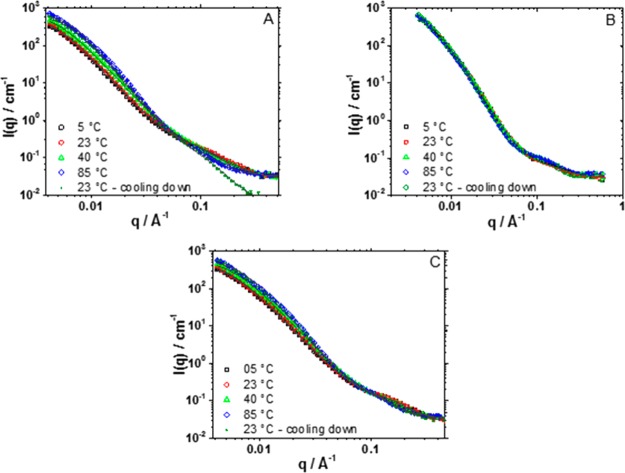
The native states of proteins generally have stable well-defined folded structures endowing these biomolecules with specific functionality and molecular recognition abilities. Here we explore the potential of using folded globular polyproteins as building blocks for hydrogels. Photochemically cross-linked hydrogels were produced from polyproteins containing either five domains of I27 ((I27)), protein L ((pL)), or a 1:1 blend of these proteins. SAXS analysis showed that (I27) exists as a single rod-like structure, while (pL) shows signatures of self-aggregation in solution. SANS measurements showed that both polyprotein hydrogels have a similar nanoscopic structure, with protein L hydrogels being formed from smaller and more compact clusters. The polyprotein hydrogels showed small energy dissipation in a load/unload cycle, which significantly increased when the hydrogels were formed in the unfolded state. This study demonstrates the use of folded proteins as building blocks in hydrogels, and highlights the potential versatility that can be offered in tuning the mechanical, structural, and functional properties of polyproteins.
蛋白质的天然状态通常具有稳定且明确的折叠结构,赋予这些生物分子特定的功能和分子识别能力。在此,我们探索使用折叠的球状多聚蛋白作为水凝胶构建模块的潜力。通过光化学交联由含有五个I27结构域((I27))、蛋白L((pL))或这些蛋白1:1混合物的多聚蛋白制备水凝胶。小角X射线散射(SAXS)分析表明,(I27)以单一棒状结构存在,而(pL)在溶液中表现出自聚集的特征。小角中子散射(SANS)测量表明,两种多聚蛋白水凝胶具有相似的纳米结构,蛋白L水凝胶由更小且更紧密的聚集体形成。多聚蛋白水凝胶在加载/卸载循环中表现出较小的能量耗散,当水凝胶在未折叠状态下形成时,能量耗散显著增加。这项研究证明了使用折叠蛋白作为水凝胶的构建模块,并突出了在调节多聚蛋白的机械、结构和功能特性方面可提供的潜在多功能性。