Liu Fengping, Ling Zongxin, Xiao Yonghong, Lv Longxian, Yang Qing, Wang Baohong, Lu Haifeng, Zheng Li, Jiang Ping, Wang Wei, Li Lanjuan
Department of Urology, The First Affiliated Hospital, School of Medicine, Zhejiang University, Hangzhou, Zhejiang, China.
Yancheng Medical College, Yancheng, Jiangsu, China.
Oncotarget. 2017 Jan 17;8(3):3798-3810. doi: 10.18632/oncotarget.14028.
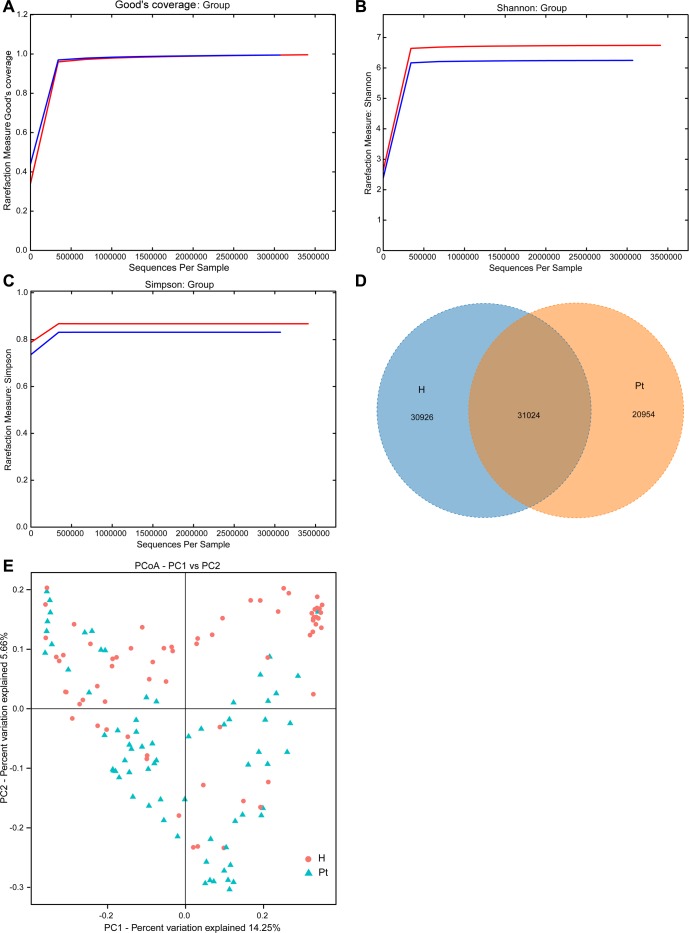
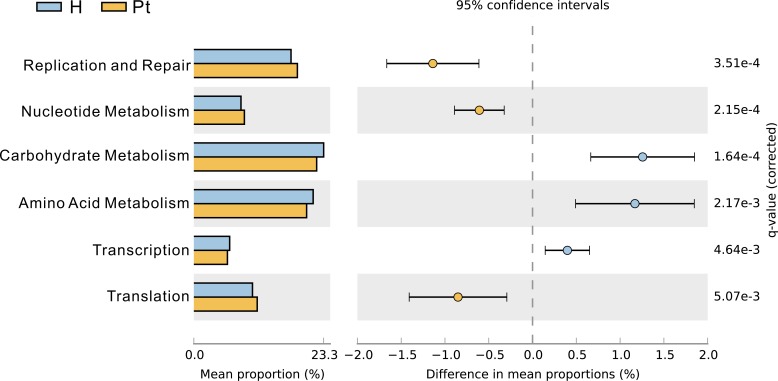
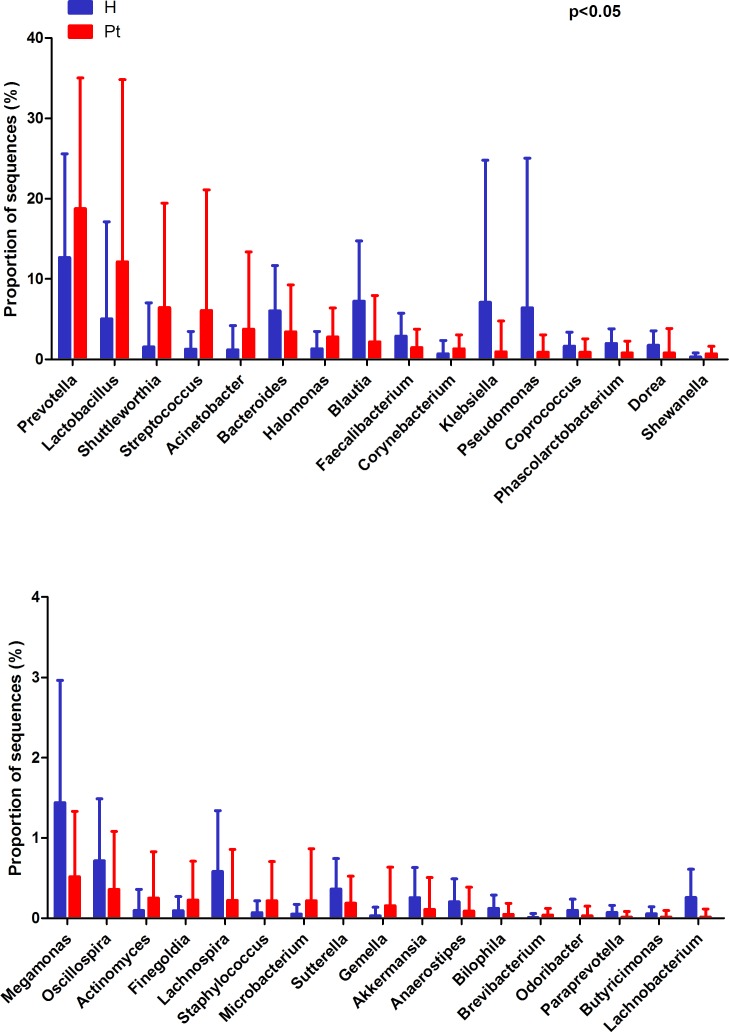
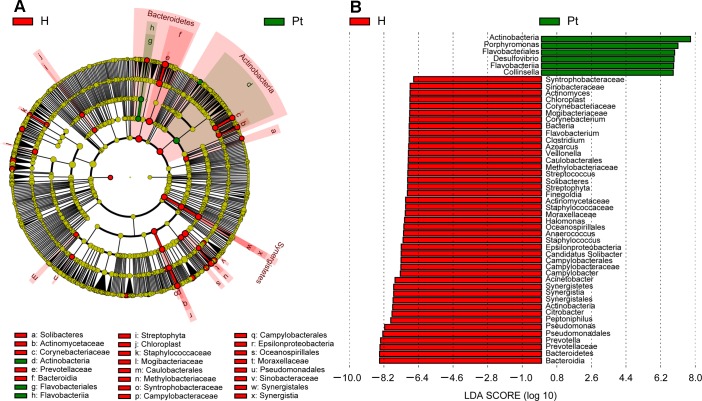
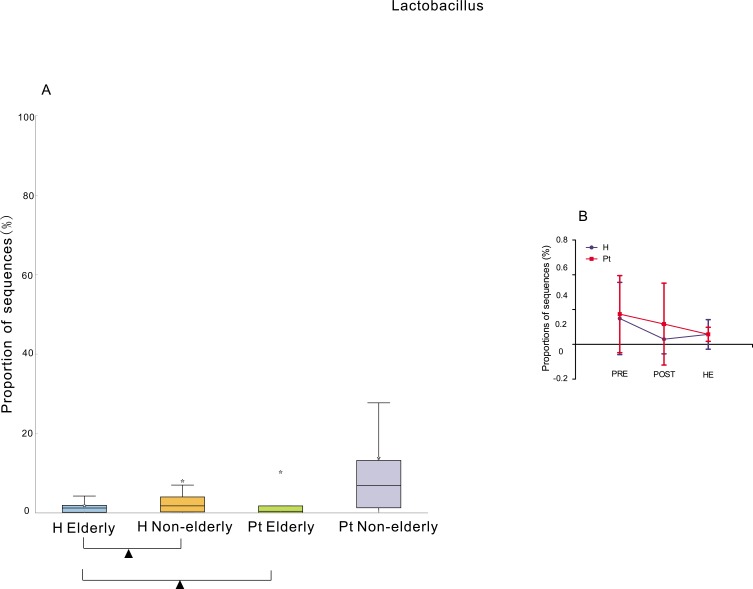
Type 2 diabetes mellitus (T2DM) may be associated with altered urinary microbiota in female patients. We investigated alterations of urinary microbiota in Chinese female T2DM patients, and explored the associations between urinary microbiota and a patient's fasting blood glucose (FBG), urine glucose (UGLU), age, menstrual status, and body mass index (BMI). Midstream urine was collected from 70 female T2DM patients and 70 healthy females. Microbial diversity and composition were analyzed using the Illumina MiSeq sequencing platform by targeting the hypervariable V3-V4 regions of the 16S rRNA gene. We found that bacterial diversity was decreased in T2DM patients. Increased Actinobacteria phylum was positively correlated with FBG, UGLU, and BMI; Lactobacillus abundance decreased with age and menopause; and increased Lactobacillus correlated positively with FBG and UGLU. Decreased Akkermansia muciniphila was associated with FBG and UGLU. Escherichia coli abundance did not differ between the two cohorts. Carbohydrate and amino acid metabolism was reduced in T2DM patients, which were associated with bacterial richness indices such as Chao1 and ACE. Detailed microbiota analysis of well-characterized T2DM patients and healthy controls indicate that Chinese T2DM female patients exhibit dysbiosis of urinary microbiota.
2型糖尿病(T2DM)可能与女性患者尿液微生物群的改变有关。我们调查了中国女性T2DM患者尿液微生物群的变化,并探讨了尿液微生物群与患者空腹血糖(FBG)、尿糖(UGLU)、年龄、月经状况和体重指数(BMI)之间的关联。收集了70名女性T2DM患者和70名健康女性的中段尿。通过靶向16S rRNA基因的高变V3-V4区域,使用Illumina MiSeq测序平台分析微生物多样性和组成。我们发现T2DM患者的细菌多样性降低。放线菌门增加与FBG、UGLU和BMI呈正相关;乳酸杆菌丰度随年龄和绝经而降低;乳酸杆菌增加与FBG和UGLU呈正相关。嗜黏蛋白阿克曼氏菌减少与FBG和UGLU有关。两个队列之间大肠杆菌丰度没有差异。T2DM患者的碳水化合物和氨基酸代谢减少,这与Chao1和ACE等细菌丰富度指数有关。对特征明确的T2DM患者和健康对照进行的详细微生物群分析表明,中国T2DM女性患者存在尿液微生物群失调。