Xue Chen, Li Ganglei, Gu Xinyu, Su Yuanshuai, Zheng Qiuxian, Yuan Xin, Bao Zhengyi, Lu Juan, Li Lanjuan
State Key Laboratory for Diagnosis and Treatment of Infectious Diseases, National Clinical Research Center for Infectious Diseases, National Medical Center for Infectious Diseases, Collaborative Innovation Center for Diagnosis and Treatment of Infectious Diseases, The First Affiliated Hospital, Zhejiang University School of Medicine, Hangzhou, Zhejiang, China.
Department of Neurosurgery, The First Affiliated Hospital, Zhejiang University School of Medicine, Hangzhou 310003, China.
Research (Wash D C). 2023;6:0107. doi: 10.34133/research.0107. Epub 2023 Apr 3.
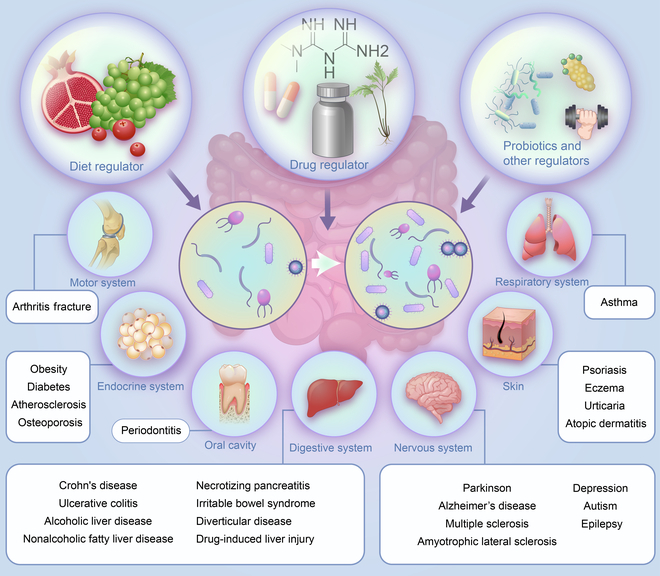
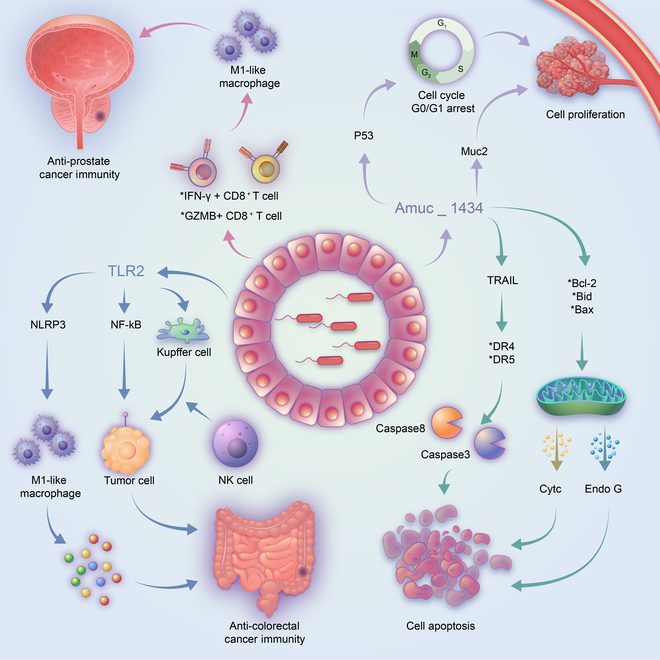
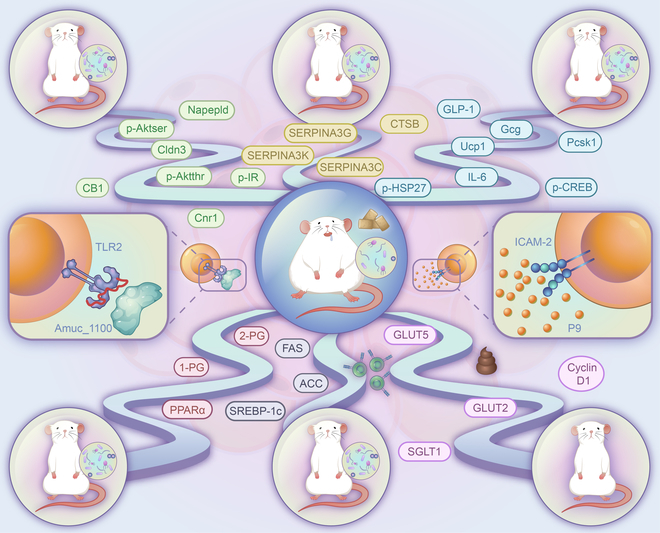
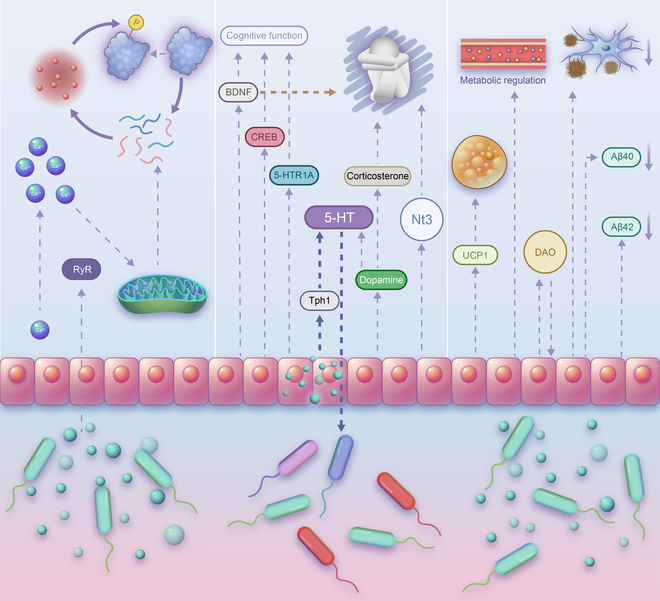
() has drawn much attention as an important gut microbe strain in recent years. can influence the occurrence and development of diseases of the endocrine, nervous, digestive, musculoskeletal, and respiratory systems and other diseases. It can also improve immunotherapy for some cancers. is expected to become a new probiotic in addition to and . An increase in abundance through direct or indirect supplementation may inhibit or even reverse disease progression. However, some contrary findings are found in type 2 diabetes mellitus and neurodegenerative diseases, where increased abundance may aggravate the diseases. To enable a more comprehensive understanding of the role of in diseases, we summarize the relevant information on in different systemic diseases and introduce regulators of abundance to promote the clinical transformation of research.
近年来,(某物质)作为一种重要的肠道微生物菌株备受关注。它可影响内分泌、神经、消化、肌肉骨骼和呼吸系统等疾病以及其他疾病的发生和发展。它还能改善某些癌症的免疫治疗。除了(其他两种物质)之外,预计它将成为一种新的益生菌。通过直接或间接补充(某物质)来增加其丰度可能会抑制甚至逆转疾病进展。然而,在2型糖尿病和神经退行性疾病中发现了一些相反的结果,即(某物质)丰度增加可能会加重疾病。为了更全面地了解(某物质)在疾病中的作用,我们总结了其在不同系统性疾病中的相关信息,并介绍了(某物质)丰度的调节因子,以促进(某物质)研究的临床转化。