Souza E Silva Virgílio, Chinen Ludmilla Thomé Domingos, Abdallah Emne A, Damascena Aline, Paludo Jociana, Chojniak Rubens, Dettino Aldo Lourenço Abbade, de Mello Celso Abdon Lopes, Alves Vanessa S, Fanelli Marcello F
Department of Clinical Oncology.
International Research Center.
Onco Targets Ther. 2016 Dec 13;9:7503-7513. doi: 10.2147/OTT.S115268. eCollection 2016.
Colorectal cancer (CRC) is the third most prevalent cancer worldwide. New prognostic markers are needed to identify patients with poorer prognosis, and circulating tumor cells (CTCs) seem to be promising to accomplish this.
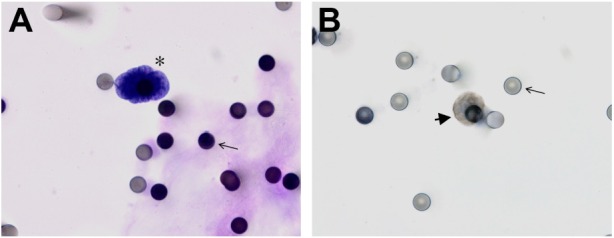
A prospective study was conducted by blood collection from patients with metastatic CRC (mCRC), three times, every 2 months in conjunction with image examinations for evaluation of therapeutic response. CTC isolation and counting were performed by Isolation by Size of Epithelial Tumor Cells (ISET).
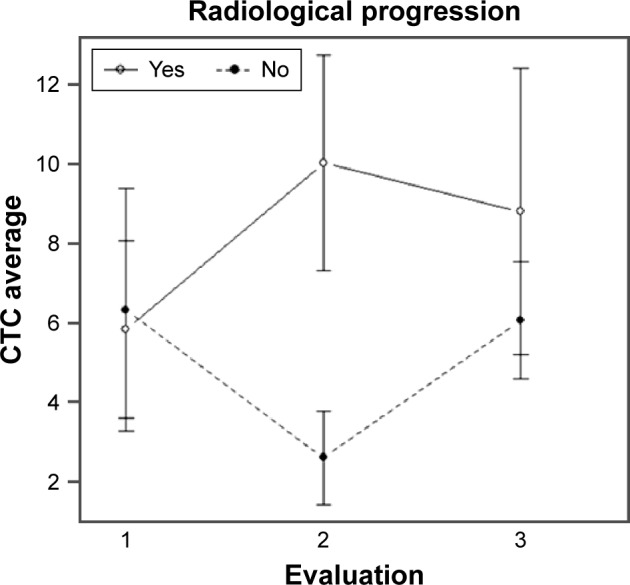
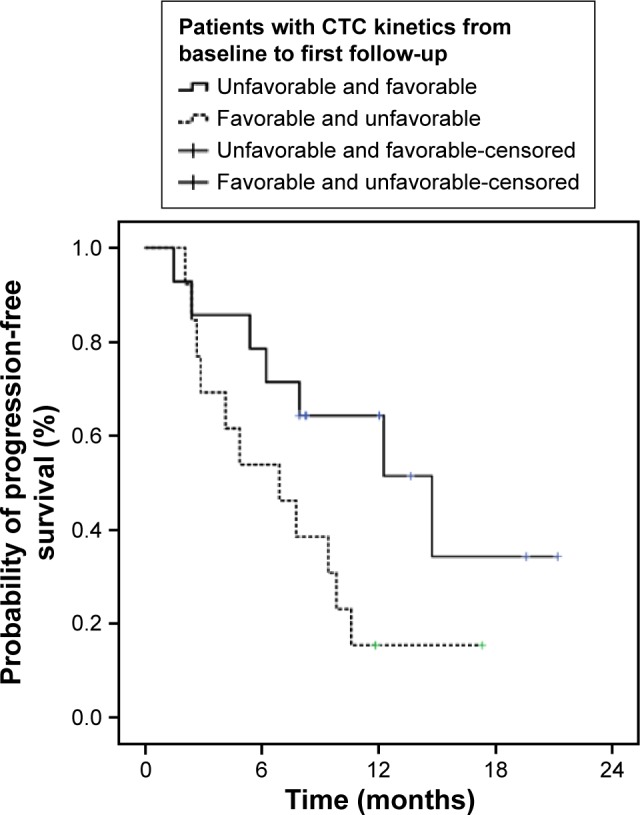
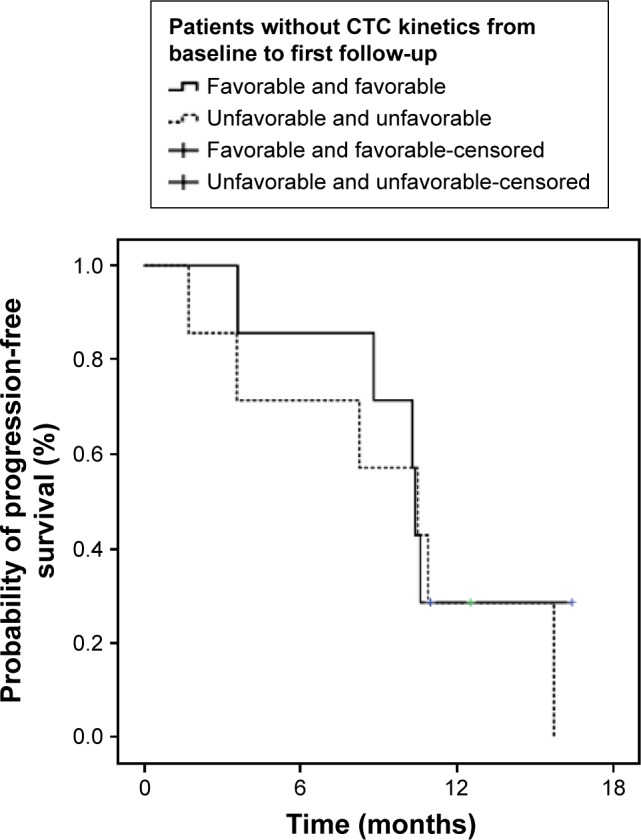
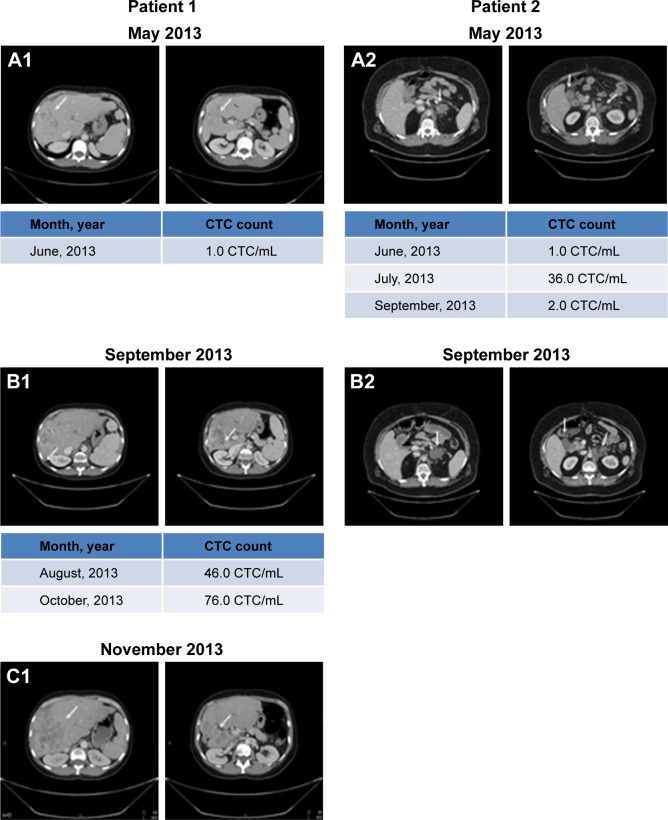
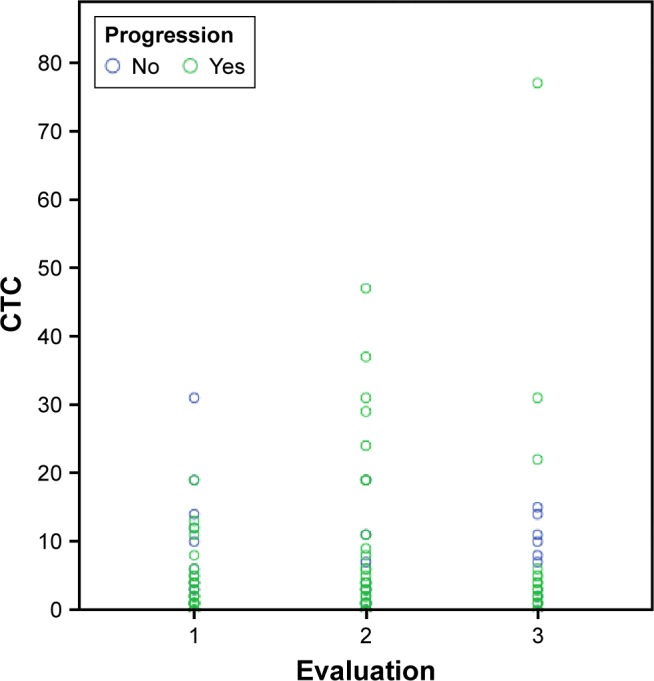
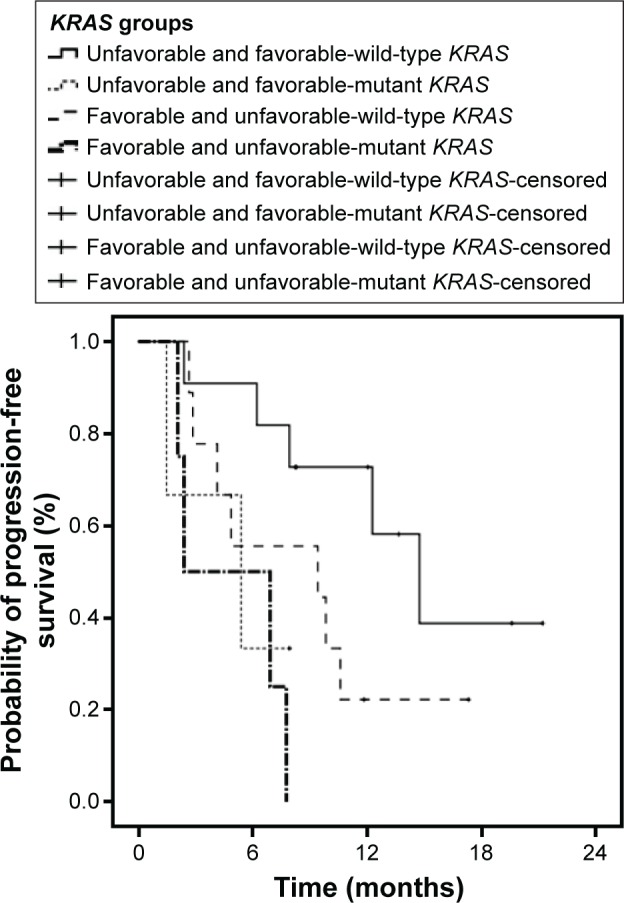
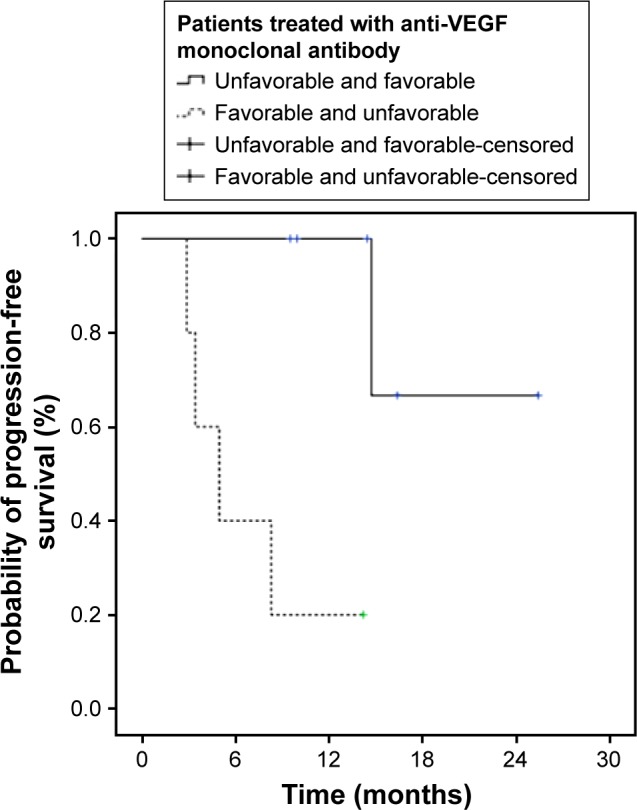
A total of 54 patients with mCRC with a mean age of 57.3 years (31-82 years) were included. Among all patients, 60% (n=32) were carriers of wild-type (WT ) tumors and 90% of them (n=29) were exposed to monoclonal antibodies along with systemic treatment. Evaluating CTC kinetics, when we compared the baseline (pretreatment) CTC level (CTC1) with the level at first follow-up (CTC2), we observed that CTC1-positive patients (CTCs above the median), who became negative (CTCs below the median) had a favorable evolution (n=14), with a median progression-free survival (PFS) of 14.7 months. This was higher than that for patients with an unfavorable evolution (CTC1- that became CTC2+; n=13, 6.9 months; =0.06). Patients with WT with favorable kinetics had higher PFS (14.7 months) in comparison to those with WT with unfavorable kinetics (9.4 months; =0.02). Moreover, patients whose imaging studies showed radiological progression had an increased quantification of CTCs at CTC2 compared to those without progression (=0.04).
This study made possible the presentation of ISET as a feasible tool for evaluating CTC kinetics in patients with mCRC, which can be promising in their clinical evaluation.
结直肠癌(CRC)是全球第三大常见癌症。需要新的预后标志物来识别预后较差的患者,而循环肿瘤细胞(CTC)似乎有望实现这一目标。
对转移性结直肠癌(mCRC)患者进行前瞻性研究,每2个月采集一次血液,共采集三次,同时结合影像检查评估治疗反应。采用上皮肿瘤细胞大小分离法(ISET)进行CTC分离和计数。
共纳入54例mCRC患者,平均年龄57.3岁(31 - 82岁)。在所有患者中,60%(n = 32)为野生型(WT)肿瘤携带者,其中90%(n = 29)在全身治疗的同时接受了单克隆抗体治疗。评估CTC动力学时,当我们将基线(治疗前)CTC水平(CTC1)与首次随访时的水平(CTC2)进行比较时,我们观察到CTC1阳性患者(CTC高于中位数)变为阴性(CTC低于中位数)的病情进展良好(n = 14),无进展生存期(PFS)中位数为14.7个月。这高于病情进展不良的患者(CTC1变为CTC2阳性;n = 13,6.9个月;P = 0.06)。动力学良好的WT患者的PFS(14.7个月)高于动力学不良的WT患者(9.4个月;P = 0.02)。此外,与无进展的患者相比,影像学检查显示放射学进展的患者在CTC2时的CTC定量增加(P = 0.04)。
本研究使ISET作为评估mCRC患者CTC动力学的可行工具得以呈现,这在其临床评估中可能具有前景。