Chen Fangfang, Wang Shuyi, Fang Yuan, Zheng Liang, Zhi Xuan, Cheng Boran, Chen Yuanyuan, Zhang Chunxiao, Shi Dongdong, Song Haibin, Cai Congli, Zhou Pengfei, Xiong Bin
Department of Oncology, Zhongnan Hospital of Wuhan University, Hubei Cancer Clinical Study Center, Hubei Key Laboratory of Tumor Biological Behaviors, Wuhan, China.
Department of Circulating Tumor Cells, YZY Medical Technological Company, Wuhan, China.
Oncotarget. 2017 Jan 10;8(2):3029-3041. doi: 10.18632/oncotarget.13823.
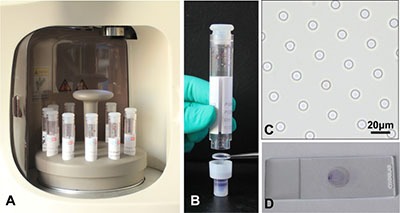
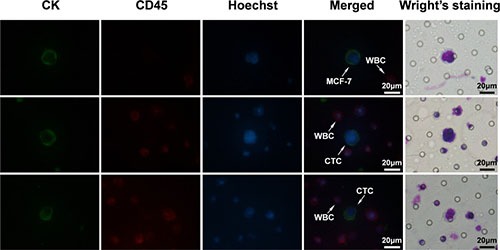
Circulating tumor cells (CTCs) play a crucial role in cancer metastasis. In this study, we introduced a novel isolation method by size of epithelial tumor cells (ISET) device with automatic isolation and staining procedure, named one-stop ISET (osISET) and validated its feasibility to capture CTCs from cancer patients. Moreover, we aim to investigate the correlation between clinicopathologic features and CTCs in colorectal cancer (CRC) in order to explore its clinical application.
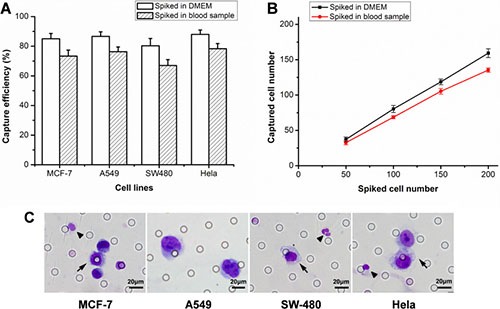
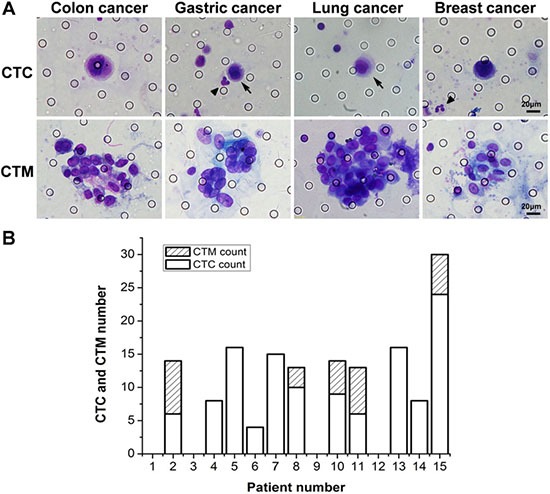
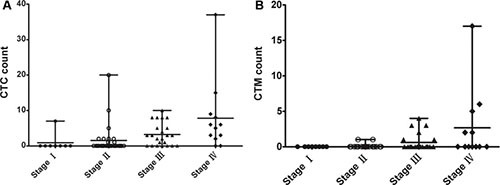
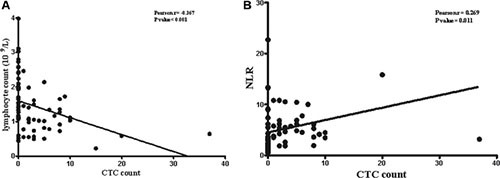
The capture efficiency ranged from 80.3% to 88% with tumor cells spiked into medium while 67% to 78.3% with tumor cells spiked into healthy donors' blood. In detection blood samples of 72 CRC patients, CTCs and clusters of circulating tumor cells (CTC-clusters) were detected with a positive rate of 52.8% (38/72) and 18.1% (13/72) respectively. Moreover, CTC positive rate was associated with factors of lymphatic or venous invasion, tumor depth, lymph node metastasis and TNM stage in CRC patients (p < 0.01). Lymphocyte count and neutrophil to lymphocyte ratio (NLR) were significantly different between CTC positive and negative groups (p < 0.01).
The capture efficiency of the device was tested by spiking cancer cells (MCF-7, A549, SW480, Hela) into medium or blood samples of healthy donors. Blood samples of 72 CRC patients were detected by osISET device. The clinicopathologic characteristics of 72 CRC patients were collected and the association with CTC positive rate or CTC count were analyzed.
Our osISET device was feasible to capture and identify CTCs and CTC-clusters from cancer patients. In addition, our device holds a potential for application in cancer management.
循环肿瘤细胞(CTC)在癌症转移中起着关键作用。在本研究中,我们介绍了一种基于上皮肿瘤细胞大小的新型分离方法(ISET)装置,该装置具有自动分离和染色程序,称为一站式ISET(osISET),并验证了其从癌症患者中捕获CTC的可行性。此外,我们旨在研究结直肠癌(CRC)患者临床病理特征与CTC之间的相关性,以探索其临床应用价值。
将肿瘤细胞加入培养基时,捕获效率为80.3%至88%;将肿瘤细胞加入健康供体血液中时,捕获效率为67%至78.3%。在检测的72例CRC患者血液样本中,检测到了CTC和循环肿瘤细胞簇(CTC簇),阳性率分别为52.8%(38/72)和18.1%(13/72)。此外,CRC患者的CTC阳性率与淋巴或静脉侵犯、肿瘤深度、淋巴结转移和TNM分期等因素相关(p<0.01)。CTC阳性和阴性组之间的淋巴细胞计数和中性粒细胞与淋巴细胞比值(NLR)有显著差异(p<0.01)。
通过将癌细胞(MCF-7、A549、SW480、Hela)加入培养基或健康供体的血液样本中,测试该装置的捕获效率。使用osISET装置检测72例CRC患者的血液样本。收集72例CRC患者的临床病理特征,并分析其与CTC阳性率或CTC计数的相关性。
我们的osISET装置可从癌症患者中捕获和识别CTC及CTC簇。此外,我们的装置在癌症管理中具有潜在的应用价值。