Oh Kyoung-Jin, Lee Da Som, Kim Won Kon, Han Baek Soo, Lee Sang Chul, Bae Kwang-Hee
Metabolic Regulation Research Center, Korea Research Institute of Bioscience and Biotechnology (KRIBB), Daejeon 34141, Korea.
Department of Functional Genomics, University of Science and Technology (UST), Daejeon 34141, Korea.
Int J Mol Sci. 2016 Dec 22;18(1):8. doi: 10.3390/ijms18010008.
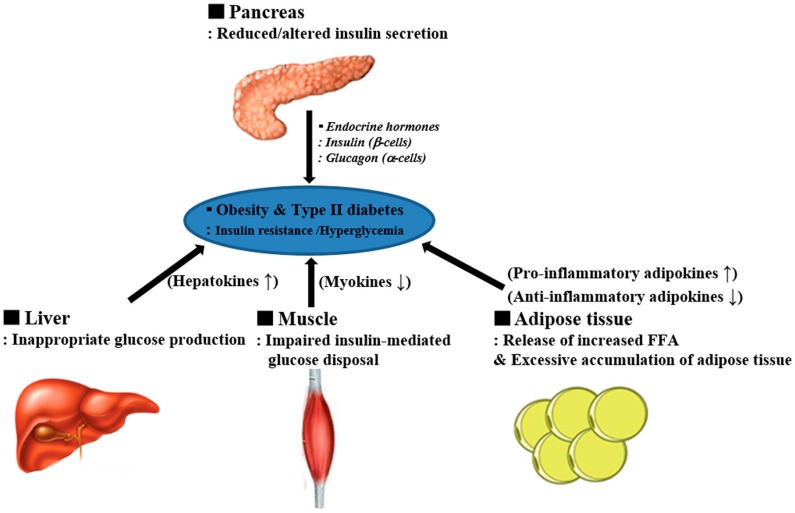
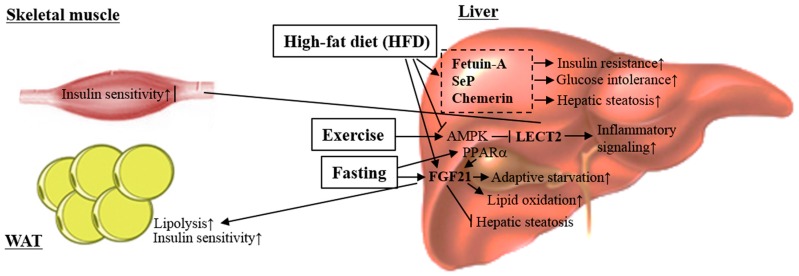
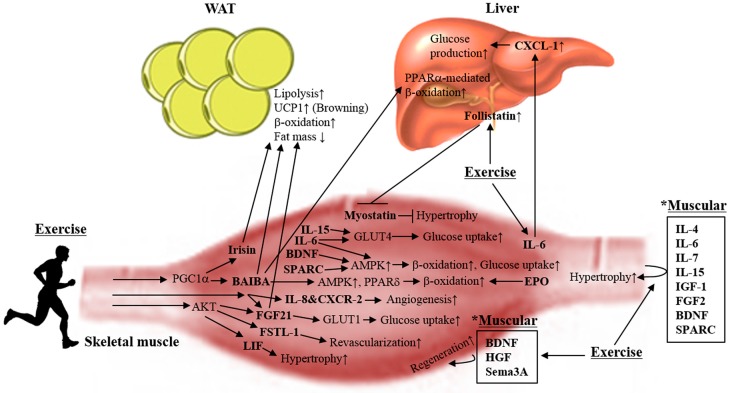
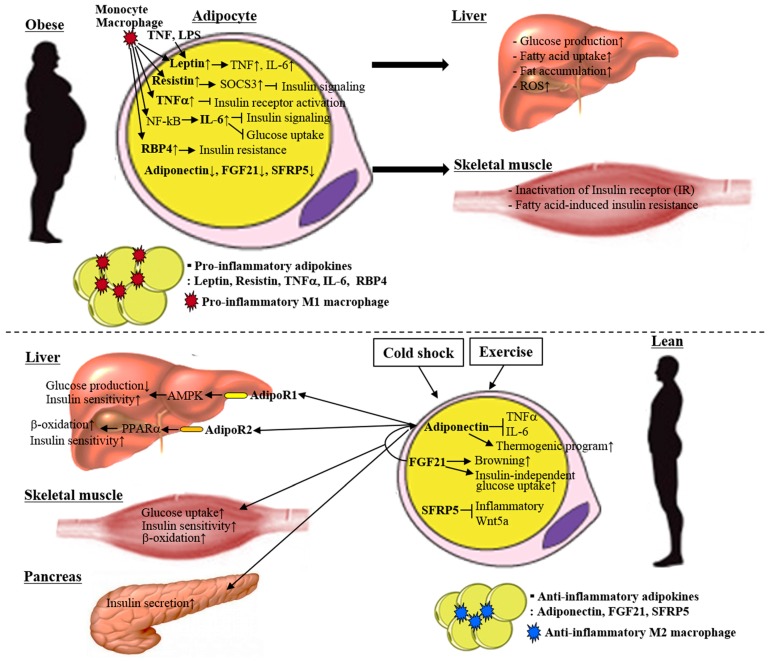
Obesity and type II diabetes are characterized by insulin resistance in peripheral tissues. A high caloric intake combined with a sedentary lifestyle is the leading cause of these conditions. Whole-body insulin resistance and its improvement are the result of the combined actions of each insulin-sensitive organ. Among the fundamental molecular mechanisms by which each organ is able to communicate and engage in cross-talk are cytokines or peptides which stem from secretory organs. Recently, it was reported that several cytokines or peptides are secreted from muscle (myokines), adipose tissue (adipokines) and liver (hepatokines) in response to certain nutrition and/or physical activity conditions. Cytokines exert autocrine, paracrine or endocrine effects for the maintenance of energy homeostasis. The present review is focused on the relationship and cross-talk amongst muscle, adipose tissue and the liver as secretory organs in metabolic diseases.
肥胖症和II型糖尿病的特征是外周组织存在胰岛素抵抗。高热量摄入加上久坐不动的生活方式是这些病症的主要成因。全身胰岛素抵抗及其改善是每个胰岛素敏感器官共同作用的结果。各器官能够进行交流并相互作用的基本分子机制中,有源自分泌器官的细胞因子或肽类。最近有报道称,在某些营养和/或身体活动条件下,肌肉(肌动蛋白)、脂肪组织(脂肪因子)和肝脏(肝因子)会分泌多种细胞因子或肽类。细胞因子发挥自分泌、旁分泌或内分泌作用以维持能量稳态。本综述聚焦于作为代谢疾病分泌器官的肌肉、脂肪组织和肝脏之间的关系及相互作用。