Kamiya Tomonori, Watanabe Yohei, Makino Seiya, Kano Hiroshi, Tsuji Noriko M
Biomedical Research Institute, National Institute of Advanced Industrial Science and Technology (AIST), Tsukuba, Ibaraki 305-8566, Japan.
Food Science Research Laboratories, Meiji Corporation, 540 Naruda, Odawara, Kanagawa 250-0862, Japan.
Microorganisms. 2016 Dec 23;5(1):1. doi: 10.3390/microorganisms5010001.
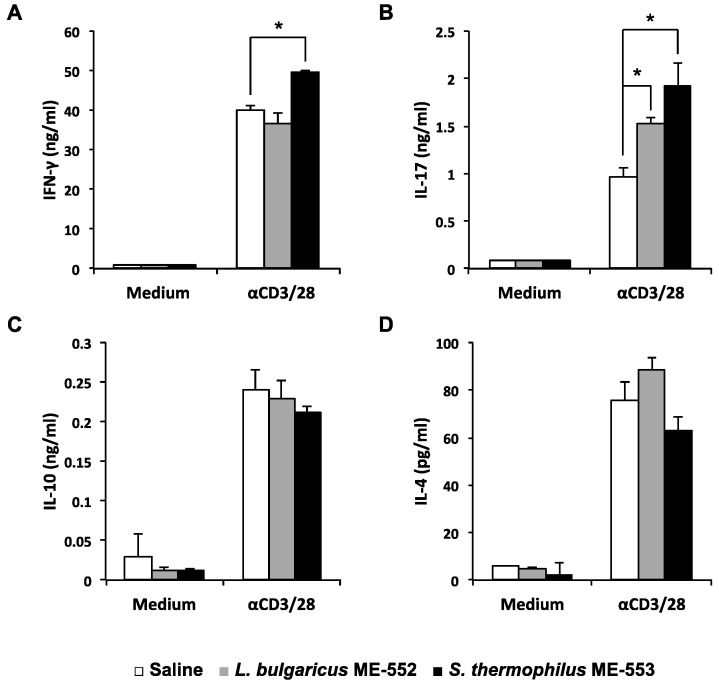
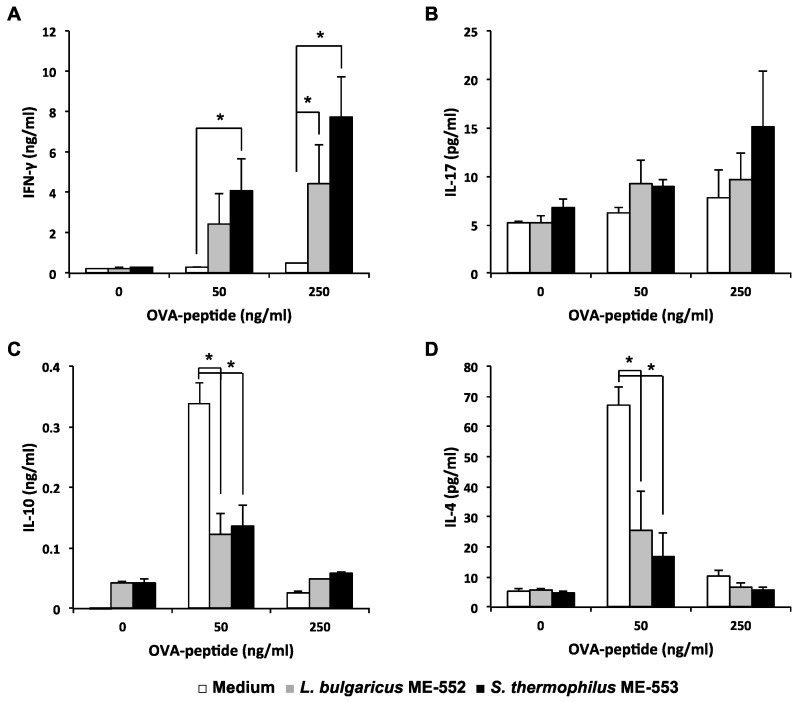
Lactic acid bacteria (LAB) form a major component of gut microbiota and are often used as probiotics for fermented foods, such as yoghurt. In this study, we aimed to evaluate immunomodulatory activity of LAB, especially that of ME-552 (ME552) and ME-553 (ME553). In vivo/in vitro assay was performed in order to investigate their effects on T cell function. After oral administration of ME553 to C57BL/6 mice, the amount of both interferon γ (IFN-γ) and interleukin 17 (IL-17) produced by cluster of differentiation (CD) 4⁺ T cells from Peyer's patches (PPs) were significantly enhanced. On the other hand, ME552 only up-regulated the production of IL-17 from PP cells. The extent of induction for IFN-γ production differed between ME552 and ME553. These results suggest that LAB modulate T cell effector functions and mucosal immunity.
乳酸菌(LAB)是肠道微生物群的主要组成部分,常用于发酵食品(如酸奶)的益生菌。在本研究中,我们旨在评估乳酸菌的免疫调节活性,尤其是ME-552(ME552)和ME-553(ME553)的免疫调节活性。为了研究它们对T细胞功能的影响,进行了体内/体外试验。给C57BL/6小鼠口服ME553后,派尔集合淋巴结(PPs)中分化簇(CD)4⁺T细胞产生的干扰素γ(IFN-γ)和白细胞介素17(IL-17)的量均显著增加。另一方面,ME552仅上调了PP细胞中IL-17的产生。ME552和ME553对IFN-γ产生的诱导程度不同。这些结果表明,乳酸菌可调节T细胞效应功能和黏膜免疫。