Sétamou Mamoudou, Simpson Catherine R, Alabi Olufemi J, Nelson Shad D, Telagamsetty Srilakshmi, Jifon John L
Department of Agriculture, Agribusiness and Environmental Sciences, Texas A&M University-Kingsville Citrus Center, Weslaco, Texas, United States of America.
Department of Plant Pathology & Microbiology, Texas A&M AgriLife Research and Extension Center, Weslaco, Texas, United States of America.
PLoS One. 2016 Dec 28;11(12):e0168997. doi: 10.1371/journal.pone.0168997. eCollection 2016.
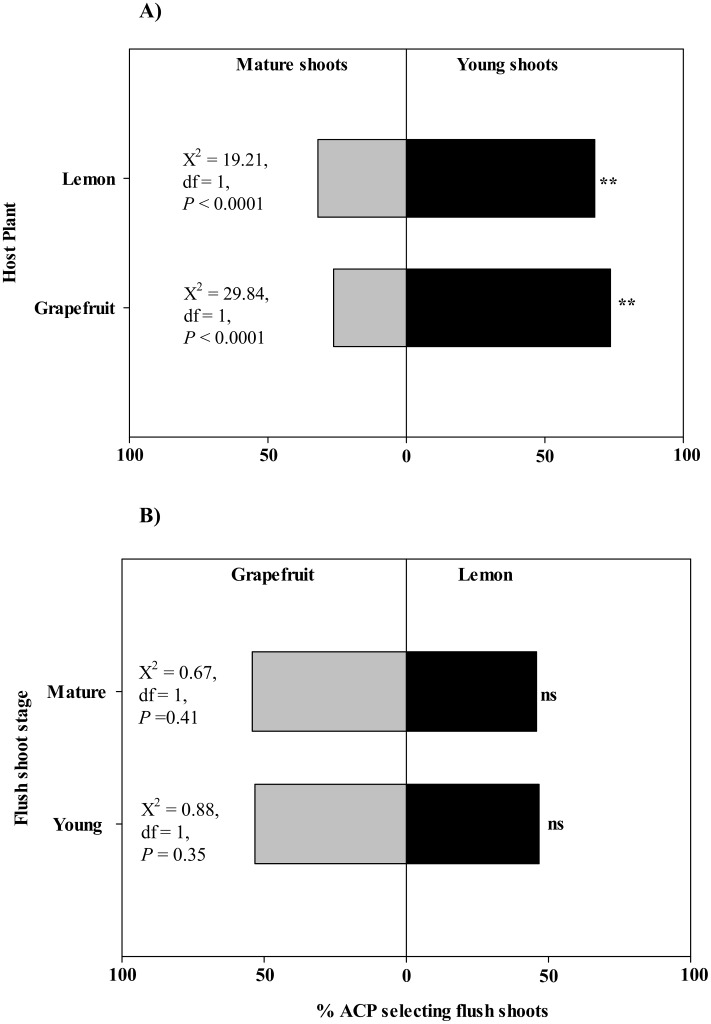
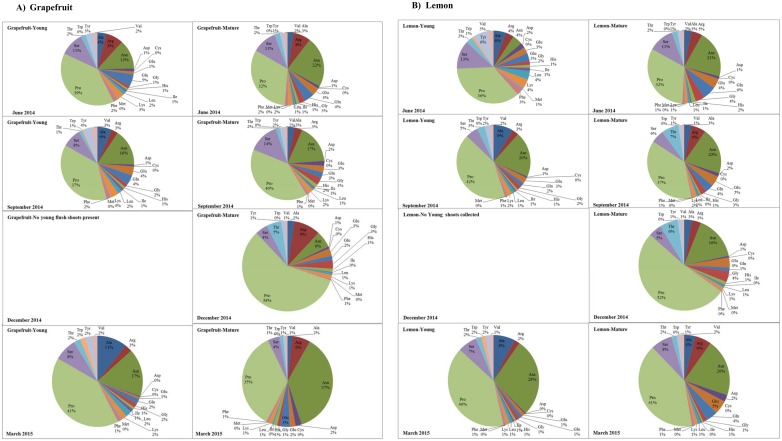
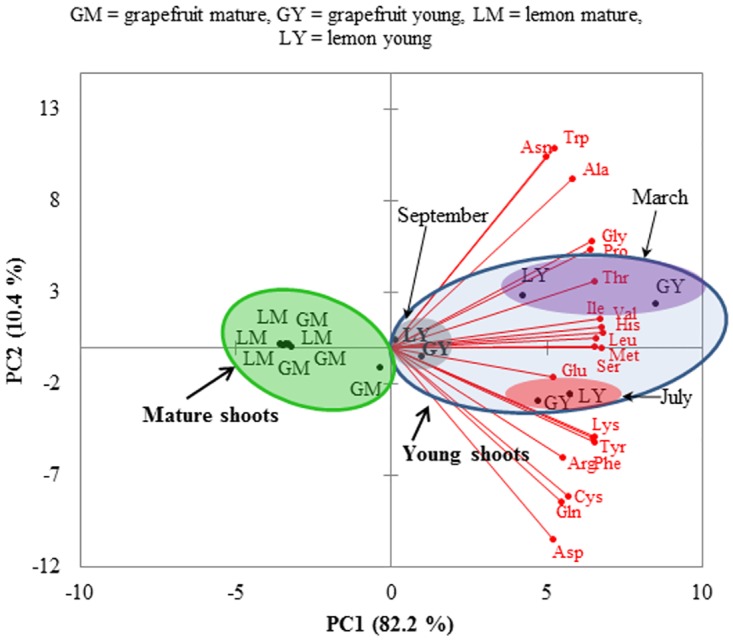
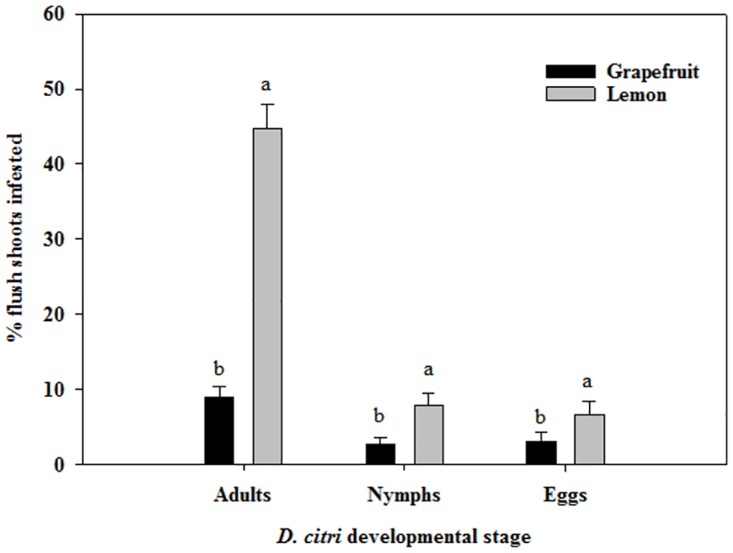
Studies were conducted to relate the influence of the physical characteristics, leaf nutrient content and phloem sap amino acid concentration of citrus flush shoots on the densities of various Diaphorina citri life stages. Adult D. citri preferentially selected young shoots for feeding and numbers of D. citri immatures were positively correlated with flush shoot softness. Young flush shoots had higher concentrations of macro and micro nutrients relative to mature ones and this was associated with higher densities of all D. citri life stages. All D. citri life stages were positively correlated with higher nitrogen-carbon (N:C), nitrogen:sulfur (N:S) and nitrogen:calcium (N:Ca) ratios in leaf tissue, while densities of adults were negatively related to calcium, manganese and boron levels. Concentrations of total and essential amino acids were highest in phloem sap of young expanding flush shoots in both grapefruit and lemon, but dramatically declined as flush shoots matured. The sulfur-containing amino acids cystine, methionine and taurine occurred only in younger flush shoots. In contrast, cystathionine was only present in phloem sap of mature shoots. These results clearly indicate that young citrus flush shoots are a nutritionally richer diet relative to mature shoots, thus explaining their preference by D. citri for feeding and reproduction. Conversely, tissue hardness and the lower nutritional quality of mature flush shoots may limit oviposition and immature development. The data suggest that both physical characteristics and nutritional composition of flush shoots and their phloem sap are important factors regulating host colonization and behavior of D. citri, and this interaction can impact the dynamics and spread of HLB in citrus groves.
开展了多项研究,以探讨柑橘嫩梢的物理特性、叶片养分含量和韧皮部汁液氨基酸浓度对柑橘木虱不同生活阶段密度的影响。柑橘木虱成虫优先选择嫩梢取食,而柑橘木虱未成熟个体的数量与嫩梢柔软度呈正相关。相对于成熟嫩梢,幼嫩的嫩梢含有更高浓度的大量和微量营养素,这与柑橘木虱所有生活阶段的较高密度相关。柑橘木虱所有生活阶段与叶片组织中较高的氮碳比(N:C)、氮硫比(N:S)和氮钙比(N:Ca)呈正相关,而成虫密度与钙、锰和硼水平呈负相关。葡萄柚和柠檬幼嫩的正在生长的嫩梢韧皮部汁液中总氨基酸和必需氨基酸的浓度最高,但随着嫩梢成熟,这些浓度会急剧下降。含硫氨基酸胱氨酸、蛋氨酸和牛磺酸仅出现在较嫩的嫩梢中。相反,胱硫醚仅存在于成熟嫩梢的韧皮部汁液中。这些结果清楚地表明,相对于成熟嫩梢,幼嫩的柑橘嫩梢在营养上更为丰富,从而解释了柑橘木虱偏好取食和在其上繁殖的原因。相反,成熟嫩梢的组织硬度和较低的营养质量可能会限制产卵和未成熟个体的发育。数据表明,嫩梢及其韧皮部汁液的物理特性和营养成分都是调节柑橘木虱寄主定殖和行为的重要因素,这种相互作用会影响柑橘园中黄龙病的发生动态和传播。