Lee Duck-Chul, Shook Robin P, Drenowatz Clemens, Blair Steven N
Department of Kinesiology, College of Human Sciences, Iowa State University, Ames, IA 50011, USA; Department of Kinesiology, College of Human Sciences, Iowa State University, Ames, IA 50011, USA.
Department of Exercise Science, University of South Carolina, Columbia, SC 29208, USA; Department of Exercise Science, University of South Carolina, Columbia, SC 29208, USA.
Future Sci OA. 2016 Jul 14;2(3):FSO127. doi: 10.4155/fsoa-2016-0028. eCollection 2016 Sep.
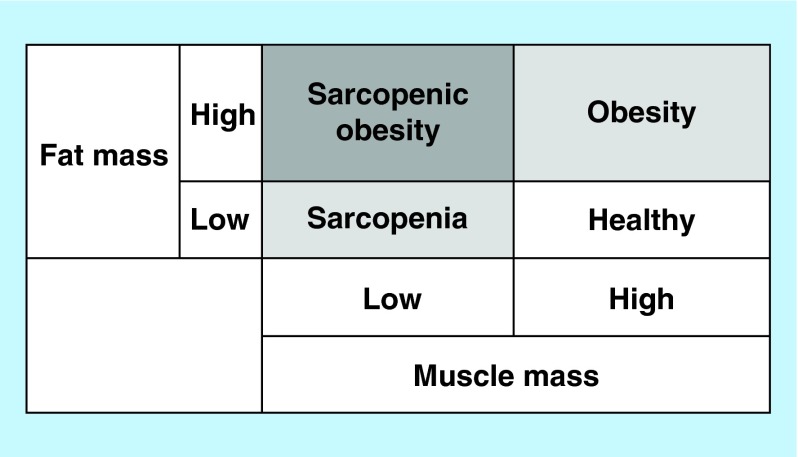
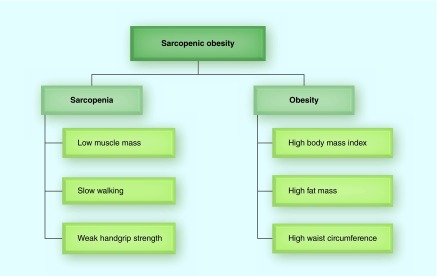
Sarcopenic obesity is the coexistance of sarcopenia and obesity. Modern sarcopenia definition includes low muscle mass, weak muscle strength (handgrip strength) and poor physical function (slow walking), although the clinical definition of each varies worldwide. The cut-points for low muscle mass for men and women using appendicular lean mass divided by height (kg/m) are ≤7.0 and ≤5.4 in Asians, and ≤7.23 and ≤5.67 in Caucasians, respectively. The cut-points for weak handgrip strength (kg) for men and women are <26 and <18 in Asians, and <30 and <20 in Caucasians, respectively. The cut-point for slow walking is ≤0.8 m/s in men and women. Current data suggest the potential benefits of physical activity and fitness on sarcopenic obesity in older adults.
肌少症性肥胖是肌少症和肥胖症并存的状态。现代肌少症的定义包括肌肉量低、肌肉力量(握力)弱和身体功能差(步行速度慢),尽管世界各地对每种情况的临床定义有所不同。亚洲男性和女性使用四肢瘦体重除以身高(kg/m)来定义低肌肉量的切点分别为≤7.0和≤5.4,白种人则分别为≤7.23和≤5.67。亚洲男性和女性握力弱(kg)的切点分别为<26和<18,白种人则分别为<30和<20。男性和女性步行速度慢的切点为≤0.8 m/s。目前的数据表明,体育活动和健身对老年人的肌少症性肥胖可能有益。