Simsek Sami, Ciftci Ayse Turkan
Department of Parasitology, Faculty of Veterinary Medicine University of Firat, Elazig, Turkey.
Parasitology and Bee Diseases Laboratory, Veterinary Control and Research Institute, Elazig, Turkey.
J Arthropod Borne Dis. 2016 Oct 4;10(4):445-453. eCollection 2016 Dec.
and are the most common species of filarial nematodes described in the dogs. A single-step multiplex PCR was applied to detect and differentiate simultaneously and unequivocally and on DNA extracted from canine peripheral blood and besides to detect the seroprevalance of by ELISA in Elazig Province, Turkey. A PCR detection of the , which plays an important role in biology and contributes to the inflammatory pathology of the heartworm, was also applied for the first time in Turkey.
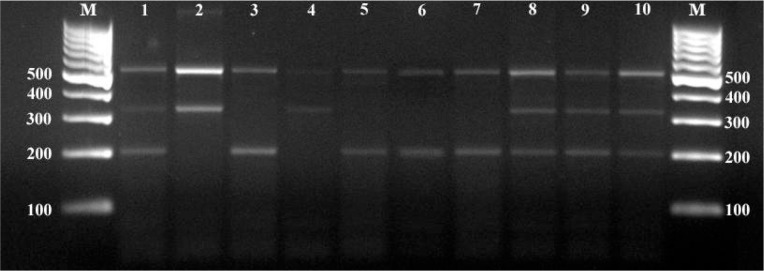
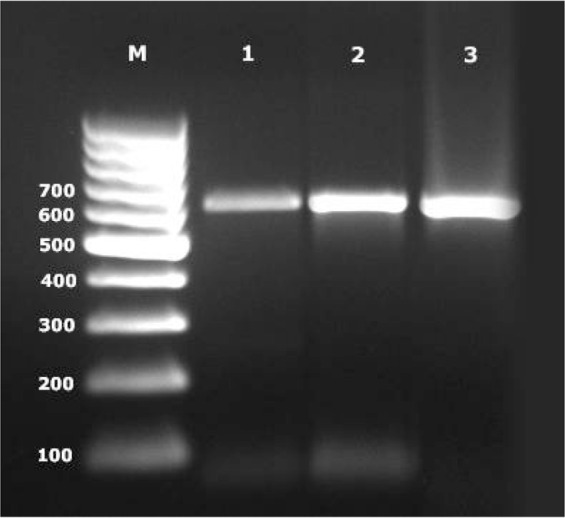
A total of 161 whole blood and sera samples were collected from stray dogs and stored at -20 °C until used. After DNA extraction, all samples were processed with primers by multiplex-PCR and primers by conventional PCR besides ELISA for serology. The amplification was performed using a set of primers designed on a portion of the small subunit ribosomal RNA gene of the mitochondrion (12S rDNA).
Three of the examined dogs (1.8%) were found to be infected with only , one (0.6%) with and three (1.8%) with both parasites. Besides, 10 out of 161 dogs (6.2%) were found infected with sp. Finaly, the seroprevalence of dirofilariosis in the examined dogs was found to be 3.7% (6/161).
Although dirofilariosis is not a serious problem in the region, the stray dogs still continue to be a source of infection.
[具体线虫名称1]和[具体线虫名称2]是犬类中描述的最常见的丝虫线虫种类。应用单步多重PCR同时明确检测和区分从犬外周血提取的DNA中的[具体线虫名称1]和[具体线虫名称2],此外还通过酶联免疫吸附测定(ELISA)检测土耳其埃拉泽省[具体线虫名称1]的血清流行率。对在[具体线虫名称1]生物学中起重要作用并导致犬心丝虫炎症病理的[具体线虫名称3]的PCR检测也首次在土耳其应用。
从流浪狗收集了总共161份全血和血清样本,并在-20°C下储存直至使用。DNA提取后,除了用于血清学的ELISA外,所有样本均用[引物名称1]引物通过多重PCR处理,并用[引物名称2]引物通过常规PCR处理。使用一组基于线粒体小亚基核糖体RNA基因(12S rDNA)的一部分设计的引物进行扩增。
在检查的狗中,3只(1.8%)仅感染了[具体线虫名称1],1只(0.6%)感染了[具体线虫名称2],3只(1.8%)同时感染了这两种寄生虫。此外,在161只狗中有10只(6.2%)被发现感染了[具体线虫名称4]属。最后,在检查的狗中发现犬恶丝虫病的血清流行率为3.7%(6/161)。
虽然犬恶丝虫病在该地区不是一个严重问题,但流浪狗仍然是感染源。