Shen Hongchang, Wang Liguang, Zhang Jiangang, Dong Wei, Zhang Tiehong, Ni Yang, Cao Hongxin, Wang Kai, Li Yun, Wang Yibing, Du Jiajun
Department of Oncology, Shandong Provincial Hospital Affiliated to Shandong University, Shandong University, Jinan, Shandong 250021, P.R. China.
Institute of Oncology, Shandong Provincial Hospital Affiliated to Shandong University, Shandong University, Jinan, Shandong 250021, P.R. China.
Oncol Rep. 2017 Feb;37(2):761-767. doi: 10.3892/or.2016.5337. Epub 2016 Dec 28.
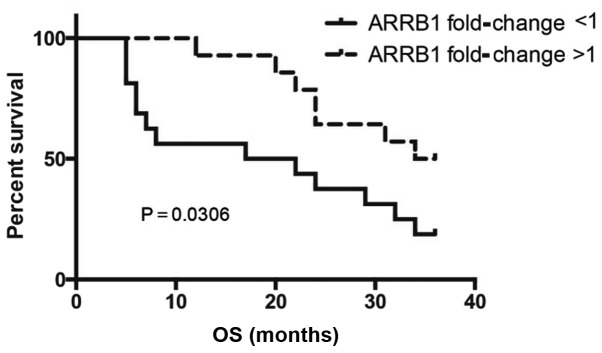
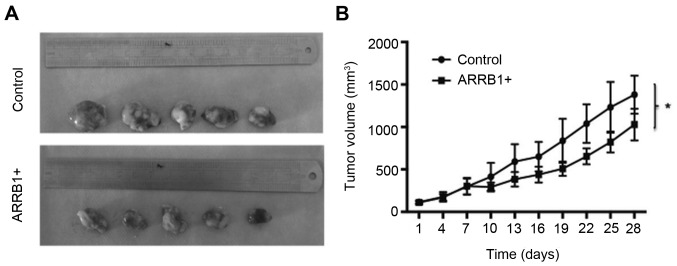
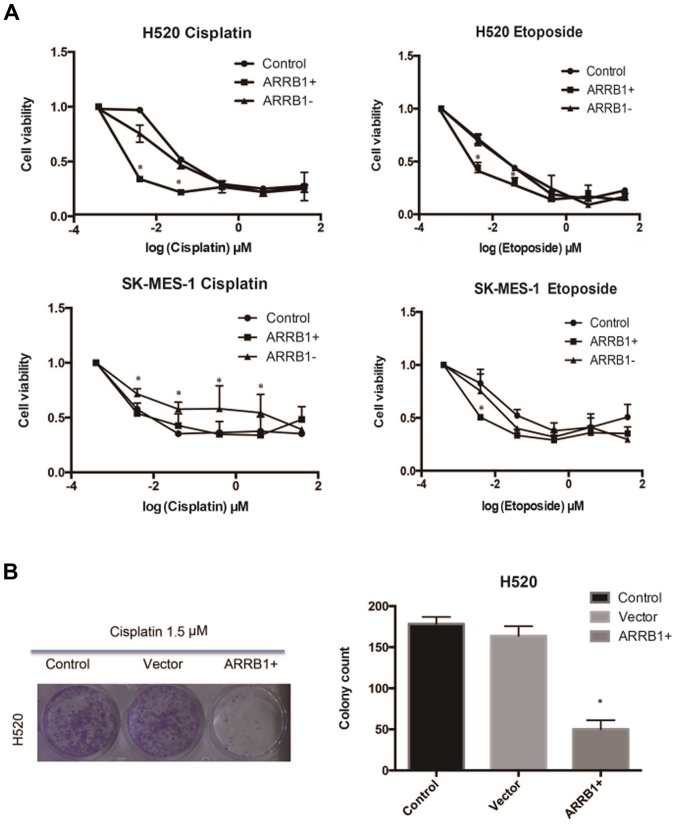
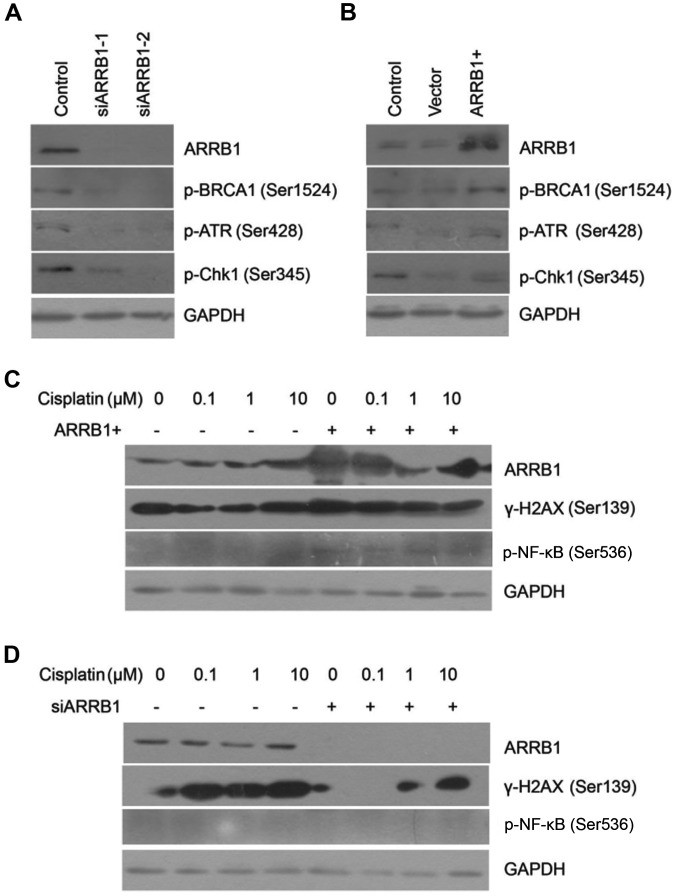
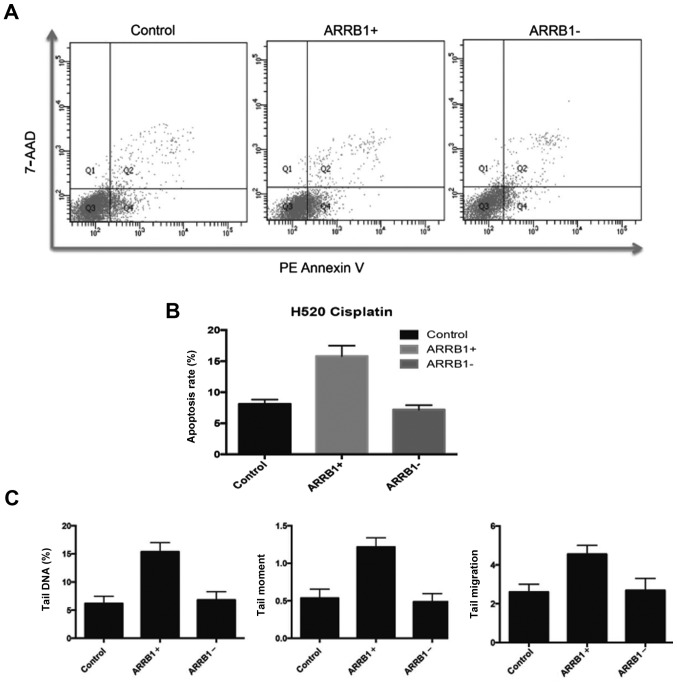
ARRB1 (also known as β-arrestin-1) serves as a multifunctional adaptor contributing to the regulation of signaling pathways. ARRB1 may be involved in DNA damage accumulation; however the underlying mechanism involved is unclear. In the present study, non-small cell lung cancer (NSCLC) cell lines (H520 and SK-MES-1) were transfected with ARRB1 plasmids or small interfering ribonucleic acid (siRNA) and received treatment with DNA-damaging agents (cisplatin and etoposide). A mouse xenograft model was used to assess the impact of ARRB1 on the efficacy of cisplatin in vivo. A total of 30 surgically resected NSCLC patients were recruited for the present study and qRT-PCR was performed to determine the mRNA levels in cancer tissues compared with para-carcinoma tissues. Our data showed that DNA damage was abrogated in the ARRB1‑knockdown cells and enhanced in the ARRB1-overexpressing cells. ATR and Chk1 were more activated in the ARRB1-overexpressing cells compared to the ARRB1-knockdown cells, followed by increased H2AX phosphorylation. DNA damage and apoptosis were increased in the ARRB1-overexpressing cells treated with cisplatin. These data provided strong evidence that ARRB1 contributes to the response of NSCLC to DNA-damaging agents and is essential for DNA damage response (DDR). ARRB1 may enhance the efficacy of DNA-damaging agents in NSCLC.
ARR B1(也称为β-抑制蛋白1)作为一种多功能衔接蛋白,有助于信号通路的调节。ARR B1可能参与DNA损伤积累;然而,其潜在机制尚不清楚。在本研究中,非小细胞肺癌(NSCLC)细胞系(H520和SK-MES-1)用ARR B1质粒或小干扰核糖核酸(siRNA)转染,并接受DNA损伤剂(顺铂和依托泊苷)处理。使用小鼠异种移植模型评估ARR B1对顺铂体内疗效的影响。本研究共招募了30例手术切除的NSCLC患者,并进行qRT-PCR以确定癌组织与癌旁组织相比的mRNA水平。我们的数据表明,在ARR B1基因敲低的细胞中DNA损伤被消除,而在ARR B1过表达的细胞中DNA损伤增强。与ARR B1基因敲低的细胞相比,ARR B1过表达的细胞中ATR和Chk1的激活程度更高,随后H2AX磷酸化增加。在用顺铂处理的ARR B1过表达的细胞中,DNA损伤和细胞凋亡增加。这些数据提供了强有力的证据,表明ARR B1有助于NSCLC对DNA损伤剂的反应,并且对于DNA损伤反应(DDR)至关重要。ARR B1可能增强DNA损伤剂对NSCLC的疗效。