Shinde Vaibhav, Perumal Srinivasan Sureshkumar, Henry Margit, Rotshteyn Tamara, Hescheler Jürgen, Rahnenführer Jörg, Grinberg Marianna, Meisig Johannes, Blüthgen Nils, Waldmann Tanja, Leist Marcel, Hengstler Jan Georg, Sachinidis Agapios
Institute of Neurophysiology and Center for Molecular Medicine Cologne (CMMC), University of Cologne (UKK), Robert-Koch-Str. 39, 50931, Cologne, Germany.
Department of Statistics, Technical University of Dortmund University, 44227, Dortmund, Germany.
Stem Cell Res Ther. 2016 Dec 30;7(1):190. doi: 10.1186/s13287-016-0449-2.
Human embryonic stem cells (hESCs) partially recapitulate early embryonic three germ layer development, allowing testing of potential teratogenic hazards. Because use of hESCs is ethically debated, we investigated the potential for human induced pluripotent stem cells (hiPSCs) to replace hESCs in such tests.
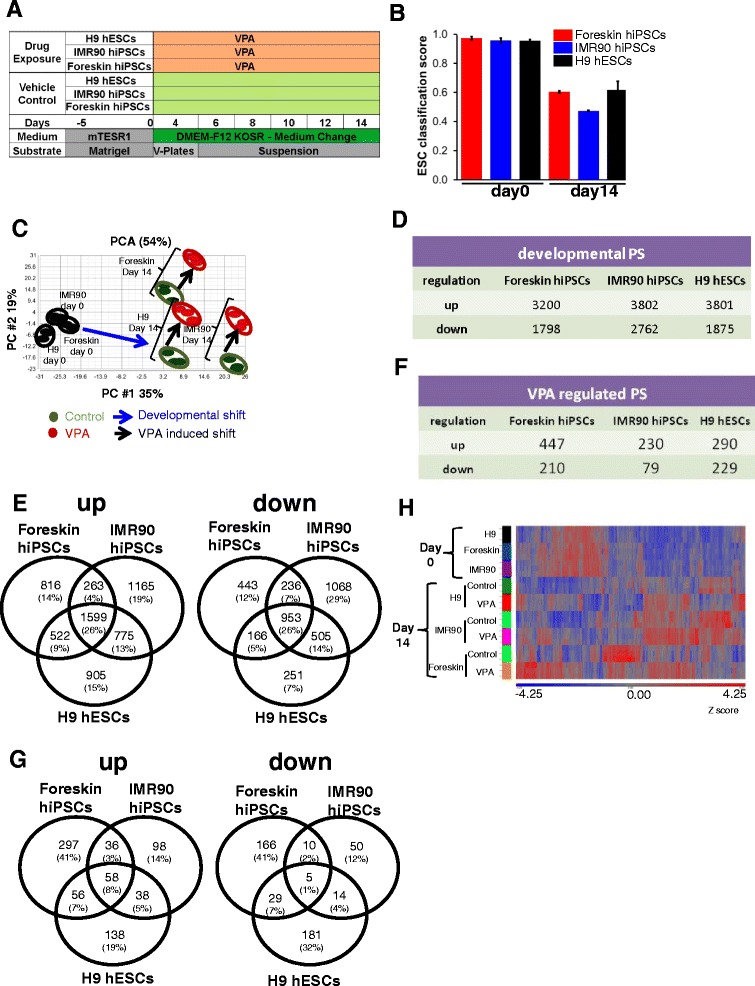
Three cell lines, comprising hiPSCs (foreskin and IMR90) and hESCs (H9) were differentiated for 14 days. Their transcriptome profiles were obtained on day 0 and day 14 and analyzed by comprehensive bioinformatics tools.
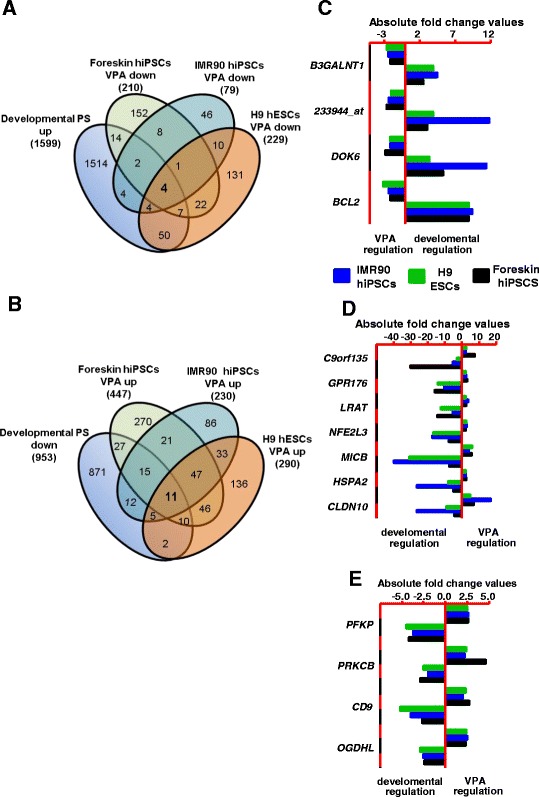
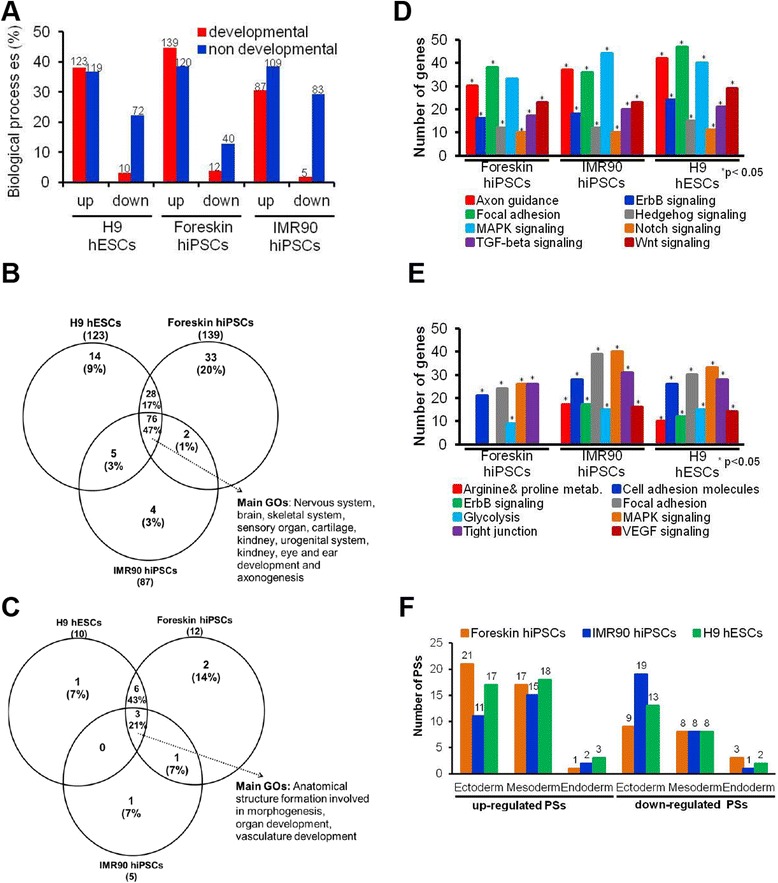
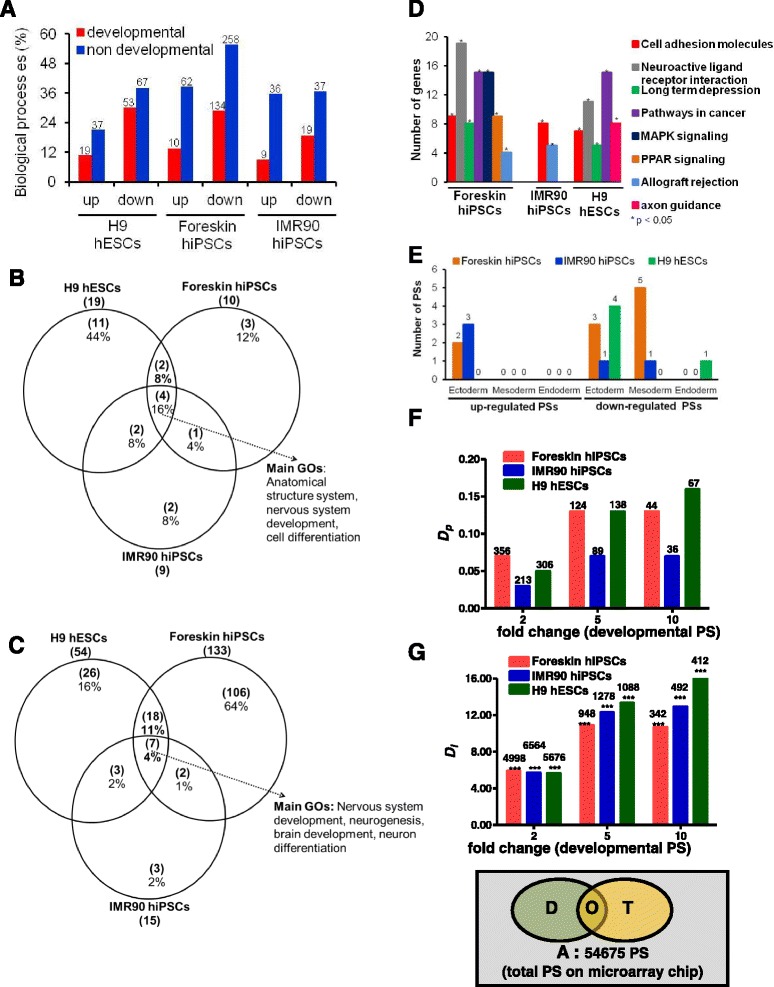
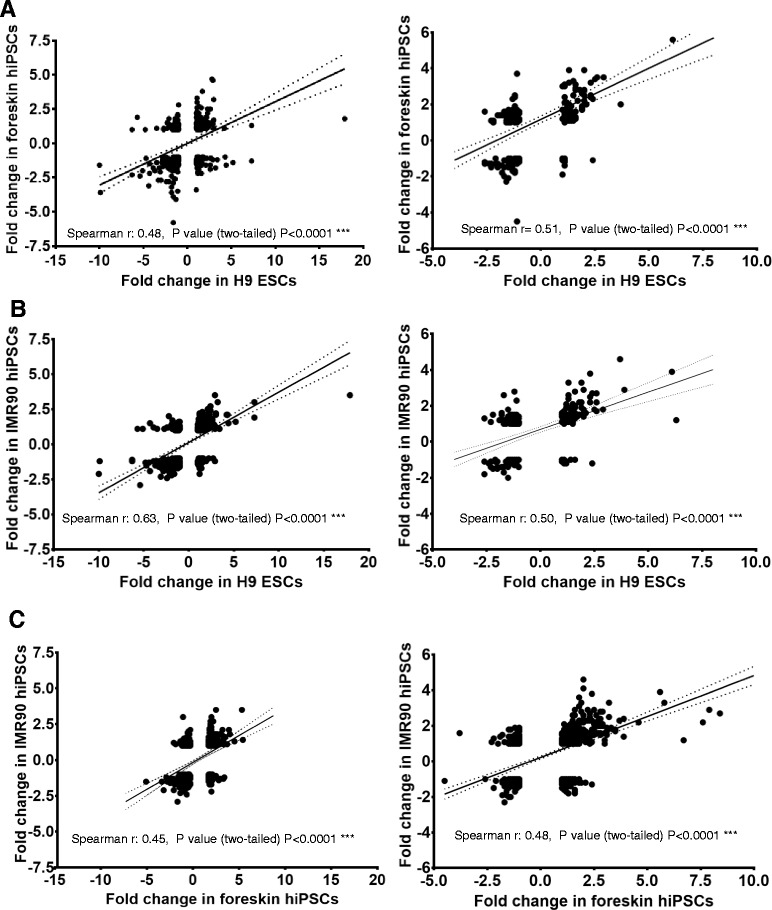
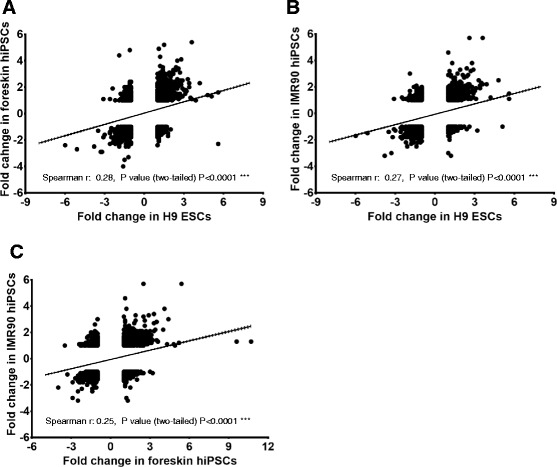
The transcriptomes on day 14 showed that more than 70% of the "developmental genes" (regulated genes with > 2-fold change on day 14 compared to day 0) exhibited variability among cell lines. The developmental genes belonging to all three cell lines captured biological processes and KEGG pathways related to all three germ layer embryonic development. In addition, transcriptome profiles were obtained after 14 days of exposure to teratogenic valproic acid (VPA) during differentiation. Although the differentially regulated genes between treated and untreated samples showed more than 90% variability among cell lines, VPA clearly antagonized the expression of developmental genes in all cell lines: suppressing upregulated developmental genes, while inducing downregulated ones. To quantify VPA-disturbed development based on developmental genes, we estimated the "developmental potency" (D ) and "developmental index" (D ).
Despite differences in genes deregulated by VPA, uniform D values were obtained for all three cell lines. Given that the D values for VPA were similar for hESCs and hiPSCs, D can be used for robust hazard identification, irrespective of whether hESCs or hiPSCs are used in the test systems.
人类胚胎干细胞(hESCs)部分重现了早期胚胎三胚层发育过程,从而能够对潜在的致畸风险进行检测。由于hESCs的使用存在伦理争议,我们研究了人类诱导多能干细胞(hiPSCs)在这类检测中替代hESCs的可能性。
三种细胞系,包括hiPSCs(包皮和IMR90)以及hESCs(H9),进行了14天的分化。在第0天和第14天获取它们的转录组图谱,并通过综合生物信息学工具进行分析。
第14天的转录组显示,超过70%的“发育基因”(与第0天相比,第14天变化超过2倍的调控基因)在细胞系间表现出变异性。属于所有三种细胞系的发育基因涵盖了与所有三个胚层胚胎发育相关的生物学过程和KEGG通路。此外,在分化过程中暴露于致畸剂丙戊酸(VPA)14天后获取了转录组图谱。尽管处理组和未处理组样本之间差异调控的基因在细胞系间显示出超过90%的变异性,但VPA明显拮抗了所有细胞系中发育基因的表达:抑制上调的发育基因,同时诱导下调的发育基因。为了基于发育基因量化VPA干扰的发育情况,我们估算了“发育潜能”(D )和“发育指数”(D )。
尽管VPA解除调控的基因存在差异,但所有三种细胞系获得了一致的D 值。鉴于hESCs和hiPSCs的VPA的D 值相似,无论检测系统中使用的是hESCs还是hiPSCs,D 均可用于可靠的风险识别。